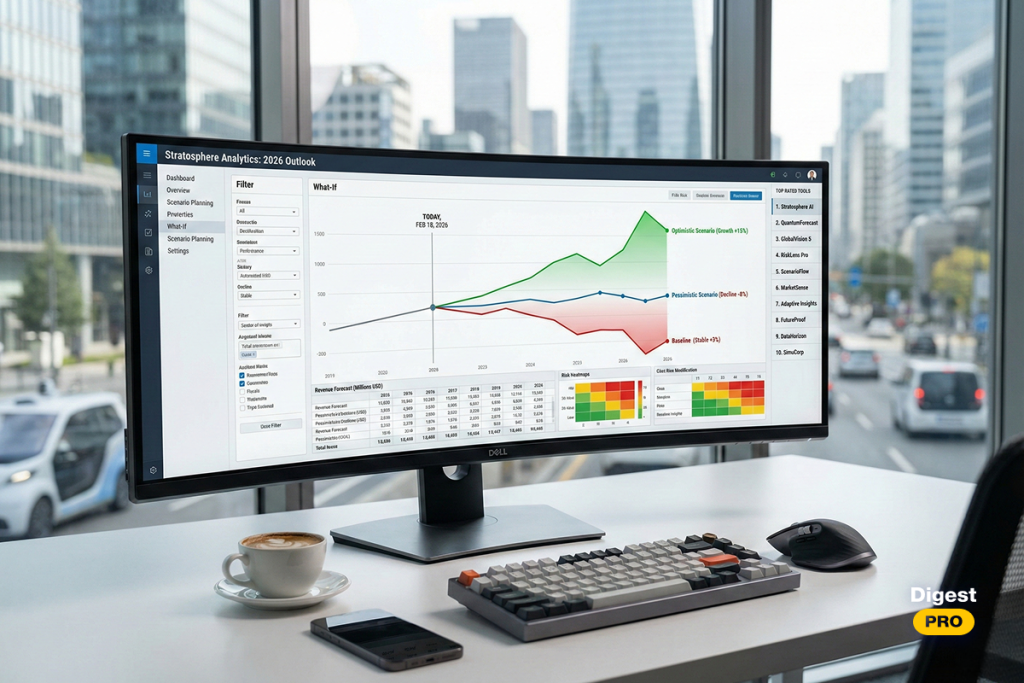
As of the year 2026, the fiscal environment is subject to persistent upheaval, which will require an extreme shift away from fixed forecasting practices toward fluid, agile, and dynamic forecasting capabilities.
Traditional forms of static budgeting have proven to be an extremely hazardous wager in an era of rapid AI-driven transformation of the marketplace due to their irrelevance and inability to sustain their effectiveness.
According to the latest Deloitte 2026 Global Software Outlook, AI-driven solutions are projected to represent 60% of the software market by 2030. A fundamental shift toward predictive intelligence that can process data volumes far larger than what humans can analyze is the driving force behind this explosive growth.
In this article, we will provide you with a comprehensive understanding of the best scenario planning tools and how to choose the perfect software to satisfy your business’s needs.
Key takeaways:
- Through scenario planning software, the market and its changes can be more effectively anticipated, with strategies kept flexible under harsh conditions.
- The newest technologies use artificial reasoning to unearth underlying threats and maximize the distribution of resources throughout sophisticated sets of multiple, interrelated projects.
- Bridging finance, human resources, and operations for unified decision-making, these tools offer an integrated truth.
- Sustainable business growth comes from digital modeling of strategic foresight that changes the unpredictable to the predictable and builds a business’s ability to adapt.
What Is Scenario Planning?
Scenario planning is a strategic tool for developing resilient long-term plans by uncovering potential future uncertainties. Unlike traditional forecasting, this approach takes into consideration a variety of possibilities, enabling managers to simulate their plans based on different changing market scenarios.
By doing so, managers develop tailored approaches, overcoming “analysis paralysis” and promoting a sense of enterprise-wide foresight. This cross-functional tool synchronizes resources in an organization with potential future challenges using high-quality data inputs. Advanced AI-powered scenario modeling software tools make this critical task more accurate than ever before.
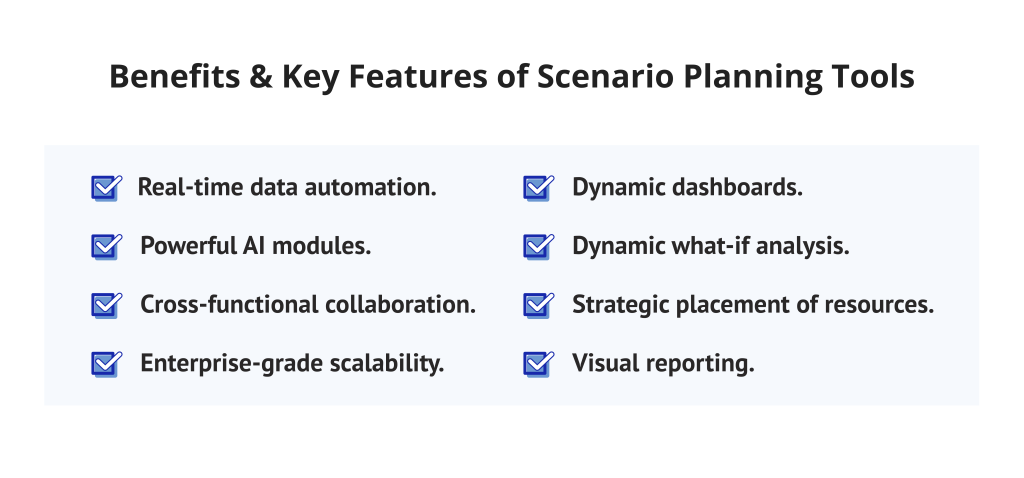
Benefits & Key Features of Scenario Planning Tools
Scenario planning tools are a competitive advantage for businesses in the 21st century. Competition in the market increases every day. By automating the most cumbersome tasks of the planning cycle, these tools turn raw data into a forward-looking strategy. They also offer the computing capabilities necessary to model intricate global market moves.
The most valuable aspects that come with the best scenario optimization tools:
- Real-time data automation: Stop updating spreadsheets manually and start gaining real insight in real time.
- Powerful AI modules: Identify intricate patterns and market anomalies that the human eye could not perceive.
- Cross-functional collaboration: Cross-align finance, HR, and operations in a unified system of record.
- Enterprise-grade scalability: High-performance processing of large-scale data sets that can handle global operations.
- Dynamic dashboards: Represent complex data through expressive, user-friendly task-management reporting experiences.
- Dynamic what-if analysis: Evaluate multiple variables at the same time to have instant results for any scenario.
- Strategic placement of resources: Place human and financial capital most efficiently in future states.
- Visual reporting: Take intricate data sets and turn them into easy-to-read charts that accelerate stakeholder approval.
Read more: Top 67 Startups in Germany to Watch 2026: AI, Unicorns & GreenTech Leaders
Top 10 Scenario Planning Tools in 2026
The market for scenario analysis software has matured significantly. We’ve reviewed some of the best solutions in terms of innovation, reliability, and overall user experience. The following are the world’s best practice strategic planning tools for 2026.
Comprehensive Comparison Table: Pricing, Deployment & AI Capabilities
Tool | Pricing | Deployment Options | AI Capabilities |
|---|---|---|---|
|
Epicflow |
Growth: €22.50/user/mo (annual); Enterprise: Custom quote | Cloud SaaS |
Multi-project management, predictive analytics, bottleneck detection, what-if scenarios, task prioritization |
|
Anaplan | Cloud SaaS |
PlanIQ predictive forecasting, generative AI CoPlanner, scenario modeling | |
|
Workday Adaptive Planning |
Starts ~$1,400/mo; varies by users/features | Cloud SaaS |
AI-powered insights, forecasting, what-if scenarios, and generative AI |
|
Vena Solutions |
Subscription; custom quote, no public tiers |
Cloud SaaS (Azure-integrated) |
Vena Copilot agentic AI, Insights analytics, scenario modeling |
|
Oracle Cloud EPM |
Custom enterprise quote | Cloud SaaS; hybrid options |
AI scenario planning, predictive modeling, driver-based forecasting |
|
Board |
Custom quote |
Cloud SaaS; on-prem/hybrid |
BEAM AI/ML forecasting, intelligent scenario insights |
|
Cube |
Usage-based; transparent tiers (details on request) |
Cloud SaaS |
ML anomaly detection, predictive analytics |
|
IBM Planning Analytics |
Custom quote |
Cloud; on-prem/hybrid |
AI forecasting, scenario analytics |
|
Jedox |
Custom quote |
Cloud; on-prem/hybrid |
Generative AI planning, advanced ML predictions |
|
SAP Integrated Business Planning |
Custom enterprise quote |
Cloud; on-prem/hybrid |
Predictive analytics, scenario optimization |
Read more: 15 Best Free ERP Software Reviewed in 2026
1. Epicflow
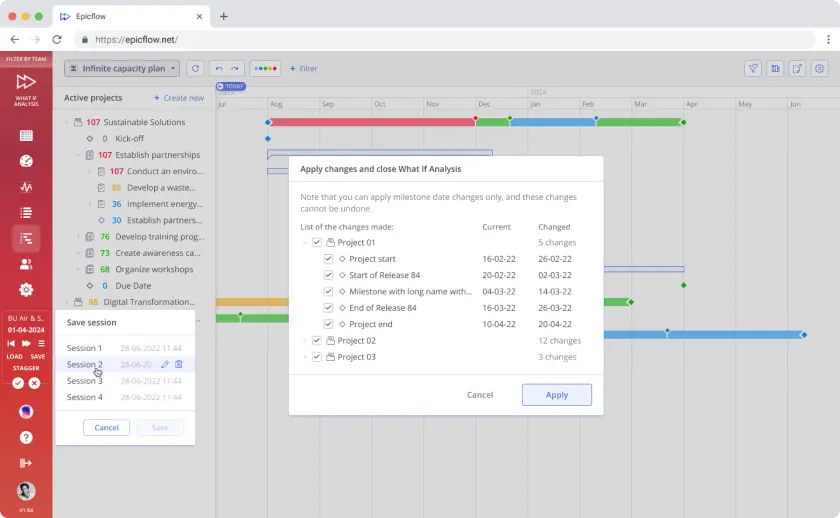
Epicflow is top-notch AI-based multi-project and resource management software developed for complex environments, such as aerospace and defense, heavy manufacturing, renewable energy, and large-scale IT engineering.
This tool is particularly good at handling the recurring issue of resource limitations that frequently cause big portfolios to go awry, as well as the complex balancing act between human resources and project schedules.
This software is unique compared to others in the field, as it is centered around the flow of work in the whole organization. Epicflow is seen as the single source of truth for various leaders who are handling multiple critical projects at the same time.
Best for: Large organizations and PMOs managing multiple concurrent projects with shared resources.
Key features:
- EPO (AI-driven portfolio optimiser): The world’s first AI engine that prioritizes your portfolio based on value per constrained hour, moving beyond arbitrary deadlines to focus on profit-optimised delivery.
- What-if analysis: Allows users to simulate new projects or resource changes to see their impact on the whole portfolio.
- AI assistant: A virtual AI project manager that provides proactive advice and identifies risks.
- Real-time bottleneck detection: Automatically spots constraints before they delay the pipeline.
- Future load graph & Capacity planning: Visualizes resource demand versus capacity for months or years ahead.
- Historical load graph: Analyzes past performance to improve future planning accuracy.
- Competence management: Tracks skills and availability to ensure the right person is on the right task.
- Pipeline management: Provides a high-level view of all active and planned work.
Pros:
- Exceptional at solving resource conflicts in multi-project environments.
- The AI Assistant provides actionable insights, not just data.
- Seamlessly integrates with Jira, MS Project, and Oracle.
- High visibility into future resource gaps.
Cons:
- May be overly complex for very small teams with single projects.
- Requires initial data discipline to yield the best results.
Pricing: Epicflow offers a Growth tier, best for growing teams, for €22.5/month, and a Custom tier with pricing tailored to the organization’s size and complexity. Interested users should contact their team for a demo.
Epicflow will help you prevent and overcome the challenges of modern project volatility. It provides a set of advanced tools, from managing multiple projects and resources to advanced scenario planning and a virtual AI project manager assistant. Don’t hesitate to schedule a call with Epicflow’s experts to learn more about Epicflow’s capabilities for overcoming the complexity and uncertainty of your strategic initiatives.
2. Anaplan
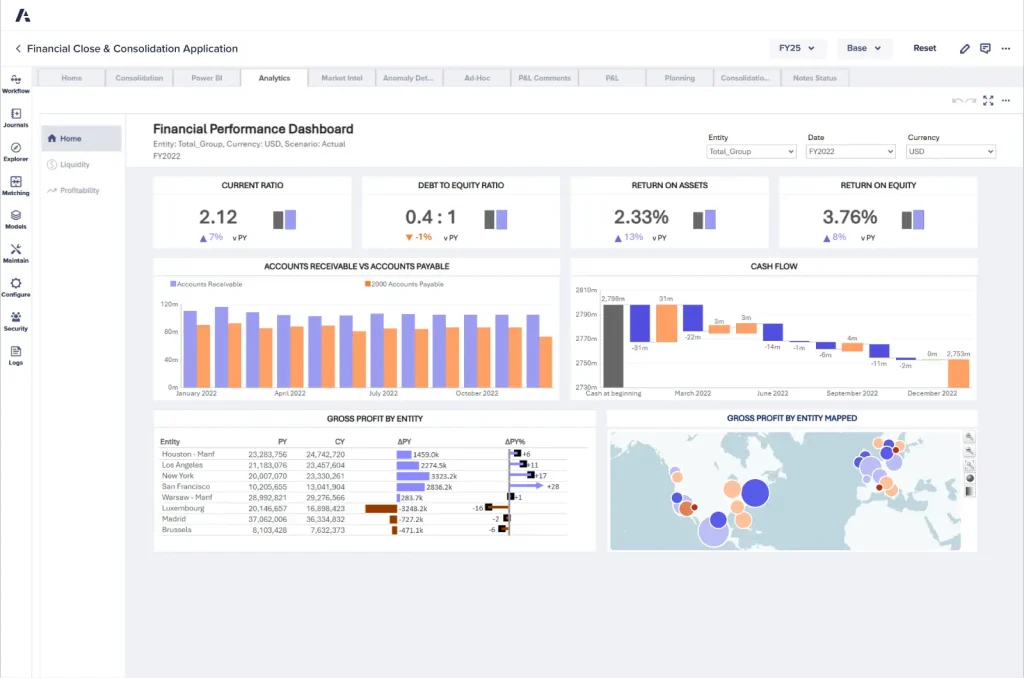
Anaplan is a big player in the world of scenario planning software. It employs its own “Hyperblock” technology to drive integrated planning across finance, sales, and supply chains. This enables huge data models to update in real-time as users make changes. For Fortune 500 companies that want deep, granular control, the choice is often Anaplan.
Best for: Big organizations with complex and competing companywide strategic initiatives.
Key features:
- Connected planning across silos.
- Proprietary Hyperblock calculation engine.
- Advanced predictive modeling capabilities.
- Highly customizable dashboards.
Pros:
- Incredible scalability for massive data sets.
- Highly flexible for various business models.
Cons:
- A huge number of options can distract.
- Long period of adaptation.
Pricing: Available upon request through their sales team.
Understanding the landscape of scenario planning tools is just the first step. Subscribe to Digest.Pro, we provide you with exclusive updates on trends and changes related to project management and AI to keep your organization agile and well-informed.
3. Workday Adaptive Planning
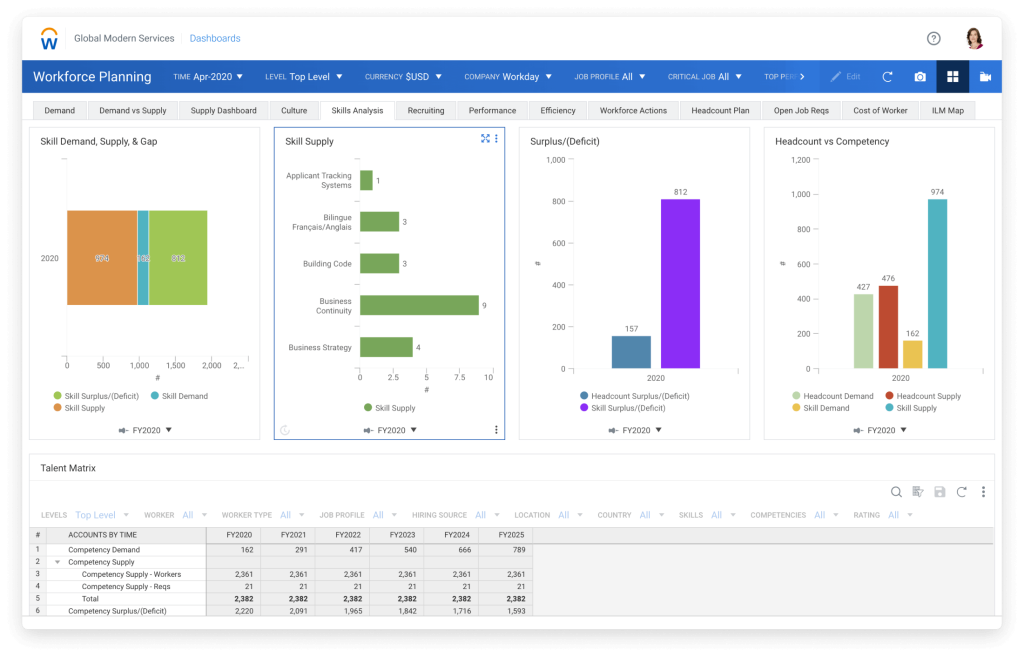
Should someone seek tools within FP&A, Workday Adaptive Planning stands out. Familiarity greets users accustomed to spreadsheets, thanks to its design approach. Existing Workday users find added value through seamless connections across systems.
Best for: Finance and HR teams looking for an intuitive, cloud-first planning experience.
Key features:
- Powerful “what-if” scenario modeling.
- Automated data integration from ERP and CRM.
- Self-service reporting for non-finance managers.
- Robust workforce modeling tools.
Pros:
- Very fast deployment compared to older EPMs.
- Excellent user adoption due to the intuitive UI.
- Strong collaboration features.
Cons:
- Can become sluggish with extremely complex calculations.
- Integration with non-Workday products can sometimes be tricky.
Pricing: Contact their experts to know the actual prices.
4. Vena Solutions
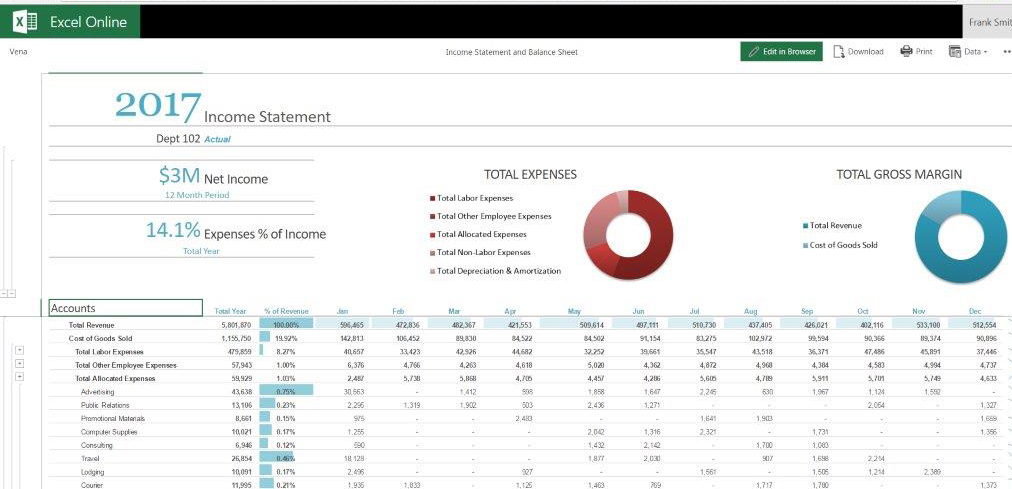
Vena Solutions bridges the gap between the flexibility of Excel and the power of a database. It uses Excel as its primary interface while managing data centrally in the cloud. This makes it one of the best scenario planning tools for teams that refuse to give up their spreadsheets. Additionally, it offers pre-built templates for common scenario planning analysis tasks.
Best for: Excel power users who need better version control and data integrity.
Key features:
- Native Excel interface with cloud-based data storage.
- Automated workflows and audit trails.
- Pre-built templates for scenario modeling software.
- Detailed variance analysis.
Pros:
- Minimal training is required for Excel experts.
- Fast time-to-value.
- Great version control features.
Cons:
- Limited by the inherent constraints of the Excel UI.
- Not as robust for non-financial resource management.
Pricing: Contact their experts to know the actual prices.
5. Oracle Cloud EPM
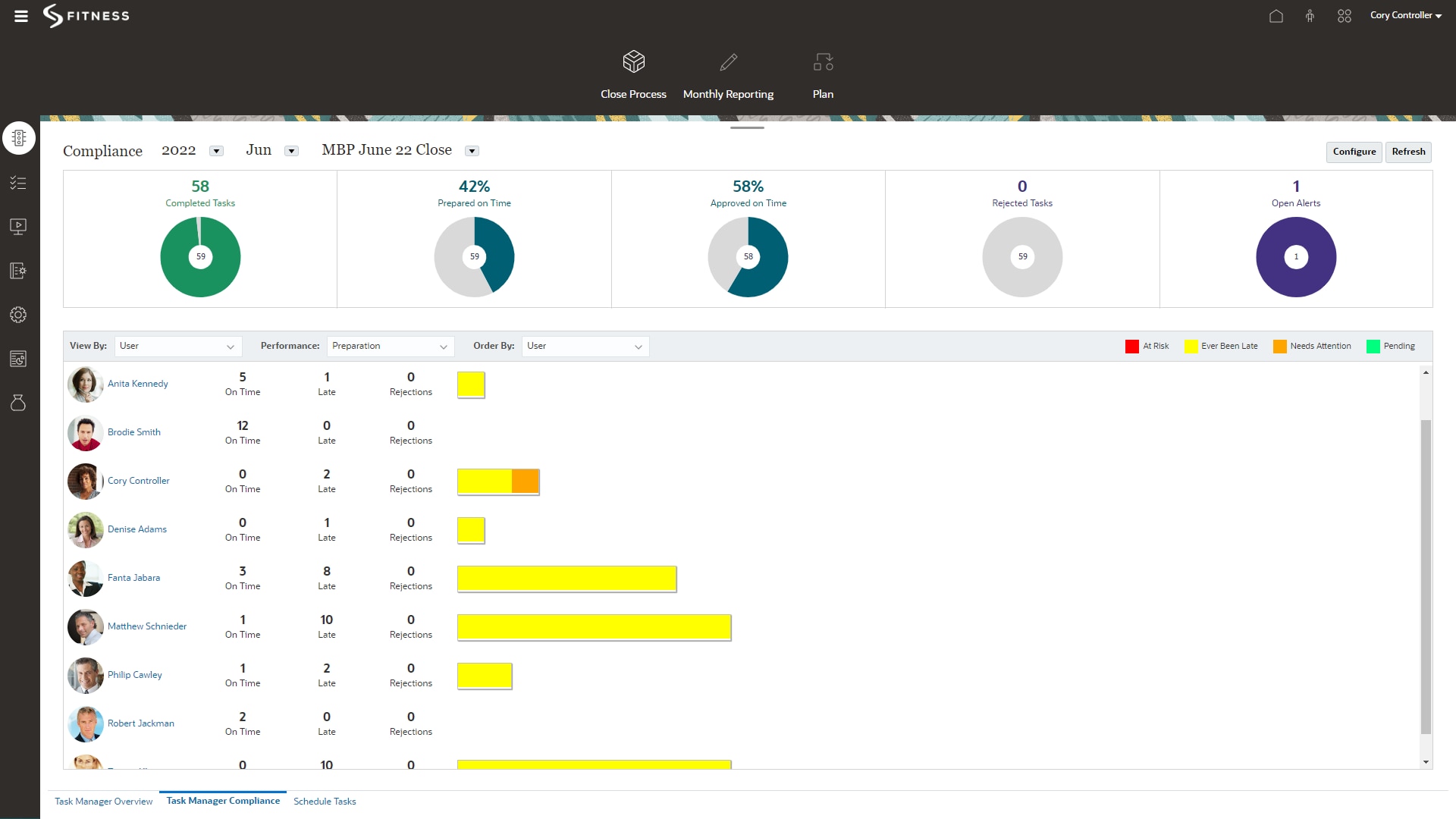
Oracle Cloud EPM is a comprehensive suite that covers every aspect of corporate performance management. It is built for the global stage, handling complex multi-currency and multi-entity scenarios with ease. The platform incorporates AI and machine learning at its core. Consequently, it can automate much of the scenario modeling software workflow.
Best for: Global corporations with complex reporting requirements and large IT budgets.
Key features:
- AI-powered predictive planning.
- Comprehensive financial close and consolidation.
Pros:
- A feature set that has no competition.
- Best-in-class security and compliance.
- Robust AI capabilities.
Cons:
- The cost of ownership is high.
- Implementation requires specialized consultants.
Pricing: Based on a modular structure and a per-user count, pricing is at the enterprise level.
Succeeding in today’s rapidly changing and intricate market landscape requires understanding these emerging patterns. For the most up-to-date information on project management and strategic agility, subscribe to Digest.Pro. We offer curated content that aids C-level executives in navigating through the fog of uncertainty and making decisions supported by data.
6. Board
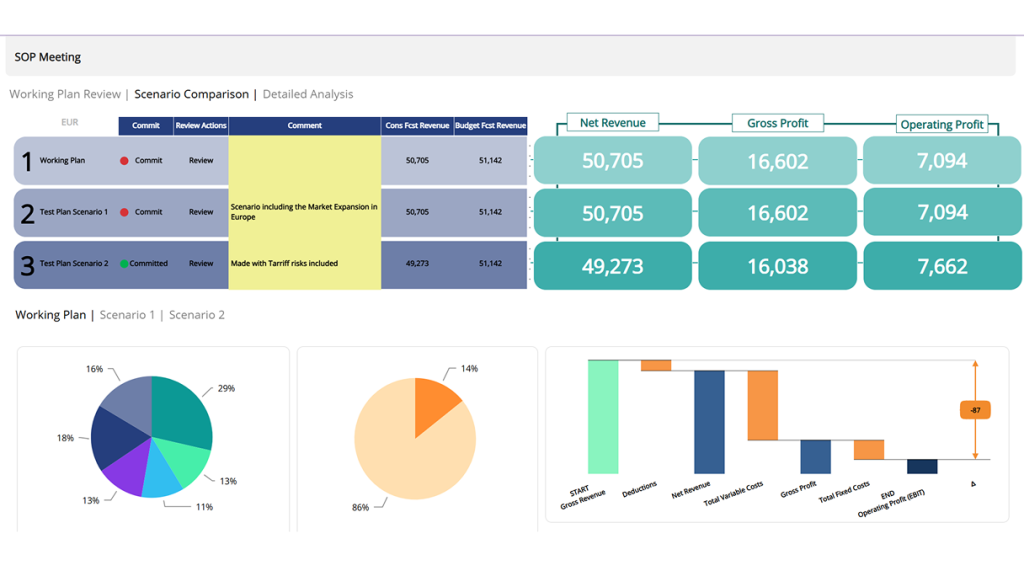
Board offers a unique combination of Business Intelligence (BI) and Corporate Performance Management (CPM). This integration allows users to move seamlessly from analyzing data to planning the next move. It is a highly visual tool that favors a “no-code” approach to model building.
Best for: Companies that want to combine BI dashboards with active strategic planning.
Key features:
- Simulation capabilities for scenario modeling software.
- Self-service data discovery.
Pros:
- All-in-one platform reduces software sprawl.
- Very strong visual reporting.
- Flexible enough for sales and operations planning.
Cons:
- The “all-in-one” nature can lead to complexity in configuration.
- Documentation can be lacking compared to larger vendors.
Pricing: Custom quotes based on deployment and features.
Read more: 15 Best ERP Software for Small Businesses Reviewed in 2026
7. Cube
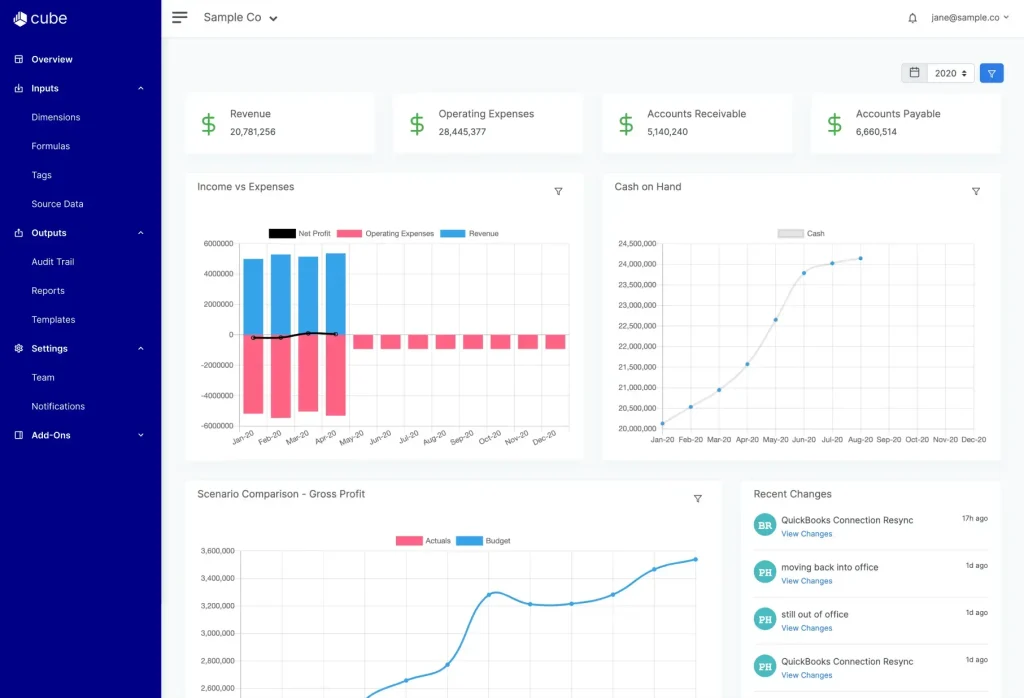
Cube is a relatively newer player that focuses on speed and simplicity. It targets the mid-market, offering a “headless” FP&A approach. Cube connects your source data to your existing spreadsheets, providing a layer of governance without changing your workflow.
Best for: Growing companies that need to professionalize their planning without complex enterprise software.
Key features:
- Lightweight scenario analysis software.
- Short implementation period.
Pros:
- Lower cost of entry than enterprise suites.
- Maintains the use of Google Sheets for collaboration.
- Responsive customer support.
Cons:
- Lacks the deep AI features of tools like Epicflow or Oracle.
- Not ideal for massive multinational consolidations.
Pricing: Tiered pricing plans starting for mid-market teams.
8. IBM Planning Analytics
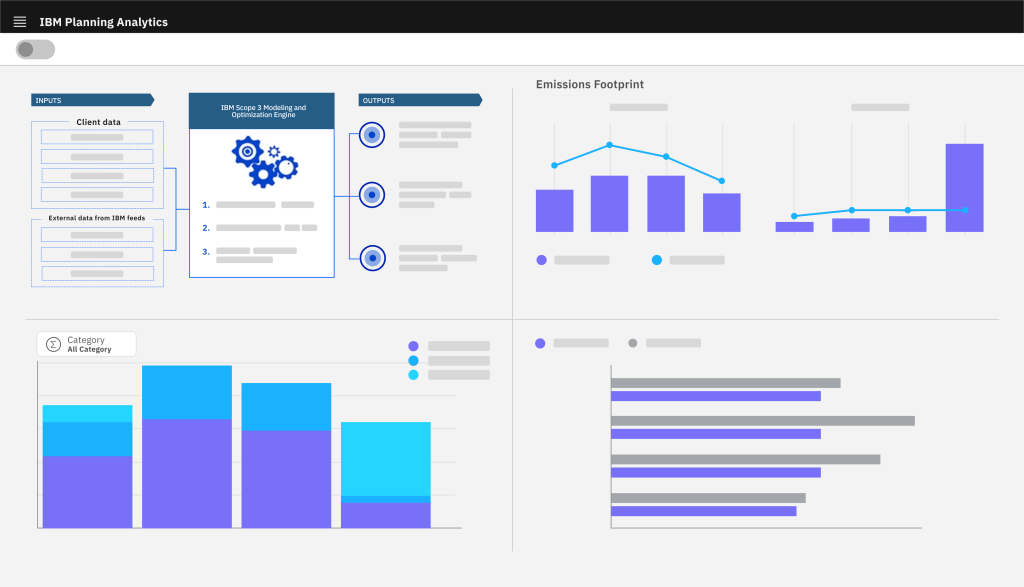
SAP IBP is the first choice among the giants of the manufacturing and retail industries. It is developed to cater to the purposes of supply chain scenario planning. It is effective in allowing companies to respond to the problems that arise due to the disruption of supplies and uncertainties.
Best for: Data scientists and analysts who need to process massive volumes of information.
Key features:
- IBM Watson AI integration.
- High-speed multidimensional calculation engine (TM1).
- Natural language processing for data queries.
- Flexible deployment (cloud or on-prem).
Pros:
- It is now unmatched in high performance with big datasets.
- Excellent for complex modeling.
- Strong AI forecasting capabilities.
Cons:
- Some parts of the user interface feel a little dated.
- Demands a very high degree of technical knowledge.
Pricing: Enterprise pricing tailored to usage and data volume.
9. Jedox
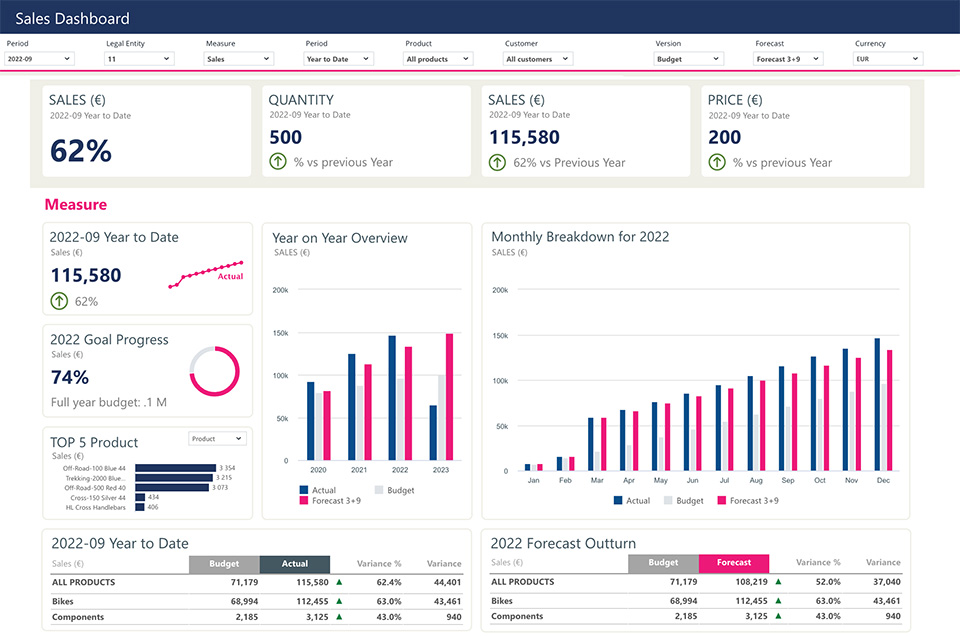
Jedox operates on a principle of user independence. Accessibility to planning tools extends across departments, reaching beyond financial specialists. Connection to MS Office happens seamlessly, enabling smooth data flow. A modeling space adapts easily to diverse needs. Within the system, artificial intelligence supports future estimates through targeted functions.
Best for: Organizations that want to decentralize the planning process across departments.
Key features:
- It’s easy to adopt the Excel-plus approach.
- AI-driven data preparation and forecasting.
- Global data modeling with timezone and currency.
- Power BI and Qlik Integration.
Pros:
- Very bendable, can be easily customized to any design.
- Strong on-premises or in the cloud.
- Well-balanced with good features, yet easy and enjoyable to use.
Cons:
- Less “out-of-the-box” functionality than competitors.
- Can get out of control if not controlled.
Pricing: Custom quotes based on user count and modules.
10. SAP Integrated Business Planning
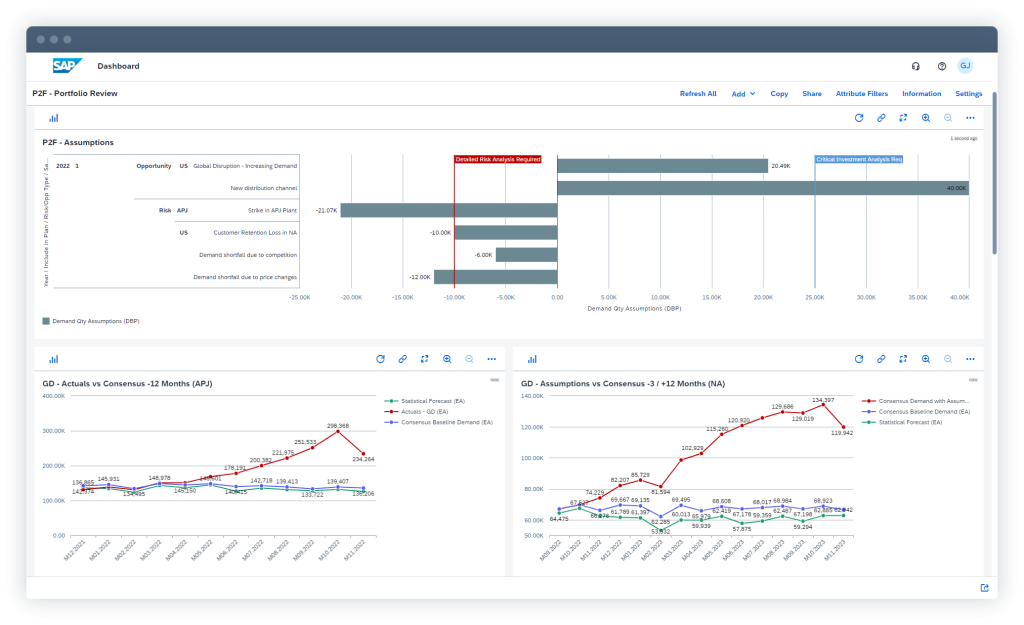
SAP Integrated Business Planning provides solid and flexible supply networks through the consolidation of demand, supply, and operational information in one integrated space. Instead of standalone systems, the embedded intelligence of the platform allows real-time testing of situations and automatic changes to the situation in case of unpredictable disruption.
Best for: Enterprises with complex supply chains already using the SAP ecosystem.
Key features:
- Demand sensing and optimization.
- Real-time supply chain monitoring.
Pros:
- Unrivaled integration with SAP ERP.
- Best-in-class supply chain modeling.
- Strong demand sensing capabilities.
Cons:
- Extremely high implementation costs.
- Challenging without an SAP footprint.
Pricing: Starter edition for €2,350, and it also offers 3 other tiers: for sales & operations, for demand, and for inventory.
How to Choose the Right Scenario Planning Tool: A Step-by-Step Guide
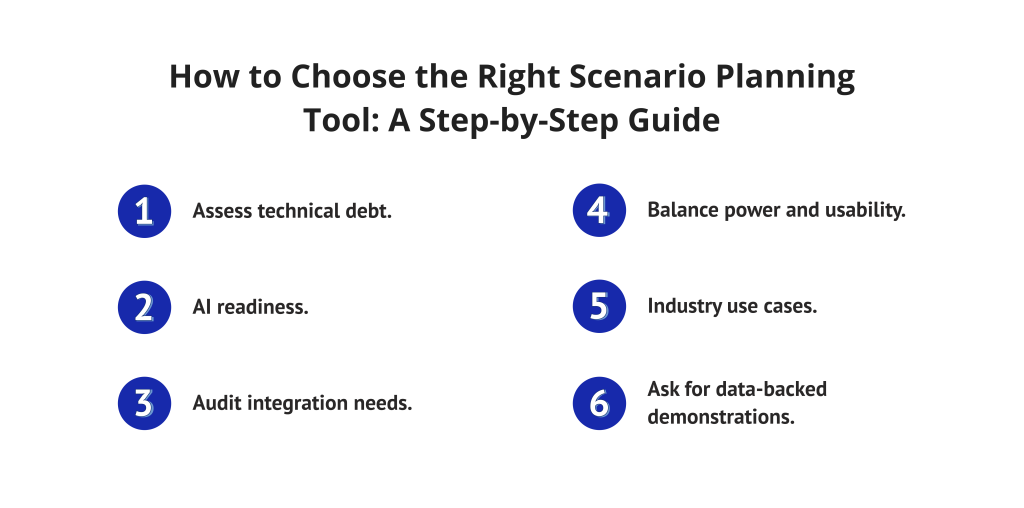
Selection of the appropriate software necessitates an in-depth understanding of what an organization needs. Check out the following steps to ensure that you pick appropriate software:
- Assess technical debt: Evaluate the existing dependence on legacy systems.
- AI readiness: It involves choosing a realistic level of AI integration that your team can adopt. Watson-level engines can be developed for a greater depth, but AI, such as Epicflow, can provide much more accessible and actionable assistance in managing resources.
- Audit integration needs: Determine all the vital sources of data. Identify all the relevant data sources and ensure the selected tool can integrate with the existing ERP, CRM, and HRIS systems to avoid isolated data.
- Balance power and usability: User experience has to be the priority so that there are high adoption rates. If a tool feels unwieldy, the team will fall back on inefficient processes they’ve abandoned before.
- Industry use cases: Get the tool that aligns with your operational needs. A manufacturing firm requires supply chain depth (SAP IBP), whereas resource optimization is vital for a professional services firm (Epicflow).
- Ask for data-backed demonstrations: Don’t just take generic sales pitches. Always ask for a demo using your individual data to see how your data is handled in complex real-world scenarios.
Read more: Top 51 Startups in Poland to Watch in 2026: Investment Executive Guide
Summary: 10 Best Scenario Planning Software Tools for 2026
2026 is a year that calls for a unique degree of strategic foresight like no other before it. Scenario planning is no longer a “nice-to-have” system component. Rather, it is a “must-have” element of any successful business strategy.
According to recent Gartner research, 50% of GenAI projects fail after proof of concept; scenario planning is vital to avoid budget black holes.
Using the most effective scenario planning tools can help recent converts turn uncertainty into opportunity. Good scenario planning provides you with the freedom of movement in a chaotic world.
Being a viable player in a rapidly evolving industry requires keeping up with the latest information available. Subscribe to Digest.Pro for current information related to strategic planning with AI through newsletters that contain valuable insights, articles, expert opinions, and the most pertinent statistics concerning current trends.
Our Methodology: How We Select The Best Scenario Planning Tools
This comprehensive guide is the result of very strict selections. We have concentrated on four major corners: functionality, integration, innovation, and user feedback. The team analyzed current market trends and assessed which would be the most important needs that C-level executives will face in 2026.
Our method makes sure that each tool on this scenario planning tools list gives leaders something worthwhile. We combined technical analysis with real-world case studies to validate the effectiveness of these platforms.
FAQ: Scenario Planning Software Tools
A scenario planning tool is software designed to model multiple future possibilities, enabling organizations to evaluate the potential impact of strategic decisions under varying conditions.
The scenario planning process includes:
1. Identifying focal issues.
2. Pinpointing key drivers.
3. Ranking uncertainties.
4. Developing narratives.
5. Evaluating strategic implications.
The widely used tools are SWOT analysis and PESTEL analysis, but scenario planning, benchmarking, gap analysis, and the balanced scorecard are also applied.
It is a strategic framework used to plot 2 key uncertainties against each other to create 4 different, yet reasonable, future environments.
The model comprises Company, Collaborators, Customers, Competitors, and Climate, thus offering a comprehensive 360-degree picture.
Some of the methods are trend impact analysis, morphological modeling, cross-impact analysis, and the Delphi method for creating strong and trustworthy simulations.
The 5 P’s, developed by Mintzberg, include dimensions such as Plan, Ploy, Pattern, Position, and Perspective.
Vena is the clear winner for deep Excel power users, with support for a fully integrated native spreadsheet interface.
Yes. Many of the leading systems offer pre-built connectors and APIs to allow data to be directly integrated from systems like SAP, Oracle, and Microsoft Dynamics.
The scenario planning process has become more automated, moving from manual forecasting to real-time prediction modeling through artificial intelligence. The system is able to instantly identify non-obvious risk factors and optimize resource flow.
References
- Gartner (2025). Magic Quadrant for Financial Planning Software.
- A. Ociepa-Kubicka (2017). Advantages of using enterprise resource planning systems (ERP) in the management process.
- R. Chopra, L. Sawant, D. Kodi, R. Terkar (2025). Utilization of ERP systems in the manufacturing industry for productivity improvement.
- Mahboob Al Bashar, Md Abu Taher, and Fatema Tuz Johura (2024). Challenges of ERP systems in the manufacturing sector: a comprehensive analysis.
- Cen Feng, Dhakir Abbas Ali (2024). Leveraging digital transformation and ERP for enhanced operational efficiency in manufacturing enterprises.
- Nguyen Van Thanh (2022). Designing an MCDM Model for Selection of an Optimal ERP Software in an Organization.
- Shaik Shafi Rizwan, G. J. Satish, and Vinayak N. Kulkarni (2025). A review on the impact of enterprise resource planning (ERP) implementation on manufacturing firms.
- Orłowska, Małgorzata (2023). SAP ERP software as a tool for managing the logistics subsystems of an enterprise.
- Büşra Dağci Yüksel, Filiz Ersöz (2024). Evaluation of ERP software selection criteria with fuzzy AHP approach: an application in the metal production enterprises in the aviation industry.
- Oliverio, Ma. Bernadeth M.; Panes, Devon Earl T.; Vinluan, Trinah Mae C.; Intal, Grace Lorraine; Balan, Ariel Kelly (2023). Business Process Reengineering And ERP System Implementation Plan For A Manufacturing Company: A Case Study.