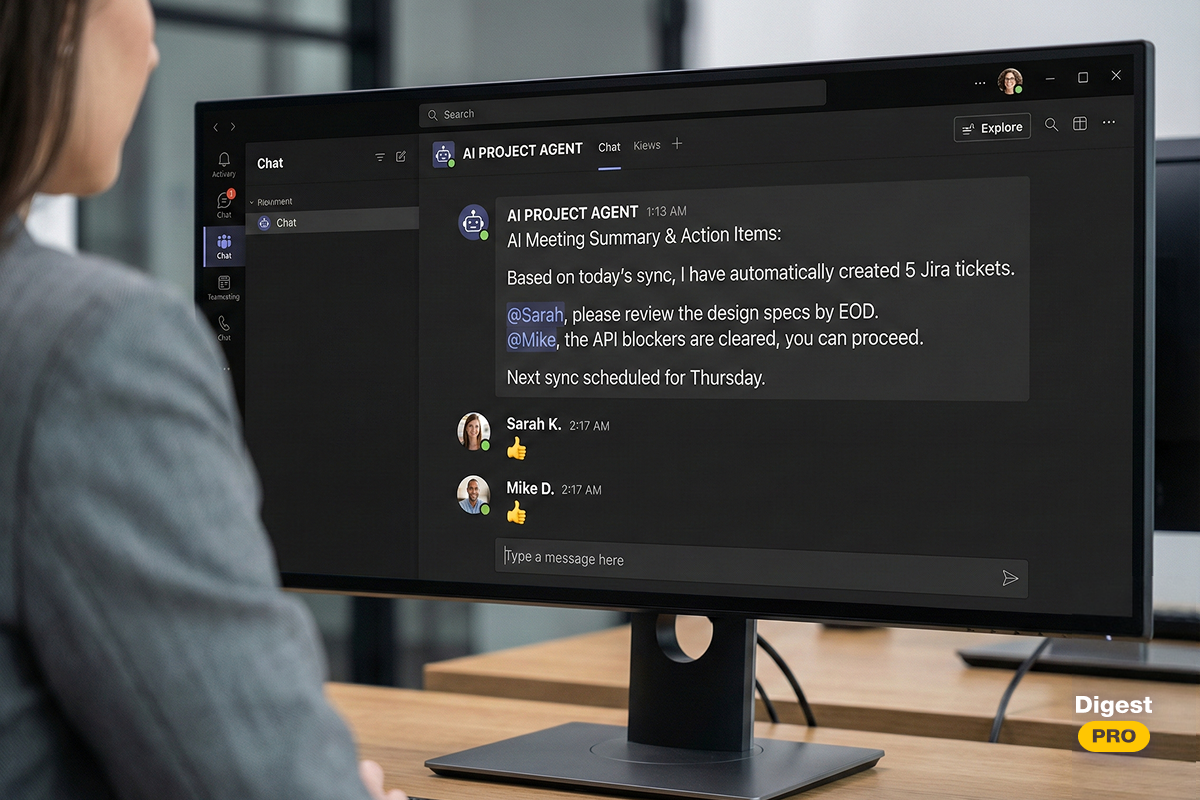
How do you maintain absolute control when your project portfolio scales beyond human capacity? In 2026, steering complex multi-project environments without intelligent guidance is like navigating a storm without a compass. Complexity grows daily. Manual tracking leads to missed dependencies and reactive firefighting instead of strategic leadership.
The “Agentic Era” offers a fundamental shift in handling this chaos. Analysts at Gartner Inc. predict a massive transition. By the close of 2026, 40% of enterprise applications will feature autonomous AI agents. This is a staggering jump from the 5% we see today.
This evolution is the primary differentiator for high-performing PMOs. According to PM Solutions’ State of the PMO 2025 research, 61% of high-performing PMOs use AI-powered practices to reach their goals.
In this guide, we will discover the true potential of these digital coworkers. We will identify the leading platforms for 2026. You will learn to harness these trends to safeguard your career.
What Are AI Agents?
An AI agent is not a simple chatbot. An AI agent is a program designed to monitor, understand, and take action based on its surroundings.
In contrast to traditional automation, AI agents will be able to conduct autonomous analyses of their surrounding environment to make decisions and provide solutions for themselves.
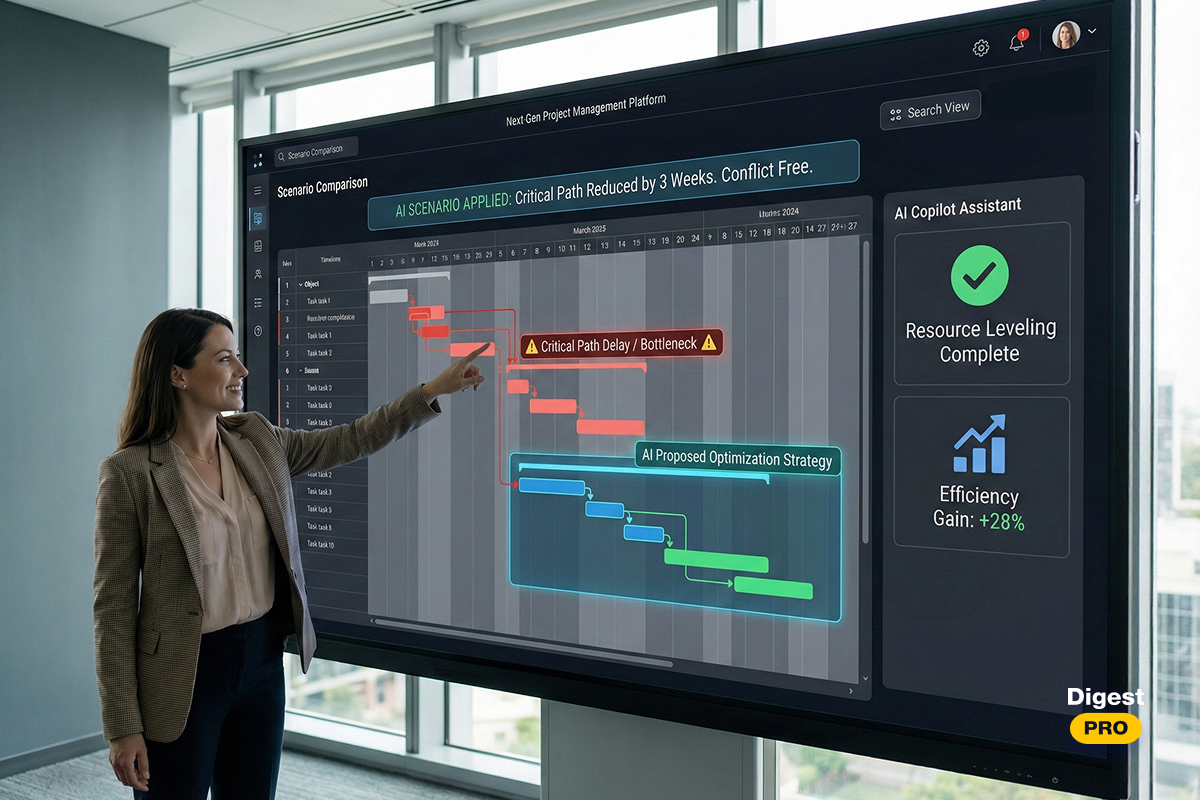
Artificial intelligence can help make a project manager’s job easier by being able to look over the project timeline and see where there may be problems with the resources needed for that specific project or possibly offer suggestions on how to fix those issues.
The AI project manager also has the capability of working on its own, without needing constant human support or supervision. Ultimately, they will create the foundation of productive working environments.
How AI Agents Are Transforming Project Management
The transformation is visible in how we handle data and manage complex workflows. AI agents are fundamentally shifting the management paradigm through:
- From data entry to data intelligence: Where traditionally management used to rely on manual entry, modern agents analyze historical velocity and real-time communication to predict future outcomes.
- Self-healing portfolios: Any time a single task or a developer is lagging behind, the agent himself recalculates automatically the impact for the whole portfolio and also alerts the stakeholders.
- Autonomous resource reshuffling: The agents themselves can either propose or carry out the reshuffling of resources to resolve bottlenecks, thereby drastically reducing human managers’ cognitive load.
Finally, in a best-case scenario by Gartner, agentic AI contributes to more than a third of revenue for application software within a company by 2035—in excess of $450 billion—from a mere 2% by 2025.
11 Best AI Agents for Project Management in 2026
The following list represents the best AI agents for project management available today. These tools were selected based on their autonomy, reasoning capabilities, and integration depth.
Best AI Agents for Project Management: 2026 Comparison Table
|
Agent |
Core Strength |
Starting Price (2026) |
|
Multi-project resource management software |
Custom/Tiered | |
|
Microsoft Copilot |
Ecosystem integration |
~$30/user/mo |
|
Atlassian Rovo |
Knowledge discovery |
~$20/user/mo |
|
Monday.com AI |
Custom workflows |
~€19/user/mo |
|
Asana AI |
Strategic alignment |
~€10,99/user/mo |
|
Notion AI Agent |
Knowledge retrieval |
~$20/user/mo |
|
ClickUp Brain |
Contextual Q&A |
~$18/user/mo (Add-on) |
|
Wrike AI |
Risk prediction |
~$10/user/mo |
|
Trello AI |
Visual automation |
~$10/user/mo |
|
Zia (Zoho) |
Diagnostic analysis |
~€40/user/mo |
|
Akira AI |
Autonomous execution |
~$25/user/mo |
1. Epica (by Epicflow)
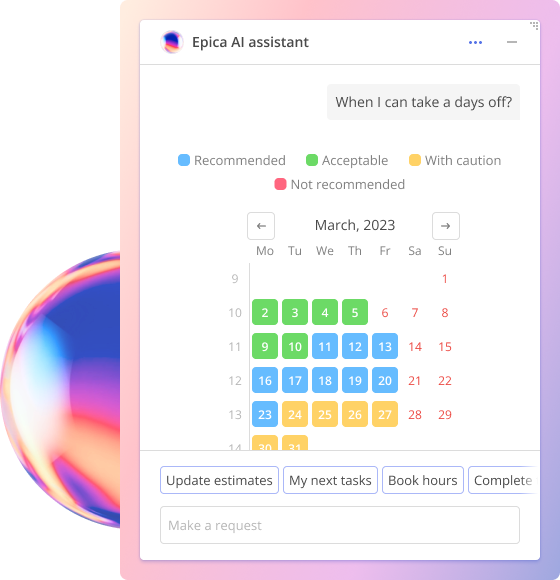
Epica is a unique AI assistant developed as part of the Epicflow ecosystem. It helps project managers to transform complex multi-project chaos into a predictable roadmap for success. This AI assistant frees the project managers from the drain of boring routine, allowing them to focus on high-level strategy and team leadership.
Additionally, Epica takes on the mathematical reality of resource efficiency and uses natural language processing (NLP). These functionalities simplify portfolio management and optimize business value across the entire organization.
Main Feature:Its core advantage is “Predictive Bottleneck Management” combined with dynamic capacity analysis. Epica detects risks, suggests workflow improvements, and alerts managers to potential overloads before they occur.
Pros:
- Unmatched visibility in multi-project environments.
- Interactive chat for instant updates.
- Prioritizes high-level data security for engineering-driven industries like aerospace and healthcare.
Cons:
- Requires clean data and alignment with Epicflow’s unique methodology to provide maximum predictive accuracy.
Software like Epica is essential for overcoming the complexity of multi-project environments. To see how these advanced capabilities can drive your specific portfolio to success, don’t hesitate to schedule a demo with Epicflow’s experts and experience the power of autonomous resource management firsthand.
2. Microsoft Copilot
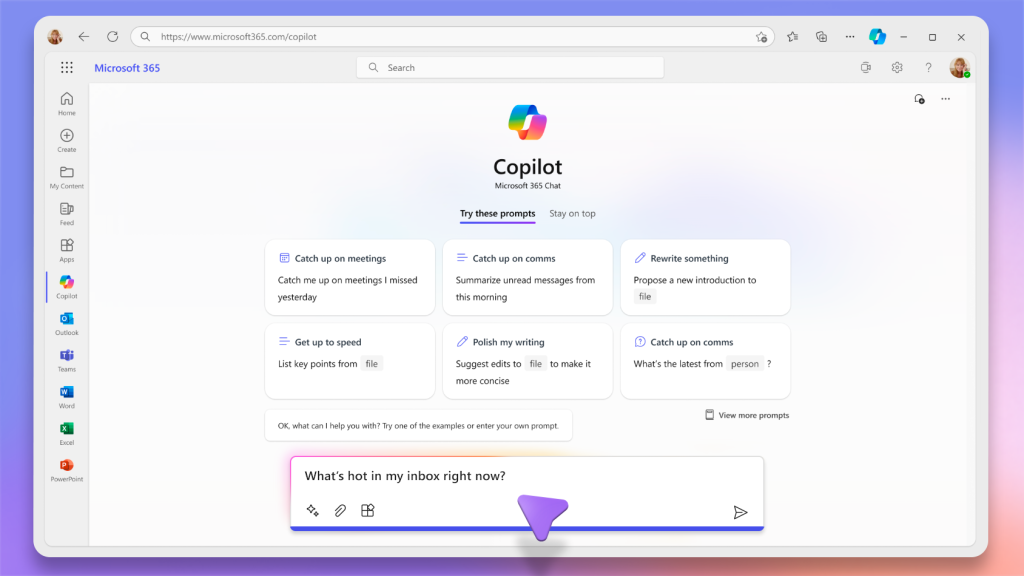
Microsoft Copilot is the most ubiquitous project manager AI agent in the corporate world. It utilizes “Work IQ” to bridge the gaps between Outlook, Teams, Excel, and Planner.
Main Feature: Its primary advantage is cross-app reasoning. It can draft a project update in Word by pulling data from a Teams meeting transcript and an Excel budget.
Pros:
- Built-in integration with Microsoft 365.
- Natural language interface with radical time savings in documentation.
Cons:
- It may be intimidating for smaller teams, and to get their full potential, they will need a complete Microsoft ecosystem.
3. Atlassian Rovo
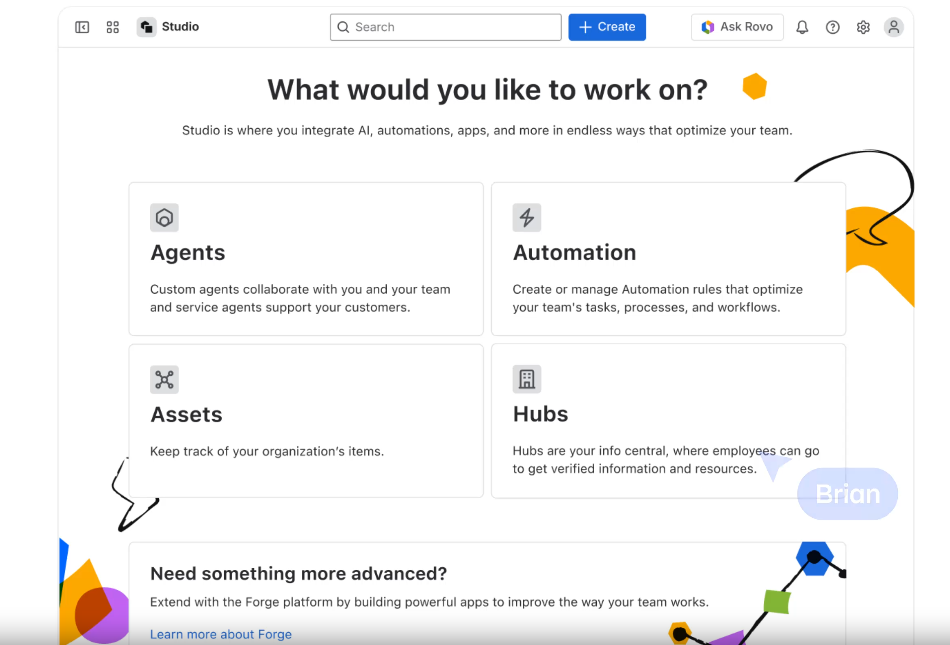
Released as a core part of the Jira ecosystem, Rovo is an agent designed for “knowledge discovery.” It uses the Teamwork Graph to find information across 20+ different third-party apps.
Main Feature: Rovo Agents can autonomously triage incoming Jira tickets. They categorize, prioritize, and even suggest the best developer for the job based on past performance.
Pros:
- Deep integration with Jira and Confluence.
- Custom agent builder (Rovo Studio).
- Exceptional search capabilities.
Cons:
- Pricing can add up for large teams.
- Requires significant setup for custom agents.
4. Monday.com AI
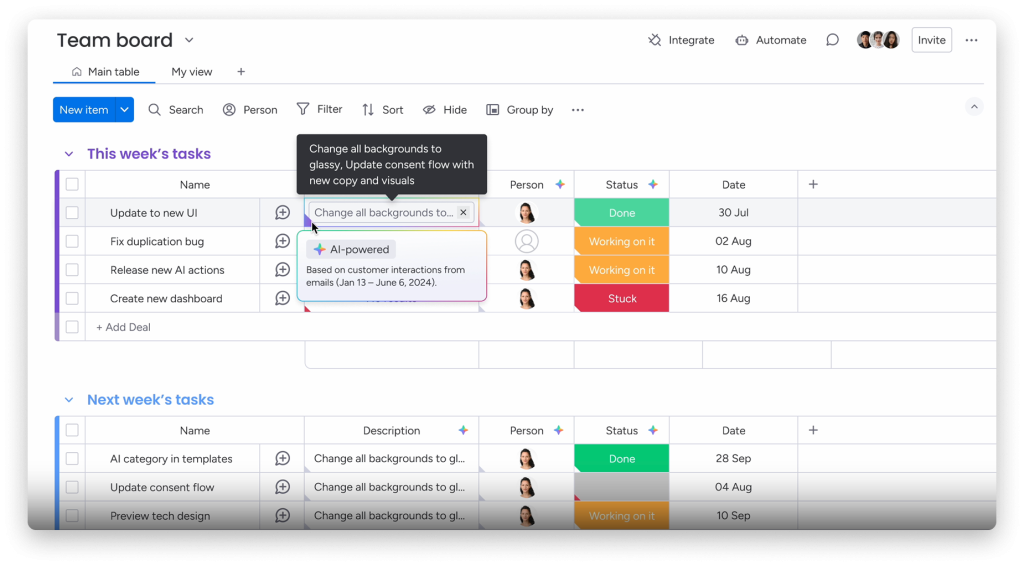
Monday.com is a versatile assistant designed to help plan and execute work across multiple projects in the portfolio. It allows teams to visualize the entire workflow pipeline and move quickly from high-level strategy to execution.
Main Feature: Its standout advantage is providing resource visibility across all projects while supporting proactive risk detection. This enables managers to balance workloads across the entire portfolio in real-time.
Pros:
- Perfect for marketing, design, and CRM software development with the feature of advanced risk detection.
- Also it has the capability of offering clear views on resources for all of your projects at any time.
Cons:
- The advanced AI features are only available in premium plans.
- Many of the basic tools require a paid subscription.
5. Asana AI
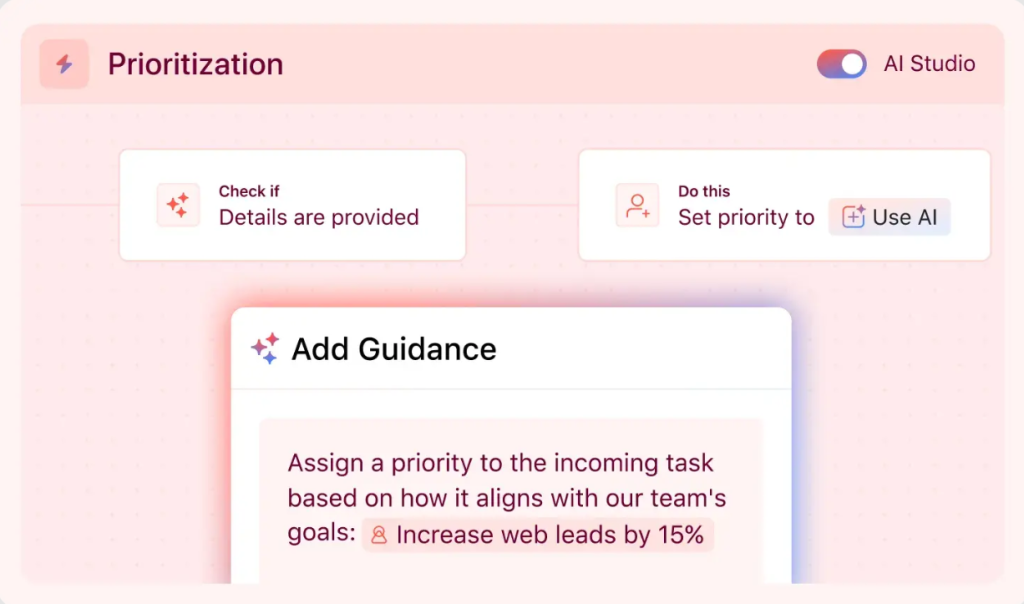
Asana focuses on “Strategic Teammates.” Their AI agent project manager logic is designed to ensure that daily tasks are always linked to high-level company goals.
Main Feature: The agent suggests task redistribution when it detects that an individual in a team is nearing burnout (“Smart Workloads”).
Pros:
- Focus on upper-level executives’ needs.
- Intuitive when balancing workloads.
- The mobile view provides a fantastic user experience.
Cons:
- The premium pricing is high.
- The larger subscription plans have the most robust features (e.g., AI capabilities), which can only be accessed by purchasing a higher-priced plan.
6. Notion AI Agent
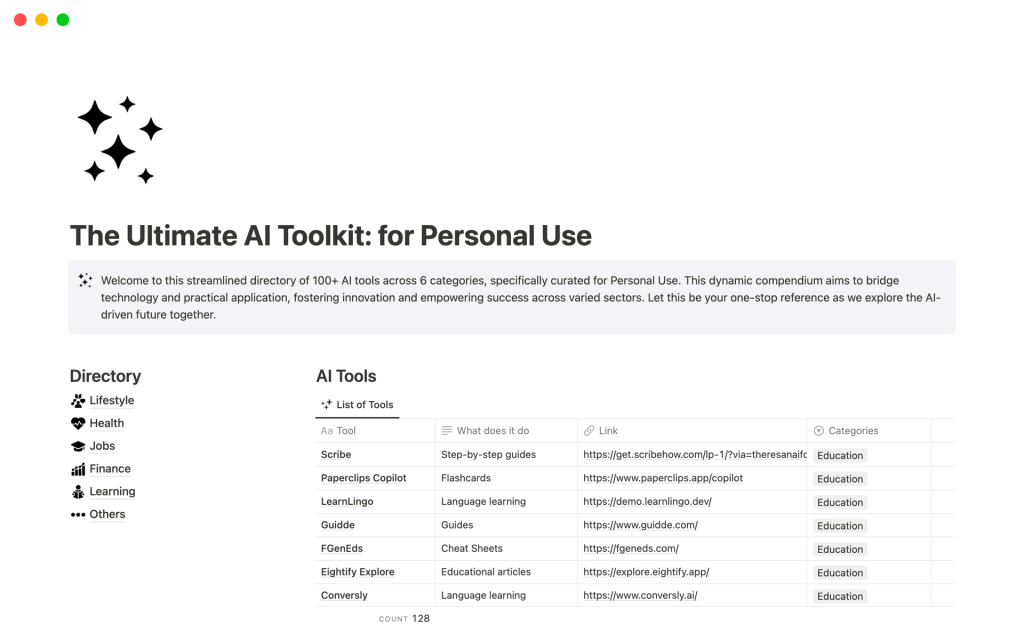
Notion has evolved from a note-taking app into a powerful knowledge agent. It uses the Model Context Protocol (MCP) to interact with external apps like Slack and GitHub.
Main Feature: It excels at “connective reasoning.” It can summarize a messy three-day Slack conversation and instantly turn it into a structured project spec document.
Pros:
- Best-in-class knowledge management, very fast search, and seamless writing assistance.
Cons:
- Not a dedicated “hard” project management tool (lacks native Gantt/resource depth).
- Can feel disorganized without strict headers.
7. ClickUp Brain
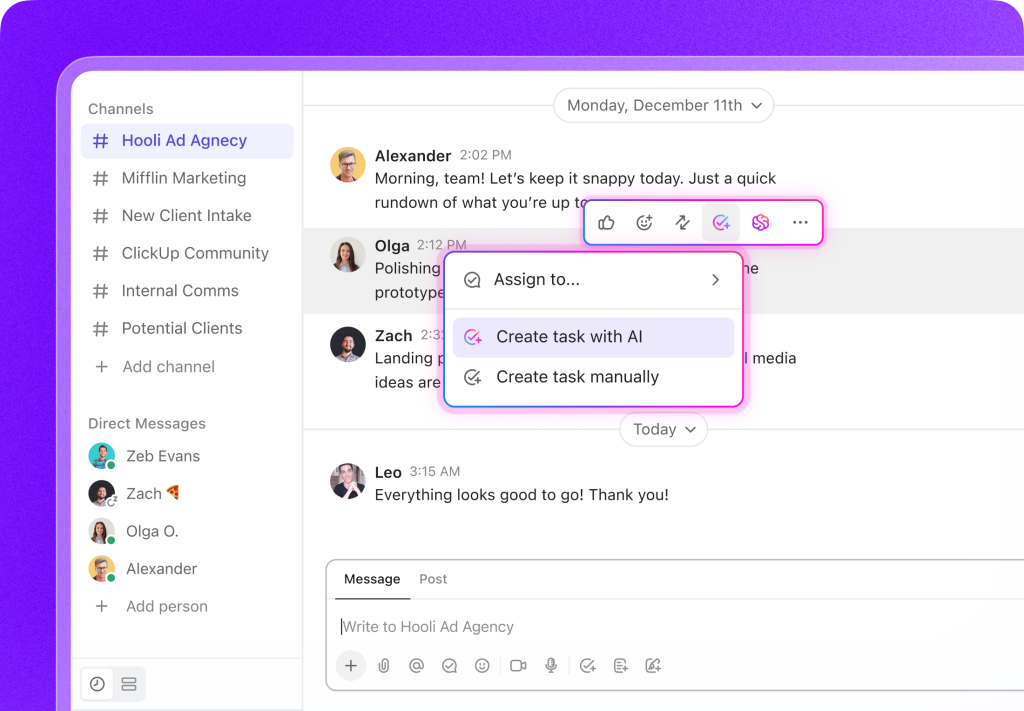
ClickUp Brain is a centralized neural network for your entire workspace. It acts as a 24/7 assistant that knows everything about your tasks, docs, and goals.
Main Feature: The “Contextual Q&A” is its greatest strength. You can ask, “Who is responsible for the delayed API docs?” and it will find the answer instantly across all folders.
Pros:
- Affordable add-on price.
- Comprehensive feature set.
- Reduces the need for “status check” meetings.
Cons:
- The UI can feel cluttered.
- The AI occasionally struggles with very large, complex datasets.
8. Wrike Work Intelligence
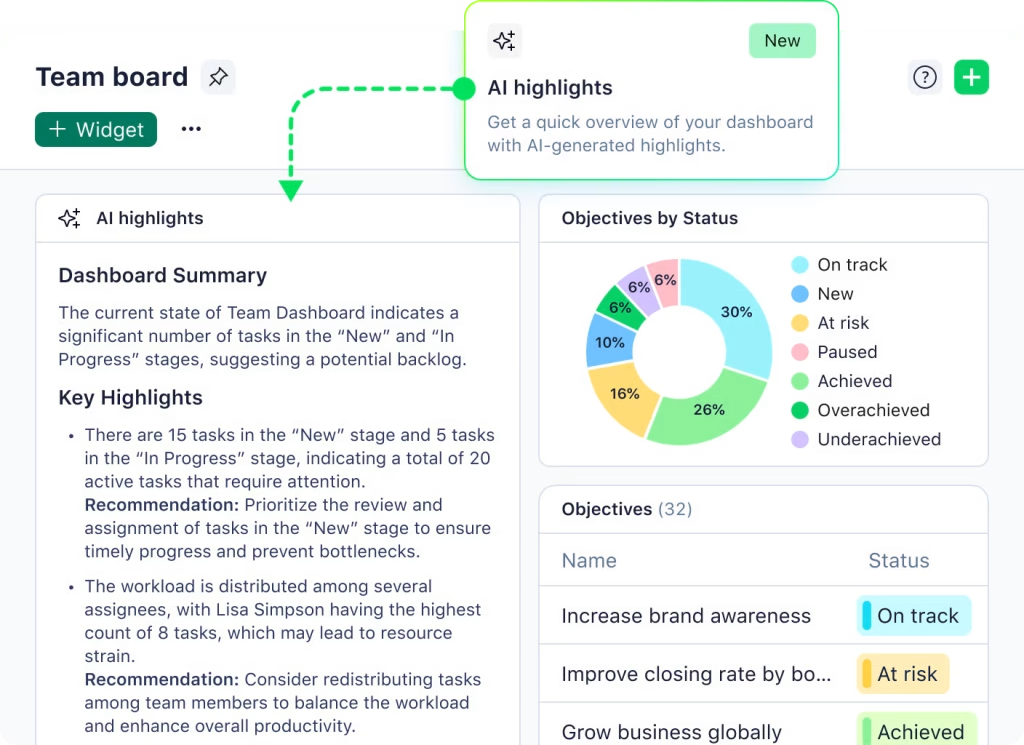
Wrike is built for the enterprise, and its AI reflects that. It focuses on “predictive risk modeling” to keep large-scale portfolios on track.
Main Feature: Its competitive edge is “Project risk prediction.” The agent assigns a risk score to every project based on historical delays and current team velocity.
Pros:
- Robust governance features.
- Excellent for complex marketing and creative teams.
- Accurate forecasting.
Cons:
- The interface feels more “corporate” and less modern.
- Setup is time-consuming for smaller squads.
9. Trello AI
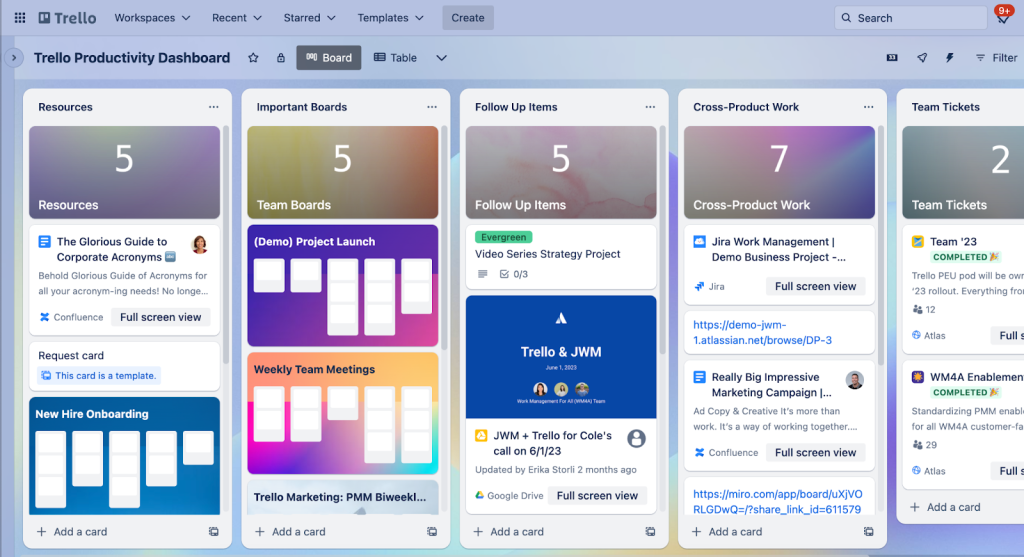
Trello’s AI is powered by Atlassian Intelligence but remains focused on the visual Kanban experience. It is a good starting point for teams new to AI agents in project management.
Main Feature: The “Board Strategy Builder” is a major time-saver. An individual describes their project in text form, and the AI creates the entire structure of the board, the varieties of lists, and the initial set of tasks.
Pros:
- User-friendly.
- Fit for small, visual projects.
- Free tier availability.
Cons:
- Lacks the “reasoning” depth.
- Limited multi-project resource views.
10. Zia (by Zoho)
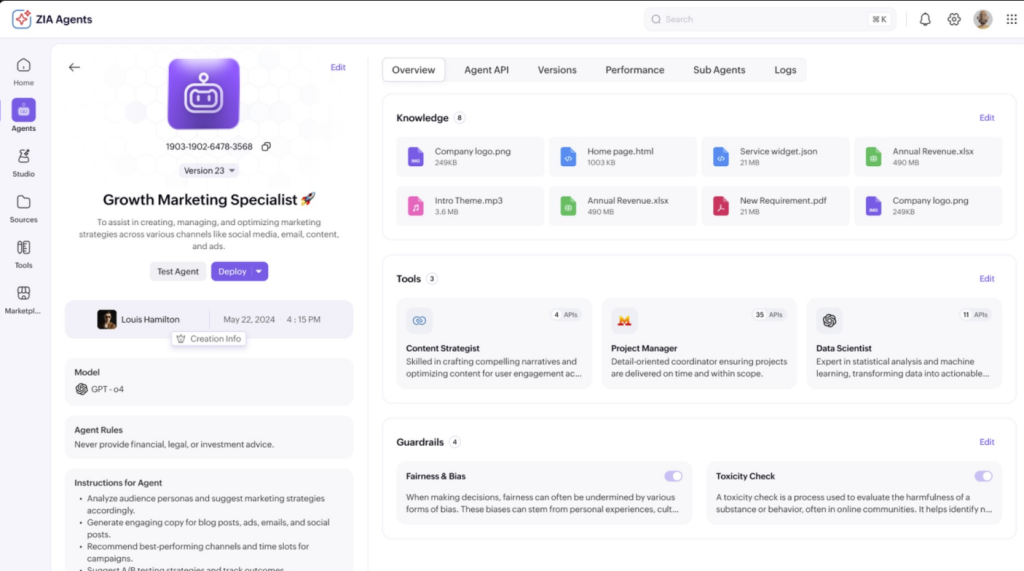
Zia is the resident AI for the Zoho ecosystem. It functions as a “Diagnostic Analyst” that looks for anomalies in project data.
Main Feature:Zia’s strength lies in budget and variance analysis. It can identify a budget leak or a resource overspend before the finance department even notices.
Pros:
- Ideal for organizations using Zoho CRM.
- Excellent data analysis.
Cons:
- Difficulty connecting with non-Zoho products.
- AI logic can exhibit rigidity at times.
11. Akira AI
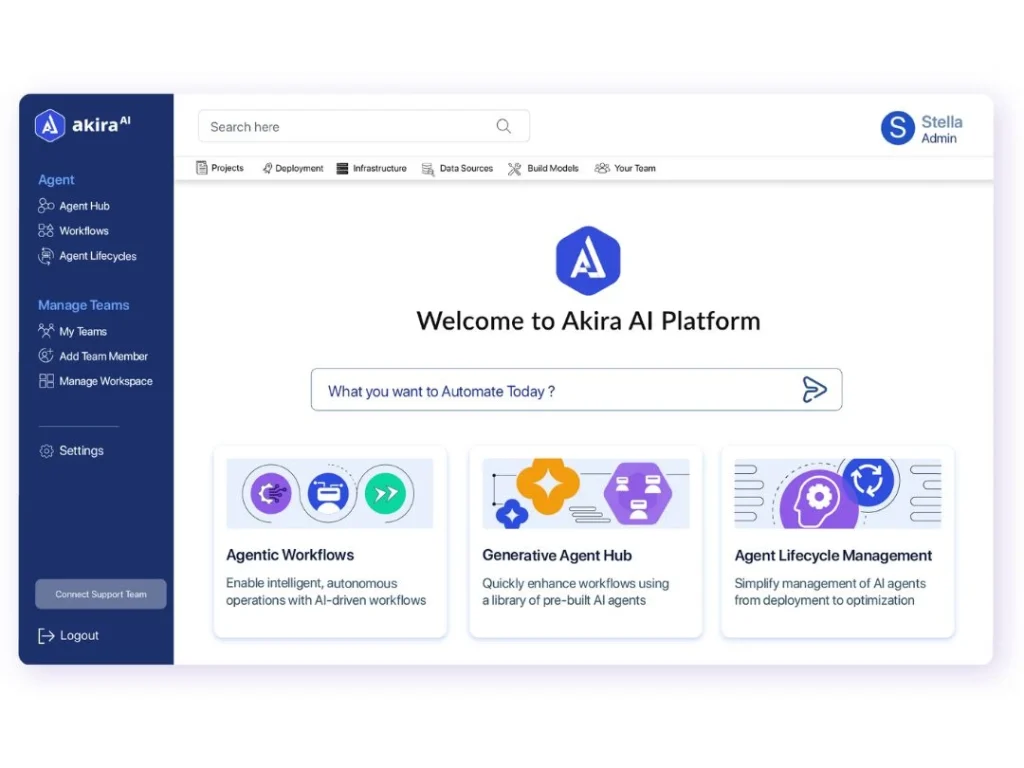
Akira is a “sovereign” agent designed for high-intensity tech projects. It is built to operate in “Pilot Mode,” where it actively manages the project for you.
Main Feature: “Autonomous Task Allocation” is its primary advantage. So, when a team member becomes unavailable or has a blocker, Akira can automatically transfer that person’s task to the next qualified person.
Pros:
- Fully self-sufficient and reduces the need for user management.
- Scalable usage-based pricing.
Cons:
- Recently introduced into the marketplace.
- Requires a great deal of confidence in artificial intelligence to make the right decisions.
The selection of the agent is just the beginning; domination of the advanced capabilities of Epica and Rovo tools, among others, defines a Tier A PM in 2026. To dive deeper into advanced AI frameworks and get exclusive optimization tips, sign up for our Digest.pro. Be part of a community of forward-thinking leaders who receive the latest project management strategies every week.
Read more: How to Build AI Agents Step-by-Step Guide
Key Benefits of Using AI Agents for Project Managers
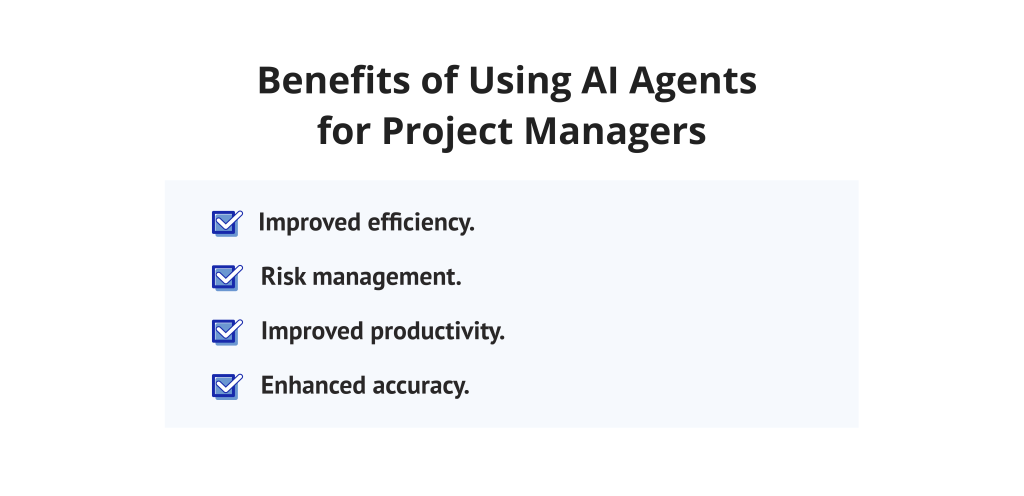
The adoption of AI agents in project management trends in 2026 shows that the role of the PM is shifting from “administrator” to “leader.” Here are the core benefits.
1. Improved efficiency
AI applications take on the manual tasks of managing projects at a corner office. By delegating these administrative functions to machines, management can focus on developing new products, stimulating good management practices and creating an environment where employees can thrive.
2. Risk management
An AI agent project manager doesn’t get tired and doesn’t miss details. It can scan thousands of data points to find a single missing dependency. This proactive risk detection saves companies millions in delayed launches.
3. Improved productivity
Automation helps keep your team working in a “flow state” by automating the triage of tasks and retrieval of information. For example, when someone on the team has to search for a document, they won’t spend twenty minutes searching; instead, the agent will find it in seconds.
4. Enhanced accuracy
The majority of the time, project managers are responsible for the successful delivery of their project. However, there will always still be a great deal of room for mistakes and misunderstandings. Moreover, an AI provides all project participants with access to the same data that informs their decisions, and the data is consistently updated in real-time; therefore, AI systems will significantly reduce project failures caused by human error.
Read more: Enterprise AI Adoption Barriers in 2026: Why Most Enterprises Get Stuck with Digital Transformation
Real Examples of AI Agent Usage in Projects
1. Software Development Projects
AI excels in multi-project developer environments where teams juggle simultaneous sprints. Bottlenecks like unexpected bugs often slow one project down. AI agents automatically scan resource availability across all active projects. They propose optimal reassignments to prevent cascade delays. This maintains sprint velocity and frees project managers from manual monitoring.
2. Marketing Campaigns
Global marketing involves designers, content creators, and localization teams across various time zones. AI project management agents detect single-point delays, such as late copy blocking social assets. The system dynamically reorders task sequences to maintain continuous momentum. Then, it prioritizes parallel tracks while creative assets finalize. This ensures that the workflow never fully stalls.
3. Healthcare Projects
Healthcare organizations often operate multiple initiatives simultaneously. These include implementing tracking systems and training new staff. AI agents monitor staffing needs against clinical staff schedules. Moreover, the system identifies if a specialist is scheduled for patient care and training at once. It proactively suggests alternative staffing rotations to maintain timelines without compromising patient services.
Selecting the Right AI Agent Framework for Your Project
To effectively select an appropriate AI agent for use within the management of your project, consider these key factors based on your knowledge of the agent’s capabilities.
- Ease of use: If your team has little or no technical understanding, a complex agent such as Akira may not perform as expected.
- Integration with existing tools: Your AI agent must be able to “see” your data. Copilot is the best AI tool to choose if you are using the Microsoft 365 suite of products.
- Data security: Since AI requires access to sensitive data, you should verify that your selected tool complies with enterprise-class security standards and that it meets all regional data privacy laws.
- Complexity: With simple projects, there is no need for the “what-if” simulation capabilities of AI. Invest in high-complexity tools like Epica if you manage multi-layered resource pools.
- Scalability and performance: Choose a tool that can grow with you. Many “niche” agents struggle when a project grows from 10 users to 1,000.
Trends in AI Agents for Project Management 2026
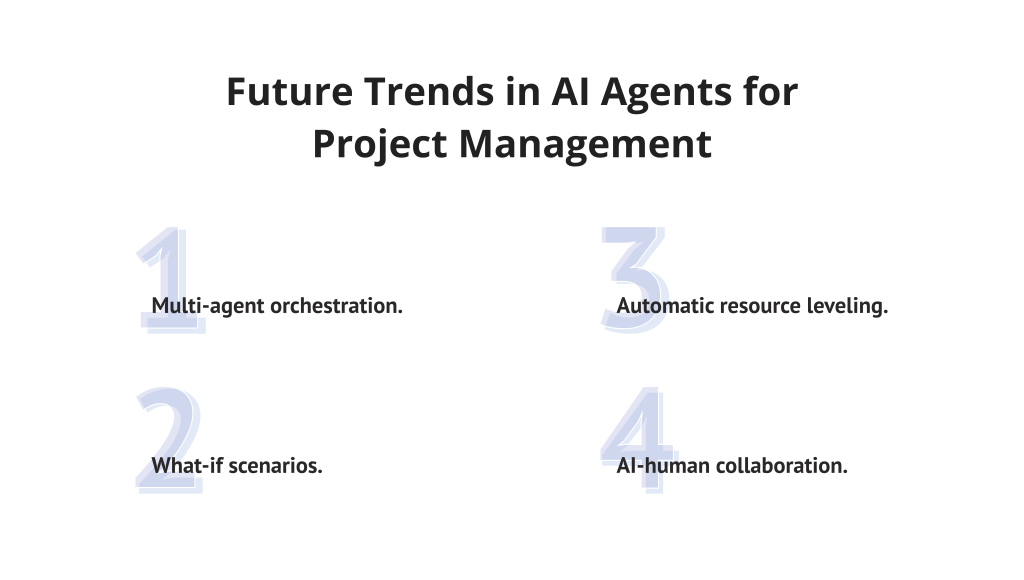
As we look toward 2027 and beyond, several AI agent project management trends from 2026 are already becoming mainstream.
1. Multi-agent orchestration
We are moving away from having one “big” AI. Instead, we will use “swarms” of small agents. One agent will handle scheduling, another will handle code reviews, and a “manager agent” will coordinate them all.
2. What-If scenarios
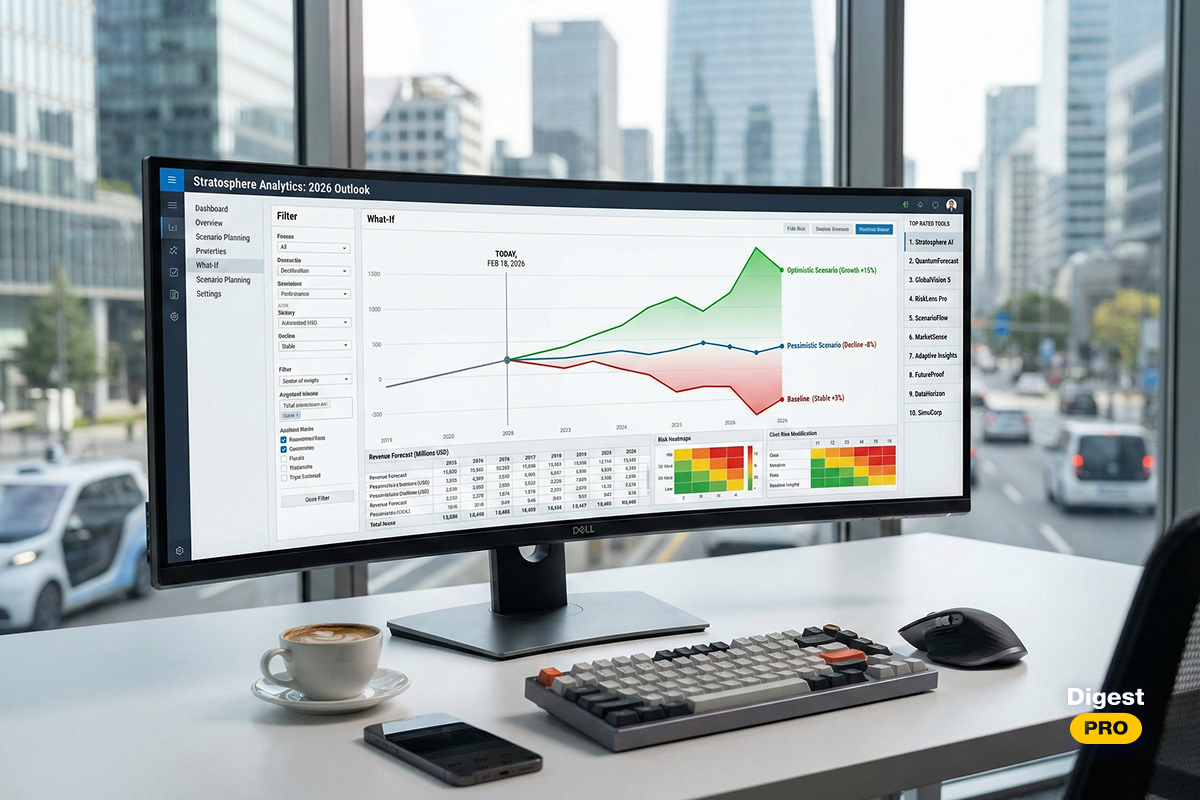
Advanced agents are becoming better at “time travel.” They can simulate 1,000 different versions of a project’s future to find the one with the highest probability of success.
3. Automatic resource leveling
In the future, “bench time” will be eliminated. AI agents will perfectly match the skills of the workforce to the needs of the pipeline in real-time, ensuring maximum utilization without burnout.
4. AI-Human collaboration
The best AI agents for project managementwill move away from being “tools” and become “teammates”. Indeed, we will see AI agents attending meetings as active participants, taking notes, and even offering verbal suggestions during brainstorming sessions.
Read more: Best Change Management Tools in 2026: Features, Use Cases & How to Choose the Right Software.
Our Methodology
We analyzed 50+ AI agents for project management by considering their key competencies, advantages, and key features as described in the entire article.
The best AI agents for project management have been chosen after taking into consideration the capabilities of AI project managers in real-world AI agents, Epica’s multi-project resource optimization, Copilot’s integration capabilities, Rovo’s discovery capabilities, and Wrike’s prediction capabilities, in conjunction with the real-world trade-offs of time, cost, and complexity. These 11 tools represent the top AI agents for project management in 2026.
Conclusion
Firms seek an advantage over their competition in the current marketplace and cannot simply choose to adopt AI agents as they have done in the past.
AI agent tools provide a way for companies to gain unprecedented scale and speed compared to traditional management systems, including both Epica’s strategic capabilities and Copilot’s ability to integrate multiple ecosystems into a single cohesive system.
Regardless of which use case you choose, you should utilize AI for the benefit of your organization by allowing it to manage the complex, thereby allowing you to focus your energy on managing the humans that work for you.
While AI will continue to eliminate the administrative burden of project management, remaining informed on how to effectively leverage the agents is your greatest competitive advantage. Subscribe to our Digest.pro for a steady stream of expert advice on navigating the Agentic Era and maximizing your team’s output. Let us do the research so you can drive your business to success.
FAQs
1. What is an AI agent for project management?
An artificial intelligence (AI) agent is an independent/self-directing digital program that provides support for managing projects. An AI agent for project management will include functionalities such as planning, execution, and optimization of activities in a project. An AI agent differs from automation in that it makes its own decisions using context and logic.
2. How do AI agents help project managers?
AI agents eliminate manual data entry, provide comprehensive risk insights, and free project managers for high-level leadership roles.
3. What are some examples of AI agents in project management?
Epica from Epicflow is a perfect example of an AI agent for project management. It monitors the status of several projects in your portfolio, finds workflow bottlenecks, and notifies you. Its primary objective is to assist businesses in optimizing portfolio performance by simplifying complicated portfolio and resource management.
4. How do I choose the right AI agent framework for my project?
Focus on your team’s specific pain points. If your issue is resource clashes, choose a tool with high mathematical maturity like Epica. If it’s communication silos, look at Notion AIor Copilot.
5. What are the best AI agents for project management?
The current market leaders are Epica and Microsoft Copilot. Each serves a different niche, from general corporate productivity to deep mathematical resource optimization.
6. How can AI agents streamline task management and scheduling?
The plans employed by AI agents are termed “self-healing” plans, and they allow for the automatic recalculation of critical paths and dependencies the instant a delay crops up.
7. What role do AI agents play in improving team collaboration?
These agents summarize communication threads while connecting tools like Epicflow to high-level documentation. They ensure that all parties are in sync by converting complex information into actionable business intelligence for the whole team.
8. How do AI project managers adapt to industry-specific challenges?
The AI system uses domain-specific learning to adapt to such constraints as weather in construction and compliance requirements in healthcare. This is the specialized “Work IQ” that enables the system to offer relevant solutions depending on the constraints of that world.
9. What would have been used before AI agents?
Prior to the existence of AI agents, resource leveling was done through static software or even spreadsheets, where data entry had to be done constantly in order to be even remotely accurate.
10. What to look for in AI agents for project management?
Look for AI agents for project managementthat exhibit a high autonomy and problem-solving capacity for performing complex logic operations automatically. Also make sure that it is interoperable with your current tools and offers high-security measures.