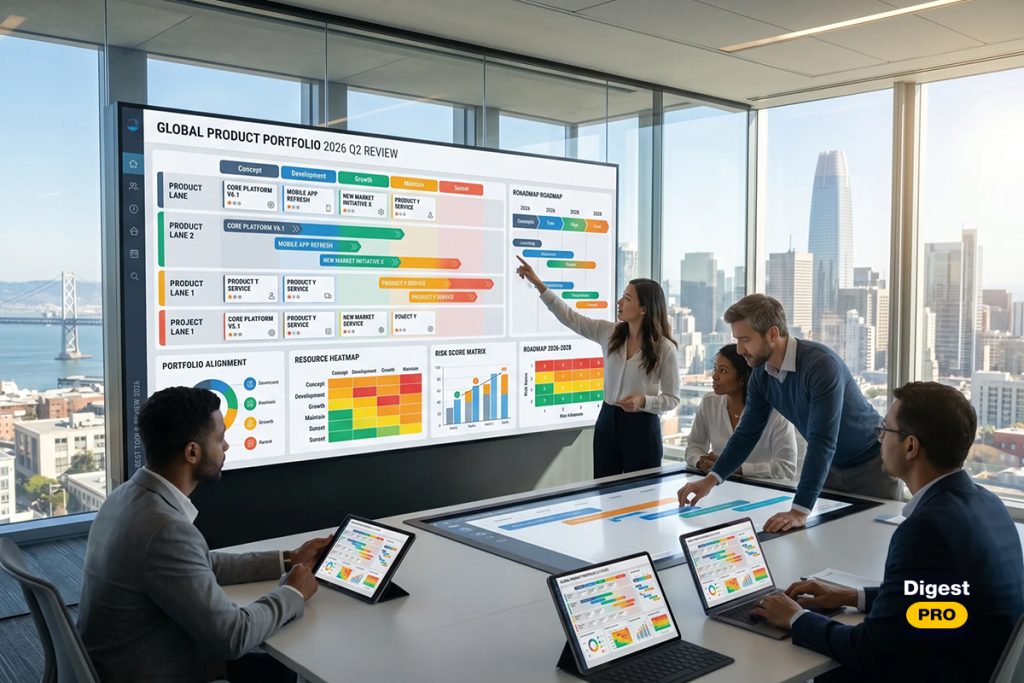
You have five products in development. Three are behind schedule. Two teams are fighting over the same engineers. And your executive board wants a strategic update by Friday.
This is what everyday life looks like when you have to manage a large portfolio of products. It’s almost impossible to do without the appropriate tools.
This is why the need for product portfolio management software has only been increasing. Companies that operate with spreadsheets and email communications lack transparency, are too slow with decision-making, and cannot collaborate effectively. Modern portfolio management tools fix all these issues.
The landscape of 2026 is more competitive than ever, and these tools have also become more sophisticated. Machine learning algorithms, interactive dashboards, and advanced resource management features are now a given.
In this article, we’ll look at the top 9 product portfolio management software options for 2026, their main features, advantages, disadvantages, and price range, and see which tool is a perfect match for your company.
What Is Product Portfolio Management Software?
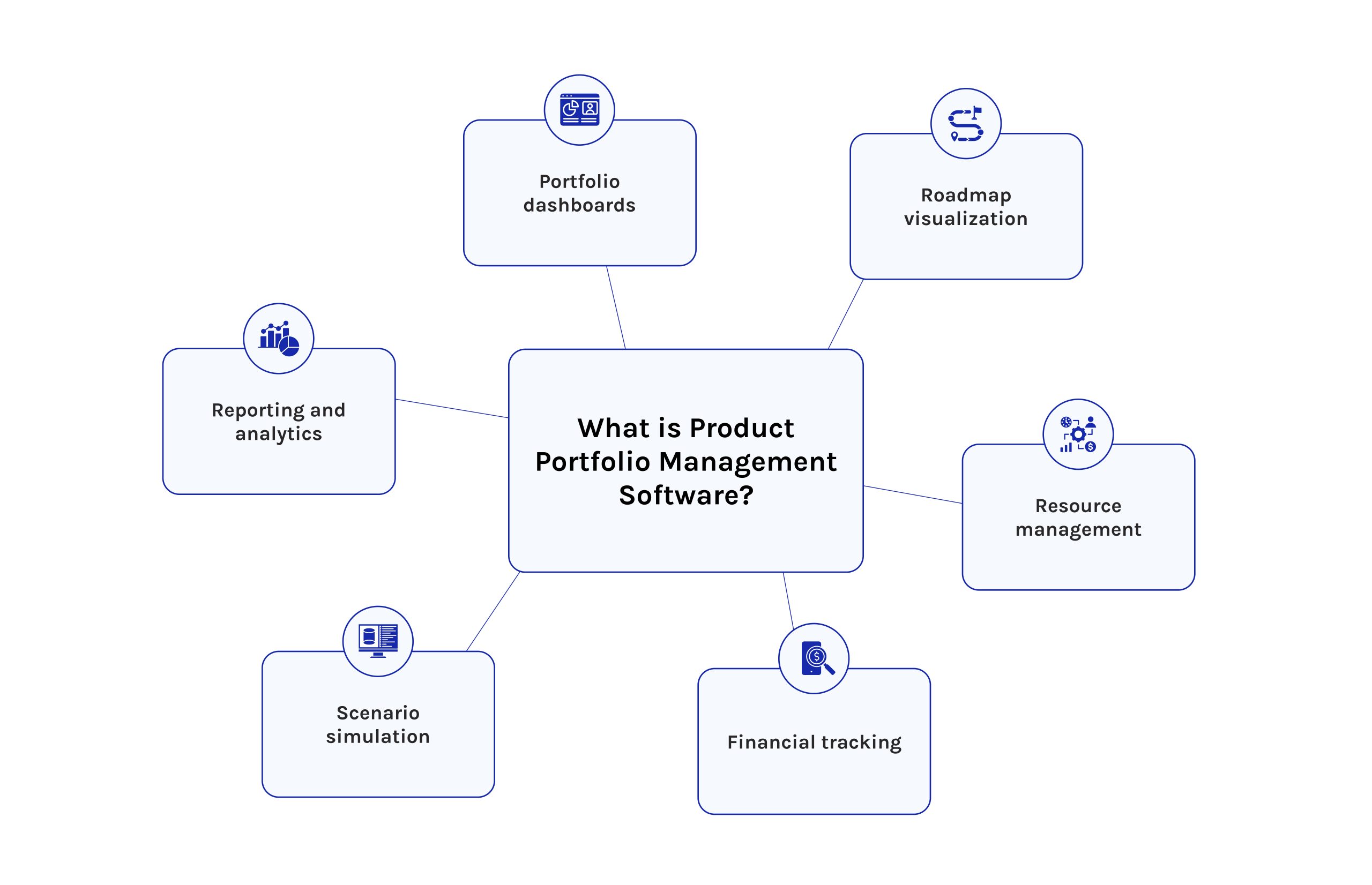
Using product portfolio management program allows businesses to define, prioritize, manage, and enhance their list of products. From strategic-level objectives to tactical execution, these applications provide users with visibility of the type of products they have, how well each one is performing and how much of their resources should be allocated to them.
These tools answer strategic questions that single-product views simply can’t. Which products drive the most value? Which ones deserve further investment? Where is the portfolio overexposed to risk?
In essence, product portfolio management software is the command center for product-focused organizations.
Portfolio Management vs. Product Management
Quick Comparison: Top 9 Product Portfolio Management Tools
|
Tool |
Best For |
Pricing |
G2 Rating |
|
Epicflow |
Resource & multi-project management in complex environments |
Starting at €22.5/user/month |
5.0/5 (users highlight high value for money) |
|
Planisware Enterprise |
Enterprise PPM, portfolio planning, and risk management |
Custom |
3.9/5 |
|
Planview Portfolios |
Strategic portfolio management and adaptive planning |
Custom |
|
|
Smartsheet |
Collaborative work management with spreadsheet-like interface |
Pro: $9/user/month; Business: $19/user/month |
4.4/5 |
|
Craft.io |
Starts at $19/user/month |
4.5/5 |
|
|
Businessmap |
Kanban and scaling agile for business operations |
Custom; from €7.40/user/month |
4.0/5 |
|
Asana |
Team task and project tracking |
Free to $10.99/user/month (Premium) |
4.4/5 |
|
Triskell Software |
PPM for strategy execution and OKRs |
Custom |
4.4/5 |
|
Quickbase |
Low-code app building for custom workflows |
From $35/user/month |
4.5/5 |
6 Key Benefits of Product Portfolio Management Tools
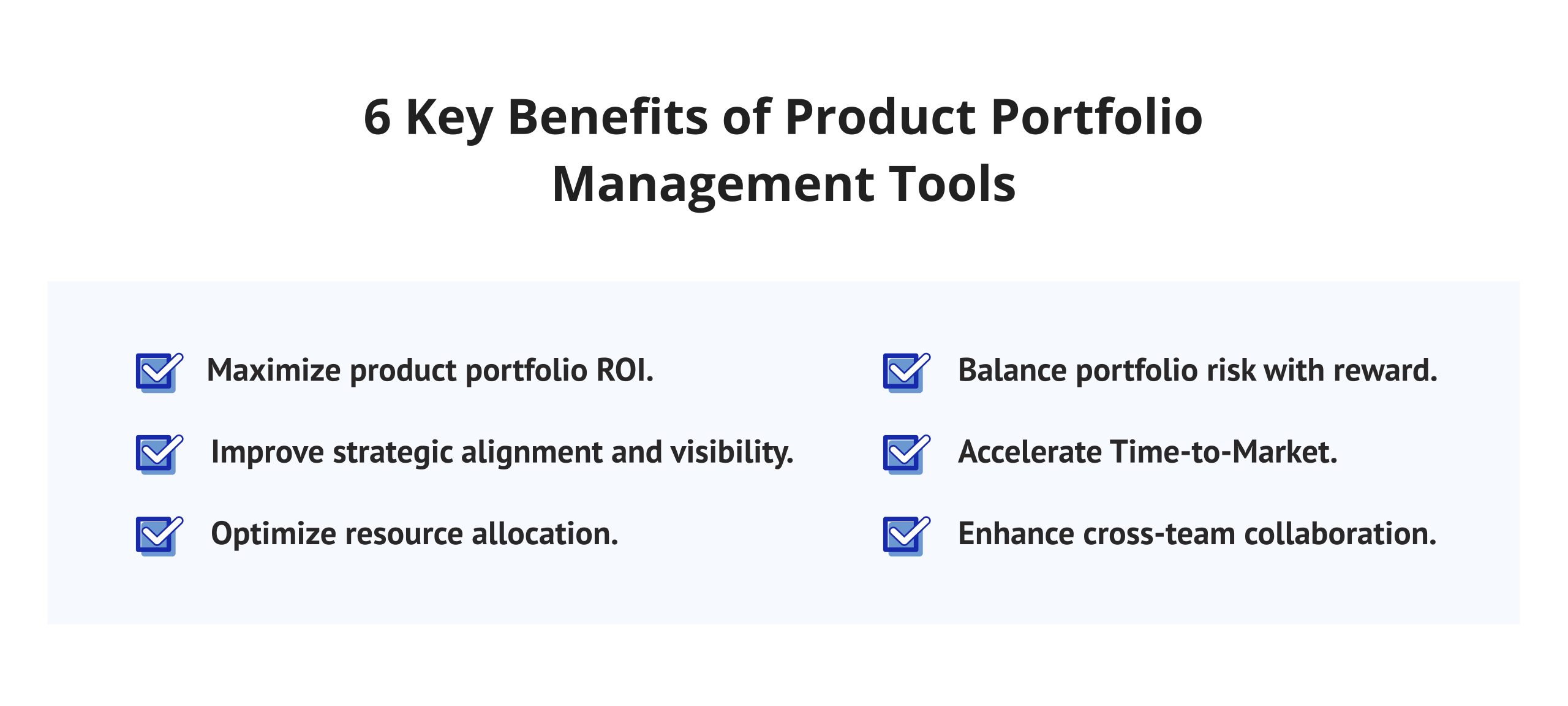
Maximize Product Portfolio ROI
Every investment in product development must generate returns. Portfolio management tools help organizations track performance across all product lines. They surface which products deliver the highest ROI — and which are draining resources without results. This empowers product leaders to make faster, smarter investment decisions.
Improve Strategic Alignment and Visibility
Strategic misalignment is among the major reasons behind poor allocation of resources towards the development of products. These platforms offer a single source of information that outlines all the relationships between the products and company objectives. They also minimize risks associated with duplication of projects and conflicting priorities.
Optimize Resource Allocation
Conflicts over resources are always an issue in product portfolios. With the help of project portfolio management software, you gain visibility into your team’s capacity at all times. This enables you to see overloaded members and redistribute their effort appropriately. This is particularly important when different product teams vie for access to certain specialists.
Balance Portfolio Risk with Reward
Successful product portfolios contain products with low risk alongside those with greater risk but also potential rewards. Product portfolio management software facilitates the classification of your products based on the level of risk associated with them, their strategic importance, and potential payoffs. It also allows for continuous portfolio rebalancing as required.
Accelerate Time-to-Market
Delays and lack of priorities hinder the delivery of the product. The use of product portfolio management software enables quick identification of delays and allocation of resources to ensure timely launch of the key products. Speed of delivering the product results in fast revenue generation.
Enhance Cross-Team Collaboration
The development of a product requires involvement from a variety of teams such as engineering, design, marketing, finance, and operations among others. Product portfolio management systems provide one platform for all the stakeholders to interact and share information.
Staying current with portfolio management best practices just got easier. Digest.Pro curates expert insights on product strategy, PPM software, and industry trends — delivered weekly. Subscribe to Digest.Pro on LinkedIn and join product professionals who lead smarter.
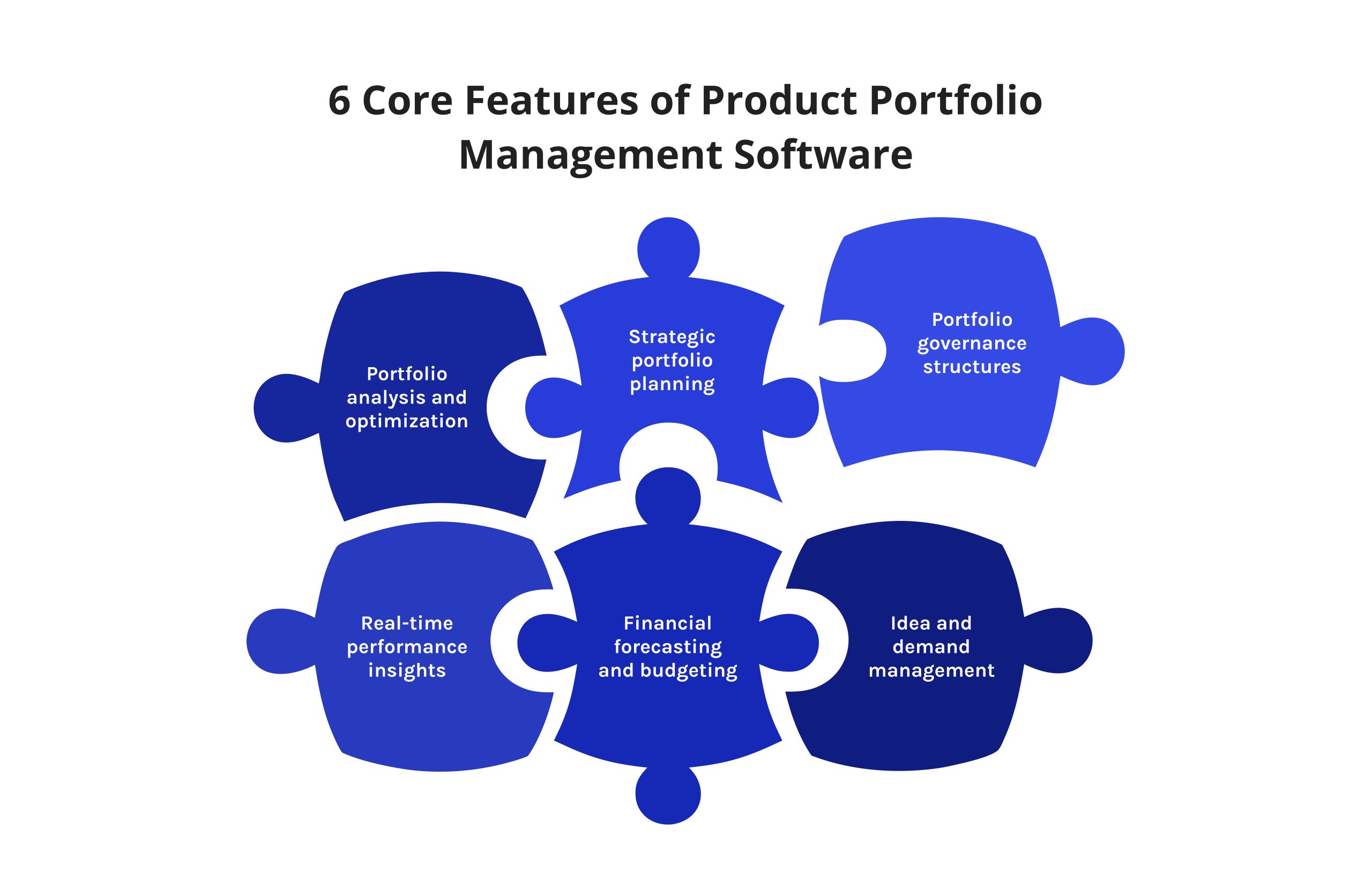
6 Core Features of Product Portfolio Management Software
Top Product Portfolio Management Tools and Solutions
Below is our expert top product portfolio management tools comparison for 2026. Each tool was evaluated on features, usability, pricing, and verified user reviews.
1. Epicflow
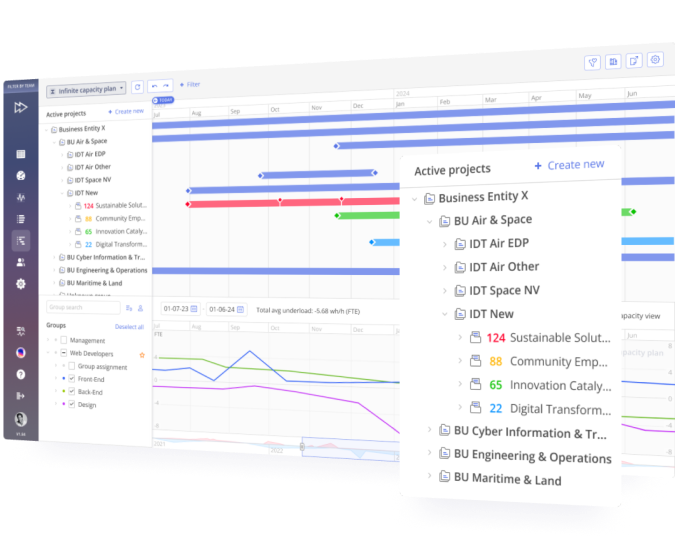
Epicflow is an artificial intelligence-powered portfolio management solution intended to provide simplified portfolio management capabilities for multi-project and multi-resource environments. The solution employs a distinct resource-centric approach where its main focus lies on achieving the highest possible efficiency through capacity optimization and intelligent decision-making processes.
The artificial intelligence capabilities of Epicflow help to forecast future resource conflicts, and suggest their most effective solutions.
Epicflow also includes Epica — a virtual AI assistant that simplifies how users interact with the tool and significantly increases its effectiveness. Additionally, Epicflow is JOSCAR-registered and has been pen-tested by the British Ministry of Defense, making it one of the most secure product portfolio management tools available for organizations that prioritize data protection.
Distinguishing Feature: AI-powered resource optimization paired with enterprise-grade security standards.
Pros:
- Real-time resource availability visualization across the full portfolio
- Intelligent task prioritization based on project constraints and resource capacity
- Portfolio Optimizer that maximizes business value under resource limitations
- Supports organisations in making well-informed decisions based on factual evidence through providing scenario simulations.
- Integrated directly into Jira, MS Project and Oracle Primavera for data exchange whilst providing users with an efficient means of managing their resources via existing tools.
- The use of dynamic dashboards to provide users with visual representations of both real-time and historical performance.
- Commonly used within industries such as Aerospace, Defence, Pharmaceutical, Automotive and Software.
Cons:
- Teams new to resource-centric planning face a steeper initial learning curve
Pricing: Growth tier for €22.5/user/month and Custom pricing based on team size and deployment model. Available on request. Also trial is available
User Reviews:
- G2: 4.4/5
- Capterra: 5.0/5
2. Planview Portfolios
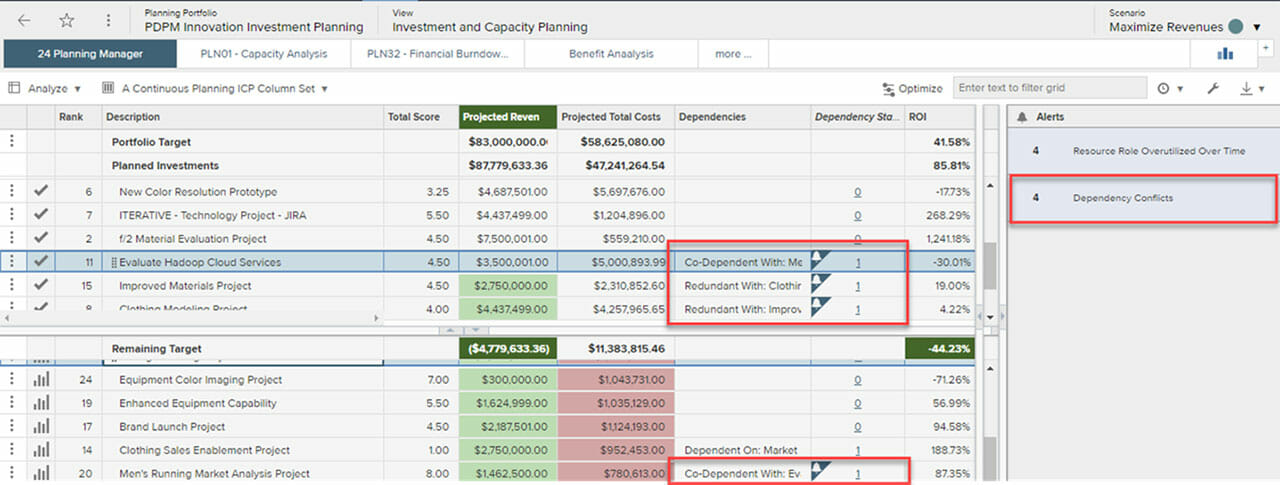
This PPM solution is aimed at helping companies that manage diverse and complex portfolios of products/projects throughout all stages of their product development lifecycle. This includes everything from portfolio strategic planning and ideation to portfolio delivery and performance monitoring.
Distinguishing Feature: End-to-end portfolio lifecycle management with robust financial planning capabilities.
Pros:
- Comprehensive financial forecasting and budget management
- Strong governance and stage-gate workflow support
- Broad integration ecosystem across enterprise systems
- Executive and board-level reporting capabilities
Cons:
- High total cost of ownership may challenge mid-market teams
- Complex implementation requires dedicated internal resources
- User interface feels dated compared to newer product portfolio management tools
Pricing: Custom enterprise pricing.
User Reviews:
- G2: 3.9/5
- Capterra: 4.2/5
3. Planisware Enterprise
-
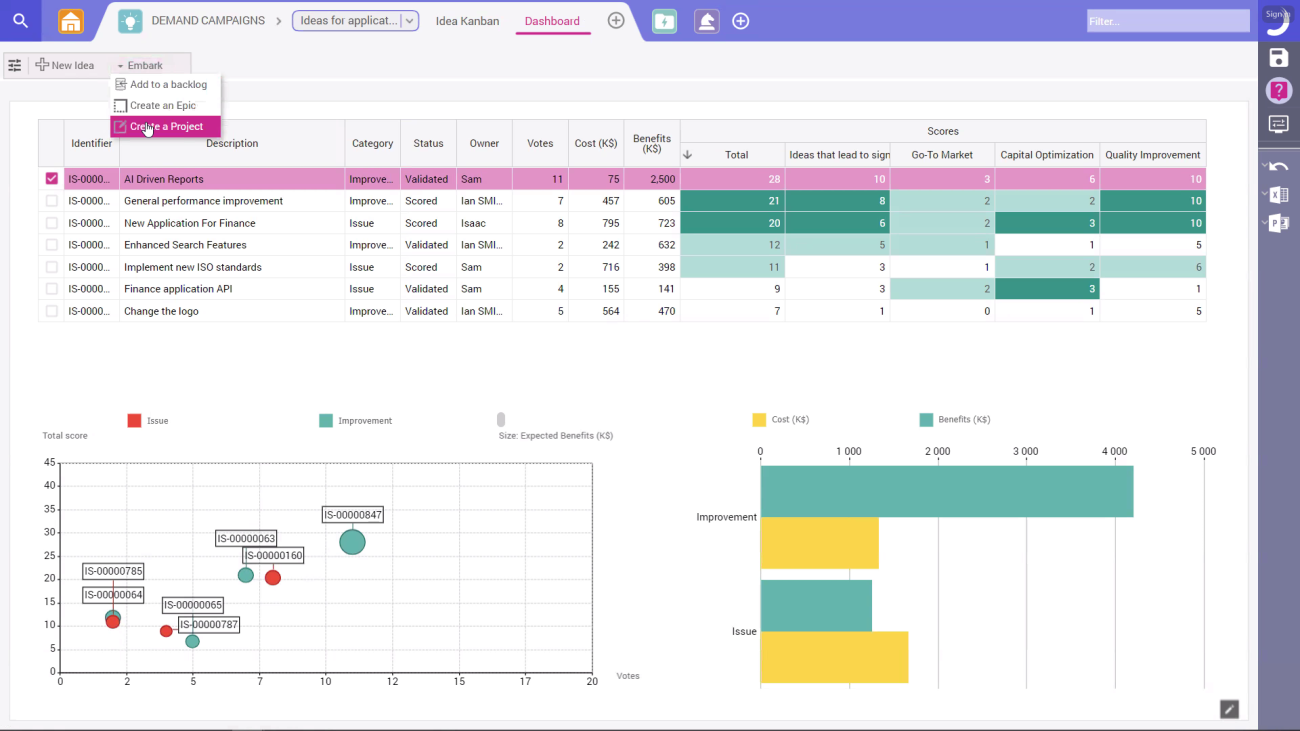
Built specifically for research-heavy fields like drugs, planes, and power, Planisware Enterprise handles full-cycle product planning. From detailed timelines to team allocation, its tools manage complex workflows. Oversight needs in strict environments are met through structured reporting features. Those guiding development choose it when rules demand precision records.
Distinguishing Feature: Specialized R&D portfolio management for highly regulated industries.
Pros:
- Advanced scenario planning for R&D investment decisions
- Regulatory and compliance workflow support
- Highly configurable to match complex business requirements
Cons:
- Long implementation timelines
- High upfront financial investment
- Less suitable for software or technology product teams
- Requires specialized administrator knowledge for ongoing management
Pricing: Custom enterprise pricing.
User Reviews:
- G2: 3.6/5
- Capterra: 4.1/5
4. Smartsheet
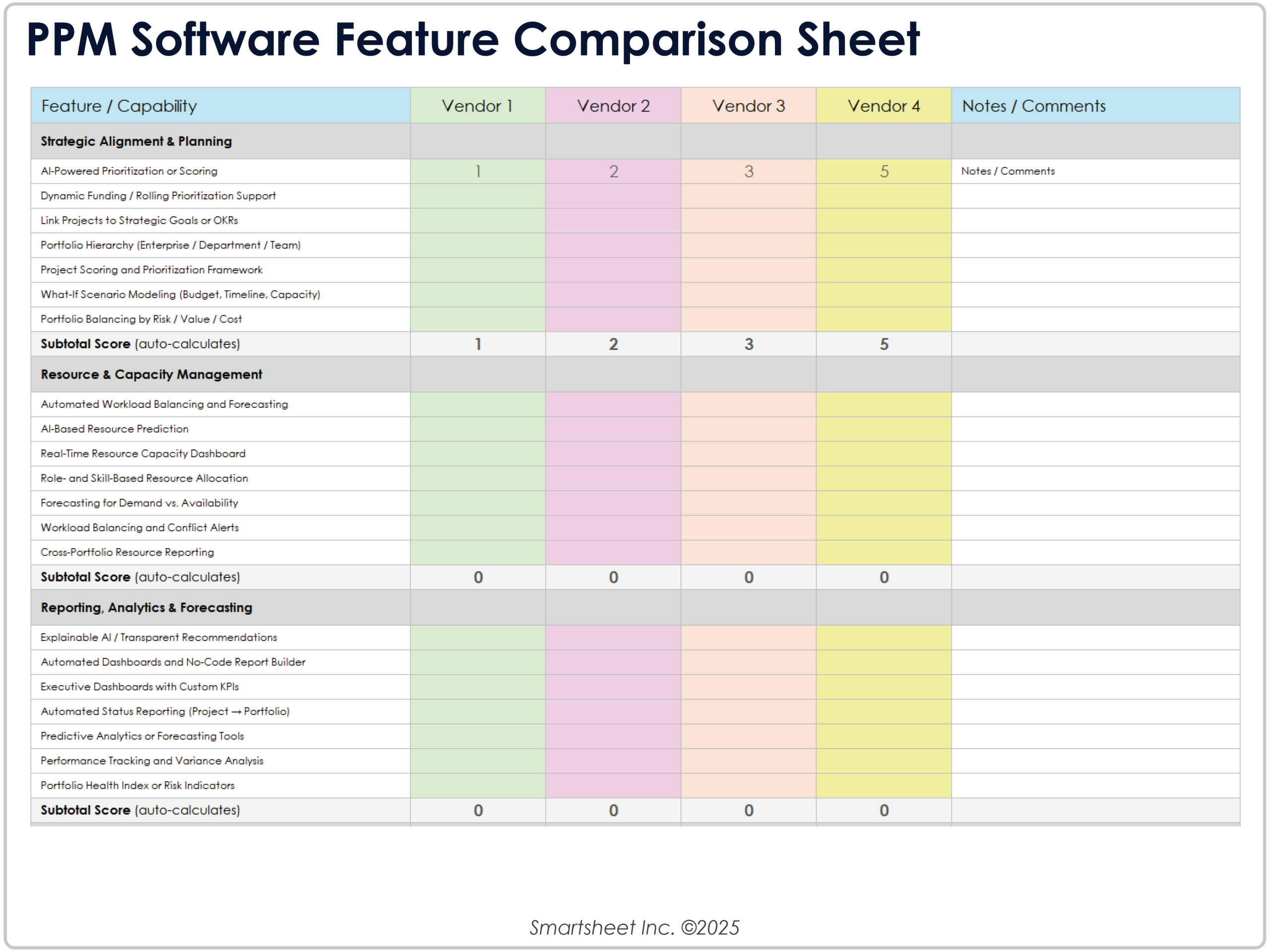
Smartsheet is an adaptable platform used for project portfolios, and thus is often referred to as project portfolio management software. The program takes the ease of working with spreadsheets and combines this with automation, report building, and collaboration. This ease of use is one reason why many people adopt it quickly, due to its similar grid format to that of popular spreadsheet applications.
Distinguishing Feature: Spreadsheet-style flexibility with enterprise-scale automation and portfolio dashboards.
Pros:
- Low learning curve for most business users
- Robust automation and workflow builder
- Over 1,000 app integrations
- Excellent real-time reporting and portfolio dashboards
- Accessible for non-technical product teams
Cons:
- Native portfolio strategy features are limited compared to dedicated PPM tools
- Advanced portfolio use cases require significant manual customization
Pricing: Starts at $9/user/month. Enterprise plans available.
User Reviews:
- G2: 4.4/5
- Capterra: 4.5/5
5. Craft.io
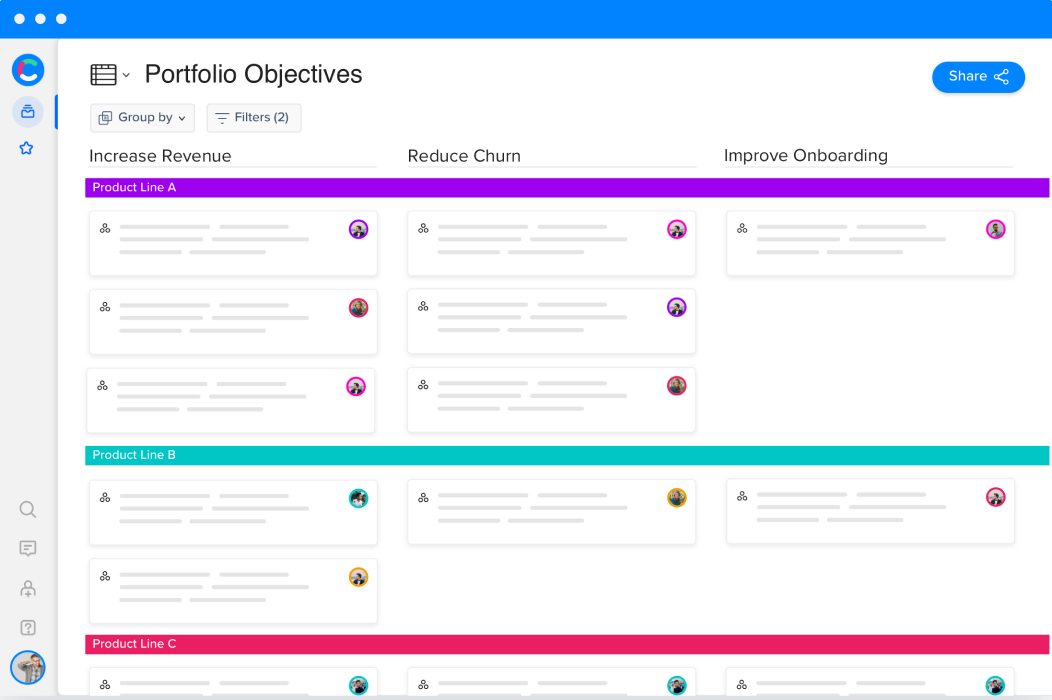
Craft.io is a specific user-friendly platform built for managing product portfolios. It gives product teams the ability to create strategic roadmaps, manage backlogs and align all stakeholders towards a common set of objectives through the use of a single integrated product management platform. Craft.io is targeted at product managers, as well as product directors or other individuals responsible for managing a product portfolio, who are looking for a dedicated product management solution rather than simply using a standard project management tool.
Distinguishing Feature: Purpose-built product strategy with native OKR-linked roadmapping and prioritization.
Pros:
- Intuitive roadmap builder with multi-level strategic alignment views
- Native OKR and goal tracking features
- Collaborative feedback collection and prioritization workflows
Cons:
- Limited resource management and capacity planning features
- Less suited for enterprise-scale portfolio governance requirements
- Narrower integration library compared to larger platforms
Pricing: From $19/user/month. Custom enterprise plans available.
User Reviews:
- G2: 4.5/5
- Capterra: 4.4/5
Don’t let the best insights pass you by. Digest.pro distills the latest in product portfolio management, PPM software trends, and strategic frameworks into clear, weekly summaries built for busy leaders. Subscribe to Digest.pro on LinkedIn — it takes 30 seconds and pays back every week.
6. Businessmap
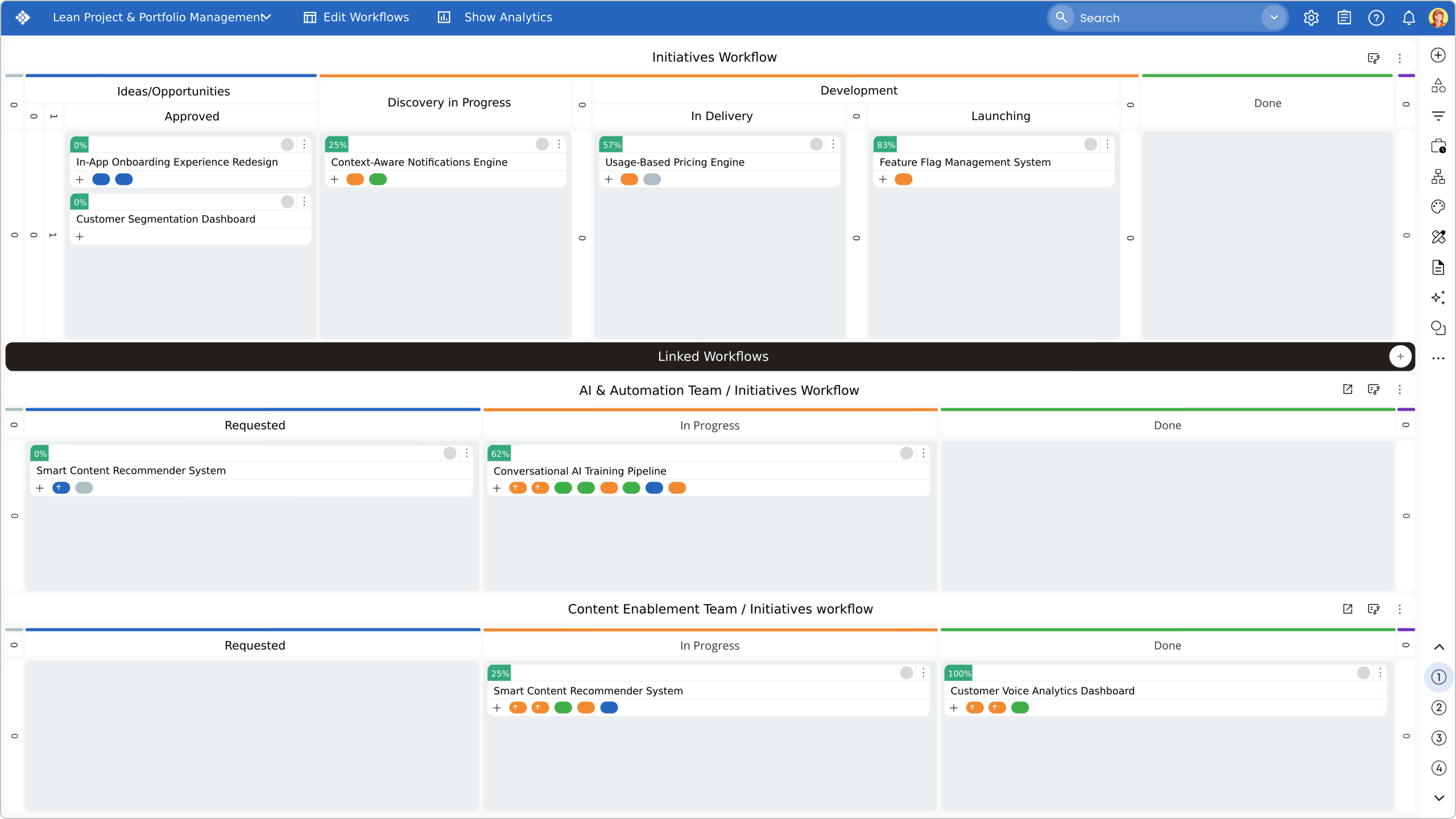
Businessmap (formerly Kanbanize) is a flexible PPM software that combines portfolio Kanban with OKR management and strategic analytics. It supports planning and execution across multiple organizational levels — from company strategy down to team-level tasks. Product leaders use it to connect high-level portfolio goals with daily execution.
Distinguishing Feature: Portfolio Kanban with multi-level OKR cascading and powerful flow analytics.
Pros:
- Clear visual layers connecting portfolio strategy to team execution
- Strong OKR and goal alignment features across organizational levels
- Flexible workflow automation for repetitive portfolio processes
- Transparent bottleneck detection through Kanban flow metrics
Cons:
- Kanban-centric approach may not suit every portfolio management style
- Reporting depth is limited for complex enterprise portfolio analysis
Pricing: From €7.40/user/month.
User Reviews:
- G2: 4.0/5
- Capterra: 4.8/5
7. Asana
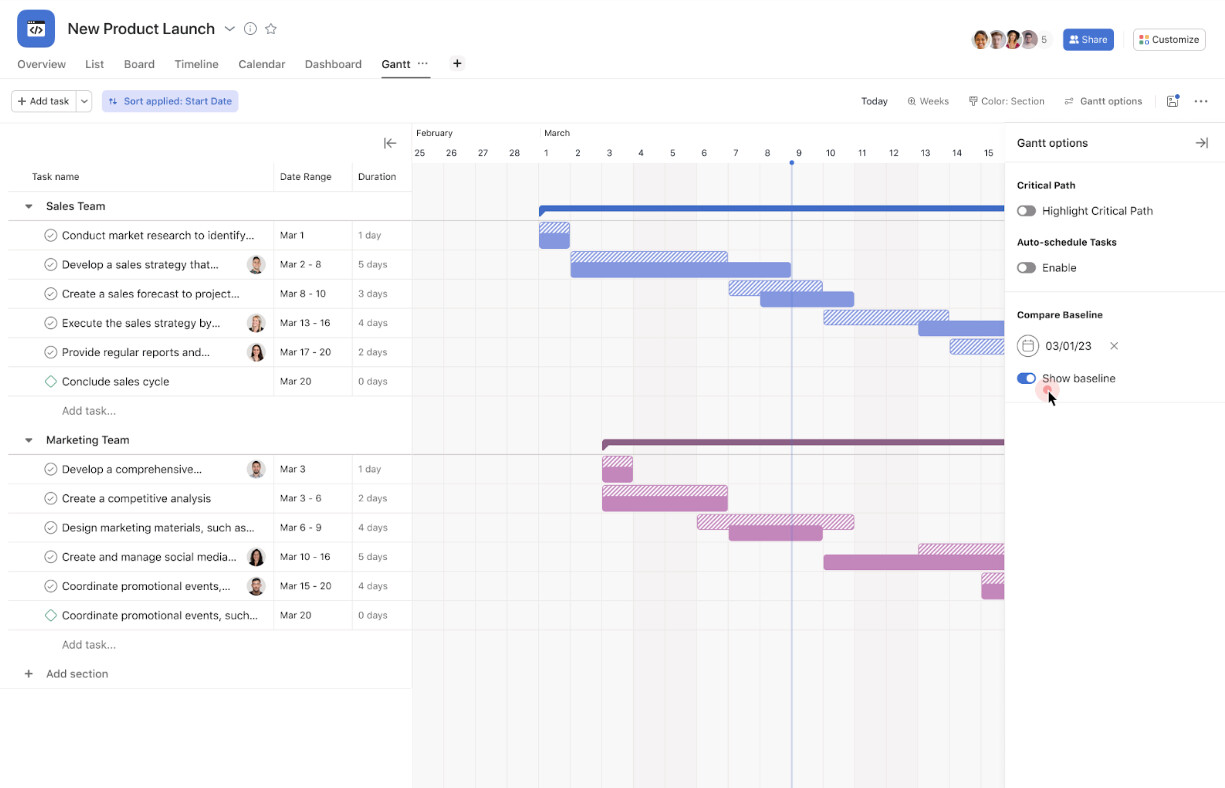
Among global tools for managing project portfolios, Asana ranks highly in usage. With features like goal monitoring, visual timelines, and reports across teams, it supports organized planning. Daily coordination tasks often flow through this system for those overseeing products or projects. Its framework assists oversight without requiring complex setups.
Distinguishing Feature: The portfolio and project management user experience, fully integrated and aligned for company objectives.
Pros:
- To create and utilize an easy to use product for cross functional teams.
- Dashboard level for all portfolios with real time updates.
- Native goal and OKR tracking connected to work items
- Over 300 app integrations
- Strong mobile experience for on-the-go product leaders
- Built-in automations for routine workflows and status updates
Cons:
- Resource management features are limited compared to dedicated PPM software
- Advanced portfolio analytics require custom configuration
- Enterprise pricing rises steeply for large organizations
Pricing: Premium tier for $10.99/user/month.
User Reviews:
- G2: 4.4/5
- Capterra: 4.5/5
8. Triskell Software
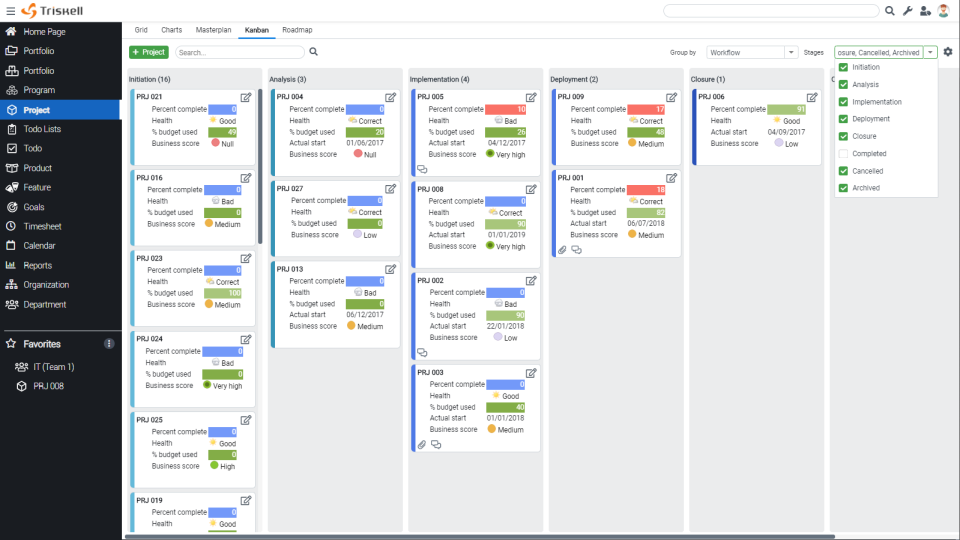
Triskell Software serves as a structured platform tailored to strategic portfolio control. Governance at scale shapes its core function within enterprise-level project management offices. Investment planning unfolds alongside disciplined project ranking through integrated workflows.
Distinguishing Feature: Integrated PPM and governance platform built for enterprise PMOs and portfolio boards.
Pros:
- Strong demand management and resource capacity planning
- Built-in stage-gate governance and approval workflow support
- Portfolio scoring and prioritization with customizable criteria
Cons:
- User interface is less modern compared to some newer alternatives
- Longer onboarding process for new teams
Pricing: Custom enterprise pricing.
User Reviews:
- G2: 4.4/5
- Capterra: 4.7/5
9. Quickbase
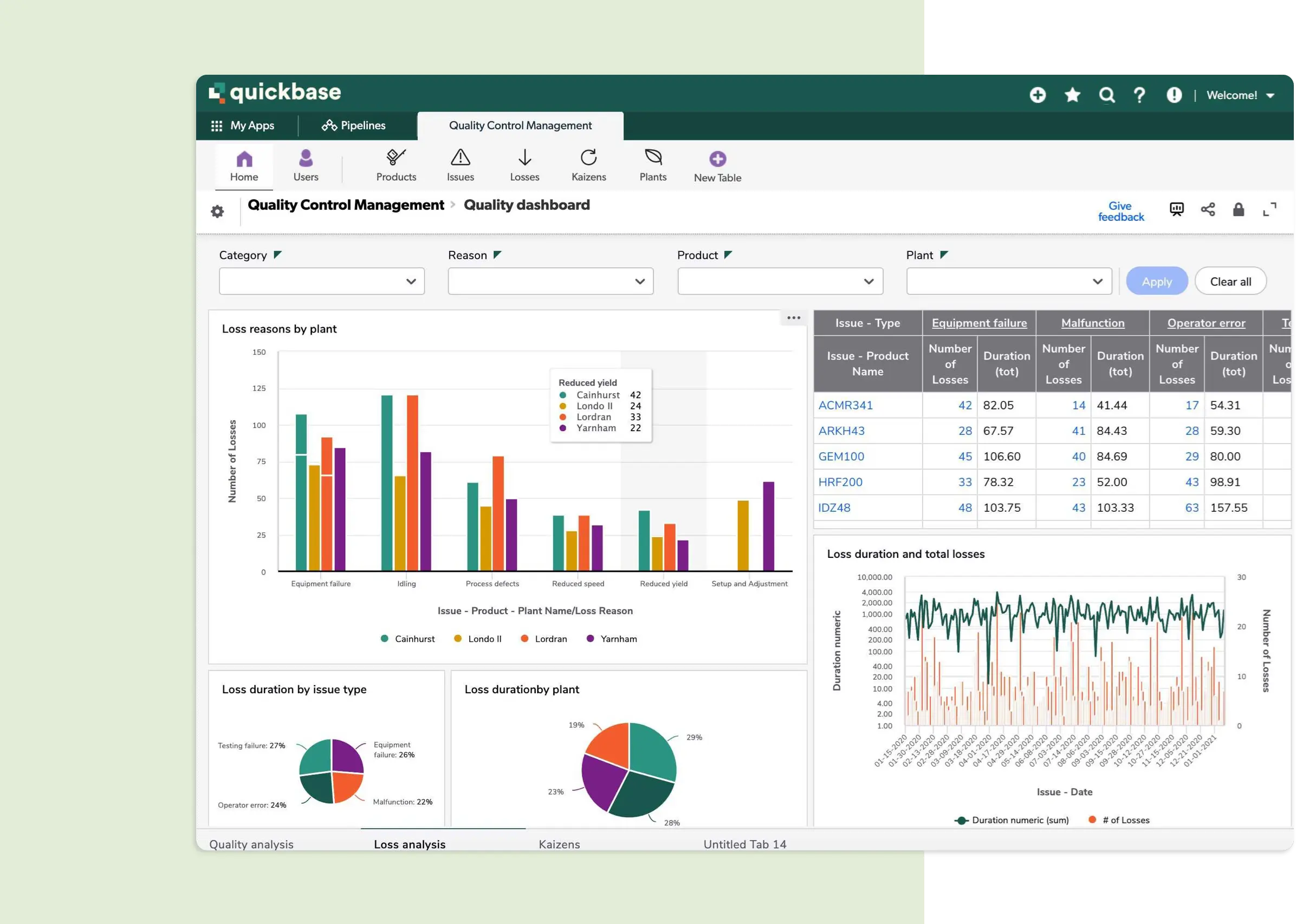
Quickbase is a low code application development platform designed for organizations to use for their Portfolio or Project Management activities. Like Asana, Quickbase allows organizations to build fully custom PPM applications without extensive IT involvement.
Distinguishing Feature: Low code custom applications are available to the organization in order to build completely unique Portfolio Management activities.
Pros:
- Highly flexible — adaptable to virtually any portfolio management process
- Strong cross-team data integration capabilities
Cons:
- Significant setup time required to build effective portfolio management workflows
- Not a purpose-built product portfolio management tool
- Lacks native product strategy, roadmapping, or AI-powered planning features
- Customization demands ongoing technical maintenance and internal expertise
Pricing: From $35/user/month.
User Reviews:
- G2: 4.5/5
- Capterra: 4.4/5
How to Select the Perfect Product Portfolio Management Tool
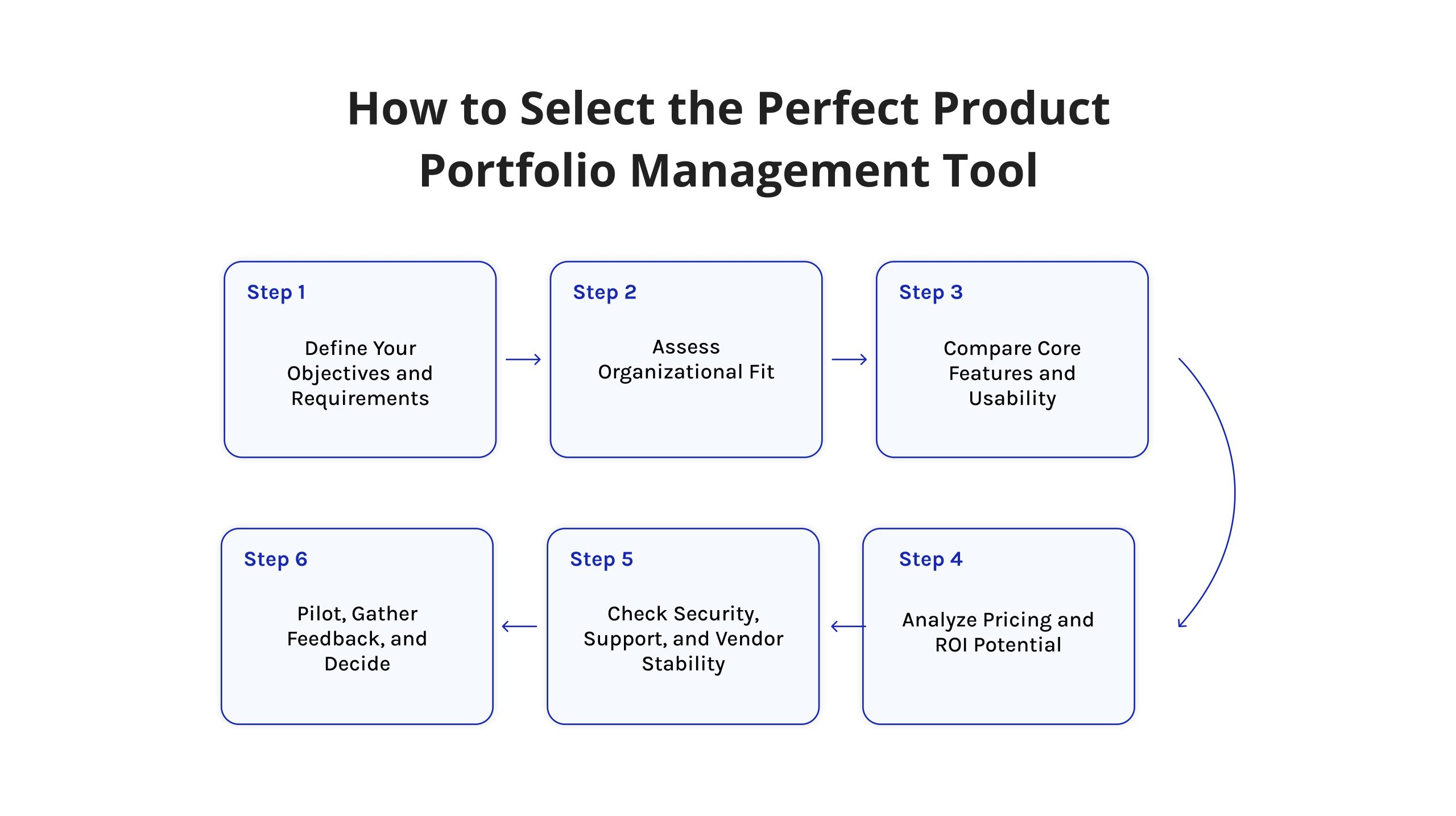
Not every tool suits each team. A methodical approach often reveals what truly fits. Instead of focusing on advertised capabilities, consider how well a system adapts to real workflows.
- What is the main purpose of your work. If research and development funding needs oversight, one tool becomes relevant. When handling many digital products at once, another option emerges. Oversight of intricate engineering efforts points elsewhere. Environments where multiple technical projects run together find strength in Epicflow.
- Team scale and workload variety matter first. When outputs are limited, tools like Asana or Smartsheet tend to fit better. Where budgets tighten across many initiatives, solutions such as Epicflow, Planview, or Triskell show stronger alignment. Size influences choice – always.
- Resource efficiency demands careful attention. When delays stem from team availability, a system built for forecasting workload becomes essential. Among available choices, Epicflow stands out due to intelligent allocation methods driven by machine learning. Its design focuses on balancing demand against team capacity over time.
- Start by checking how well systems fit together. Many product groups currently rely on platforms like Jira, Salesforce, or Slack. Ensure the selected solution links properly with what is already in place. Instead of switching workflows, connectivity with tools such as Epicflow means smoother adoption. Oversight improves across projects without pushing teams into unfamiliar software.
- Beginning with oversight requirements, regulated sectors plus large-scale project management offices require clear governance processes. When it comes to these uses, Epicflow alongside Planview stand out clearly. In contrast, product groups centered on software might operate well under simpler oversight models.
- AI functions matter more now. By 2026, systems driven by artificial intelligence stand apart in performance. Consider Epicflow – its algorithms detect delays ahead of time, adjust team allocations intelligently, while aiding forward-looking choices. Conventional software lags behind in pace.
- A practical trial brings clarity. From the leading options, seek demonstrations. Engage a live team on an actual portion of the portfolio during testing. Functionality under real conditions outweighs theoretical specifications. What works daily holds greater weight than paper promises.
Final Thoughts
Investing in the right software for product portfolio management tools pays dividends across strategy, delivery, and team alignment. In 2026, the gap between organizations using spreadsheets and those using modern PPM software has never been wider.
Among all the options reviewed, Epicflow stands out as the most powerful AI-powered portfolio management solution for complex, resource-intensive environments. Planview and Planisware serve large regulated enterprises well. Asana and Smartsheet offer accessible starting points for growing product teams. Craft.io and Businessmap bring focused strategy and execution alignment for digitally native organizations.
The best tool is the one that fits your specific context — your team size, industry, strategic priorities, and existing processes. Use the criteria above to narrow your shortlist, run a meaningful pilot, and commit to the solution that will grow with your portfolio.
Product leaders who act on this now will gain an execution advantage that compounds over time.
The smartest product leaders read Digest.Pro. Get curated insights on portfolio management, PPM tools, product strategy, and business technology — in one weekly newsletter built for C-level leaders and senior product professionals. Subscribe to Digest.Pro on LinkedIn and stay a step ahead of the market.
Our Methodology: How We Selected the Product Portfolio Management Tools
A consistent, objective methodology was applied to evaluate the nine products in our research sample using a common methodology. For each of the tool evaluated a consistent set of criteria was used including the following:
- Depth of Core (PPM) Features: Portfolio Analysis, Strategic Planning, Roadmapping, Governance, and Prioritization
- AI and Automation Capabilities: Availability and maturity of AI-Powered features for resource management, forecasting and bottleneck detection
- Quality of Resource Management: Capacity Planning, Utilization Tracking, Conflict Resolution and Multi-Project Support Across Many Projects
- Ease of Adoption: Learning curve, User Interface Design, Onboarding Experience and Potential to Adopt Across Teams
- Integration Ecosystem: Ability to integrate with tools like Jira, MS Project, Salesforce, Slack and Oracle Primavera
- Financial Planning Features: Budgeting, Financial Forecasting and ROI Modeling and Investment Scenarios
- Pricing & Overall Value: Scalability and price relative to features
- Verify User Ratings: Ratings were collected from independent rating companies, including G2 and Capterra
- Industry and Team Fit: Fit across all industry sectors, size of team, and level of maturity
Additionally, publicly available product documentation on tools from vendors was collected, compared against competitor product documentation, and reviewed verified user reviews. No vendor was charged a fee or paid to participate in this list. Therefore, all rating rankings on this list were based on my independent assessment as a medical expert.
FAQs
Among those available in 2026, a handful stand out when it comes to handling product portfolios. Think Epicflow, Planview Portfolios, Planisware Enterprise, along with Smartsheet, Craft.io, Businessmap, Asana, Triskell Software, plus Quickbase. Where artificial intelligence and heavy resource demands matter most, one name takes front spot: Epicflow. For simpler setups – teams that aren’t tangled in complexity – Asana and Smartsheet tend to fit just right.
Start by spotting tools that handle money predictions alongside project tracking. Sometimes a tool fits best when it adjusts fast to shifting team workloads. Picture software guiding choices using smart algorithms instead of guesswork. What sticks matters less than what connects – integration strength often decides daily ease. Planning depth varies, especially where rules shape decisions heavily. Matching features to field-specific demands shapes the actual value. Complexity changes everything; simpler setups rarely need layered systems.
Start by spotting tools that handle money predictions alongside project tracking. Sometimes a tool fits best when it adjusts fast to shifting team workloads. Picture software guiding choices using smart algorithms instead of guesswork. What sticks matters less than what connects – integration strength often decides daily ease. Planning depth varies, especially where rules shape decisions heavily. Matching features to field-specific demands shapes the actual value. Complexity changes everything; simpler setups rarely need layered systems.
They create full visibility across all products and initiatives. Leaders can score and compare opportunities by strategic value, risk, and ROI. This replaces gut-feel decisions with data-backed investment choices — consistently and at speed.
Today’s software often supports built-in links or accessible interfaces. Direct compatibility is provided by Epicflow when used alongside Jira, MS Project, or Oracle Primavera. With Asana and Smartsheet, connections span anywhere from 300 up past 1,000 applications. Before choosing any system, examine how well integrations perform – look beyond mere presence of a link.
Despite their familiarity, spreadsheets fall short when it comes to up-to-the-minute information, process automation, or growth-ready teamwork. Instead of static files, purpose-built PPM tools deliver continuously updated views, self-running procedures, intelligent analysis through machine learning, and structured oversight mechanisms. As demands shift, these systems adjust – something flat documents are never able to match – while also removing repeated inaccuracies tied to human handling in traditional tracking methods.
Real-time visibility into resources spans every active project. When workloads exceed limits, those responsible see imbalances quickly. Gaps in available capacity become clear through consistent monitoring. Efforts shift toward critical tasks without relying on manual checks. Tools driven by artificial intelligence take additional steps forward. Conflicts in scheduling emerge in forecasts ahead of actual deadlines. Suggestions for task distribution appear based on evolving conditions. Systems such as Epicflow adjust allocations proactively.
Despite their popularity, OpenProject along with Redmine demand installation expertise. These open source platforms need consistent upkeep. Features driven by artificial intelligence remain absent. Commercial alternatives often prove more suitable. Support teams stand ready when issues arise. Updates arrive on a predictable schedule. Security measures meet high industry standards. Value emerges not from cost alone, but reliability over time.
PPM tools operationalize your strategy by mapping products to business goals, enabling investment scoring, running scenario simulations, and tracking performance against targets. This transforms strategy from a static document into a dynamic, measurable process that teams can act on daily.
Jira is primarily a project and issue tracking tool. Jira Align adds some portfolio views, but it lacks native strategic portfolio management, financial forecasting, and resource capacity planning. Most product leaders use Jira for execution tracking — and pair it with a dedicated PPM tool like Epicflow to get true portfolio-level visibility and control.
References
- Project Management Institute. (2024). Pulse of the Profession: Executive Summary. PMI. https://www.pmi.org/learning/library/pulse-profession
- Gartner. (2024). Magic Quadrant for Strategic Portfolio Management. Gartner Research. https://www.gartner.com/en/documents/strategic-portfolio-management
- McKinsey & Company. (2023). The Product Management Talent Imperative. McKinsey Digital. https://www.mckinsey.com/capabilities/mckinsey-digital/our-insights/the-product-management-talent-imperative
- Forrester Research. (2024). The Total Economic Impact of Portfolio Management Software. Forrester. https://www.forrester.com/research/
- Cooper, R. G., & Edgett, S. J. (2010). Developing a Product Innovation and Technology Strategy for Your Business. Research-Technology Management, 53(3), 33–40. https://doi.org/10.1080/08956308.2010.11657631
- Kester, L., Griffin, A., Hultink, E. J., & Lauche, K. (2011). Exploring Portfolio Decision-Making Processes. Journal of Product Innovation Management, 28(5), 641–661. https://doi.org/10.1111/j.1540-5885.2011.00822.x
- Archer, N. P., & Ghasemzadeh, F. (1999). An Integrated Framework for Project Portfolio Selection. International Journal of Project Management, 17(4), 207–216. https://doi.org/10.1016/S0263-7863(98)00032-5
- Epicflow Blog. (2025). Product Portfolio Management Tools That Are an Indispensable Part of Competitive Edge. https://www.epicflow.com/blog/product-portfolio-management-tools-that-are-an-indispensable-part-of-competitive-edge-and-strategic-performance/
- Businessmap. (2025). Project Portfolio Management Software Guide. https://businessmap.io/project-portfolio-management/software
- Triskell Software. (2025). Best Product Portfolio Management Software. https://triskellsoftware.com/blog/best-product-portfolio-management-software/
- Atlassian. (2025). Project Portfolio Management: A Complete Guide. https://www.atlassian.com/work-management/project-management/project-portfolio-management
- Productboard. (2025). Product Portfolio Management 101. https://www.productboard.com/blog/product-portfolio-management-101/
- Harvard Business Review. (2022). Making Your Strategy Work on the Front Line. HBR. https://hbr.org/
- CPO Club. (2025). Product Portfolio Management Tools: Expert Guide. https://cpoclub.com/tools/product-portfolio-management-tools/