

Canada’s tech ecosystem has arrived on the global stage. With over $8 billion in venture capital deployed in a single year and a talent pipeline that rivals Silicon Valley, startups in Canada are no longer regional success stories. They’re global disruptors.
From autonomous trucking AI in Toronto to satellite-based emissions monitoring in Montreal, Canadian startup companies are solving the world’s most complex problems. The conditions have never been better. Strong federal R&D incentives, world-class universities, and a thriving network of startup incubators in Canada give early-stage companies a genuine structural advantage.
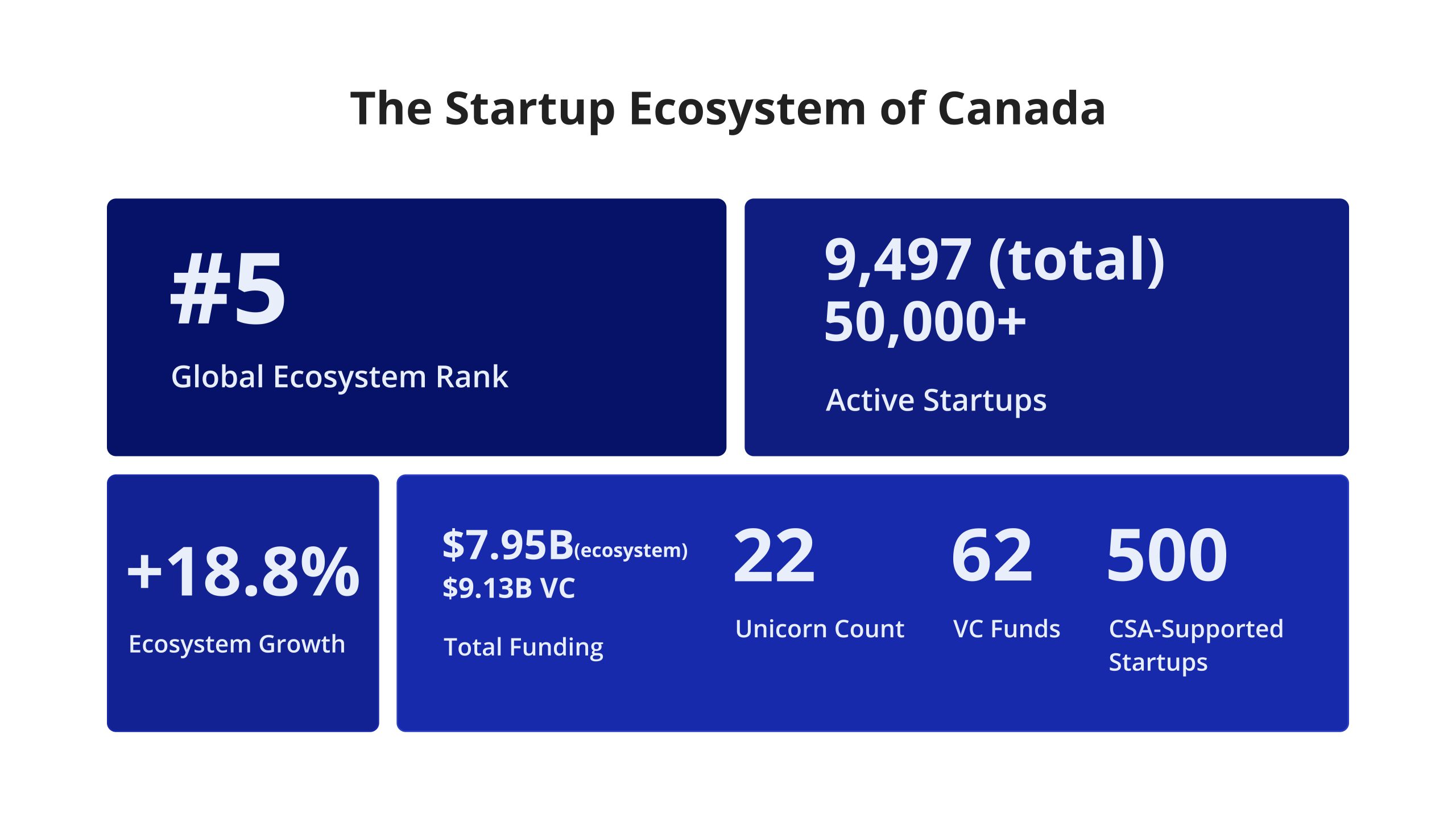
Source: Canadian Venture Capital & Private Equity Association (CVCA). Canadian VC & PE Market Overview 2025. https://reports.cvca.ca/books/CVCA_Q4-2025_VC_Report/
Key Takeaways:
- In 2025, Canada’s startup ecosystem received >$8B of VC investment, making it one of the top five technology hubs worldwide.
- Canada’s AI startups in Toronto, Montreal, and Waterloo directly compete with the US and European companies for enterprise client contracts.
- Currently, the fastest-growing Canadian businesses fall under the following sectors: fintech, deep tech, cybersecurity, and digital health.
- The structure of federal programs for start-ups (i.e., SR&ED tax credits, IRAP, and start-up accelerators) in Canada provides the level of institutional support that no other ecosystem can offer.
- Many Canadian startups and emerging companies will reach or are yet to reach ‘unicorn status’ within the 2025-2026 timeframe.
This guide will help you discover who is building Canada’s technology future. You will learn about 26 companies from six major industries, how each of them stands out, and what market drivers will define Canadian innovation beyond 2026.
And before we start, subscribe to Digest.Pro on LinkedIn, where we publish the most current information about the startup landscape, groundbreaking trends, and AI updates.
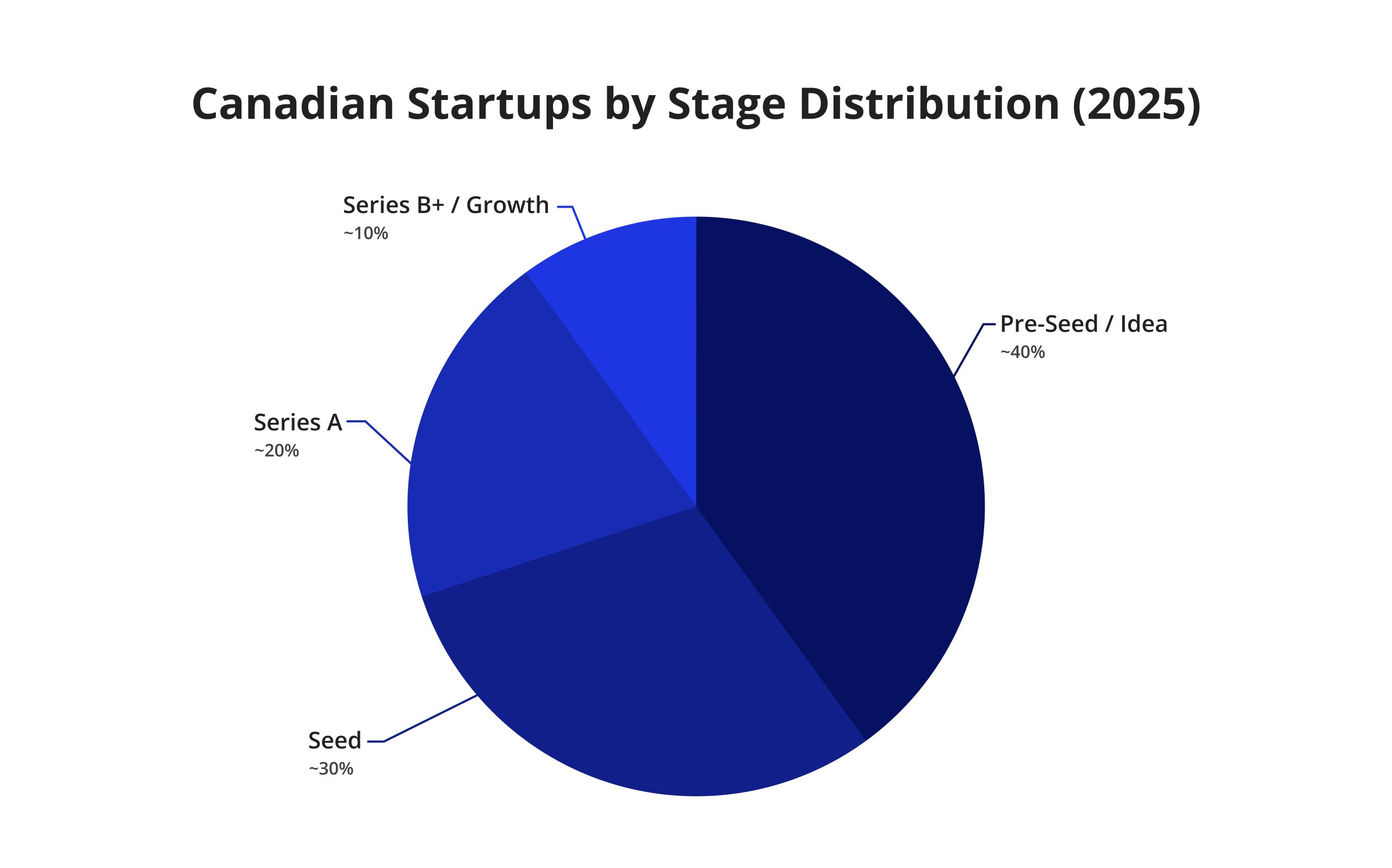
Source: Canadian Venture Capital & Private Equity Association (CVCA). Canadian VC & PE Market Overview 2025. https://reports.cvca.ca/books/CVCA_Q4-2025_VC_Report/
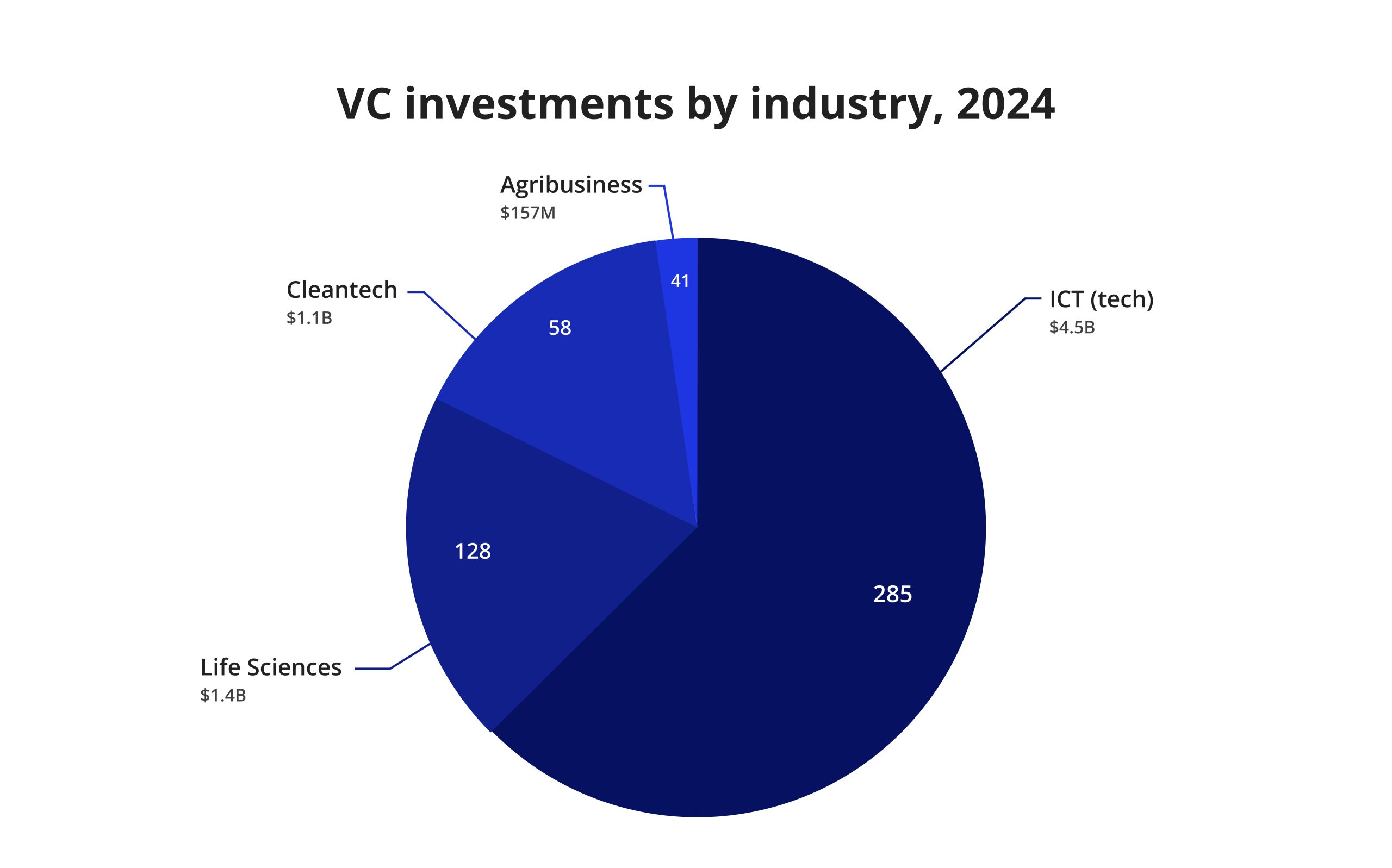
Source: Canadian Venture Capital & Private Equity Association (CVCA). Canadian VC & PE Market Overview 2025. https://reports.cvca.ca/books/CVCA_Q4-2025_VC_Report/
The State of the Canadian Tech Industry in 2026
Over the past ten years, the Canadian technology industry has changed significantly from its previous stage of development as an unimportant part of a region’s economy into a well-developed, globally competitive producer of new ideas and products.
According to the Canadian Venture Capital & Private Equity Association (CVCA), venture capitalists across Canada invested an unprecedented amount of $8 billion in 2025, demonstrating to investors that they are confident in the quality and quantity of Canadian startups. Also, investment in various industries has expanded dramatically.
Eighty thousand new technology positions emerged in Toronto from 2020 to 2024, a rise faster than what occurred in New York or San Francisco when measured by rate of job increase. At Montreal’s Mila Institute, artificial intelligence experts appear frequently in international research discussions. Talent from around the world moves toward Vancouver, drawn by activity in digital trust systems and design-focused technology fields.
Some of the reasons for Canada’s startup success include:
- A global competitor in immigration through its Start-up Visa Program, which is focused on recruiting tech founders
- Strong connections between universities and industry research at U of T, McGill, UBC, Waterloo, and Polytechnique
- A variety of generous government R&D tax incentives, including the SR&ED Tax Credit Program
- Many Canadian startup accelerators and accelerator programs have been established to assist companies with their growth from seed to Series B funding.
Read more: 5 Best Startups in Hungary to Watch in 2026
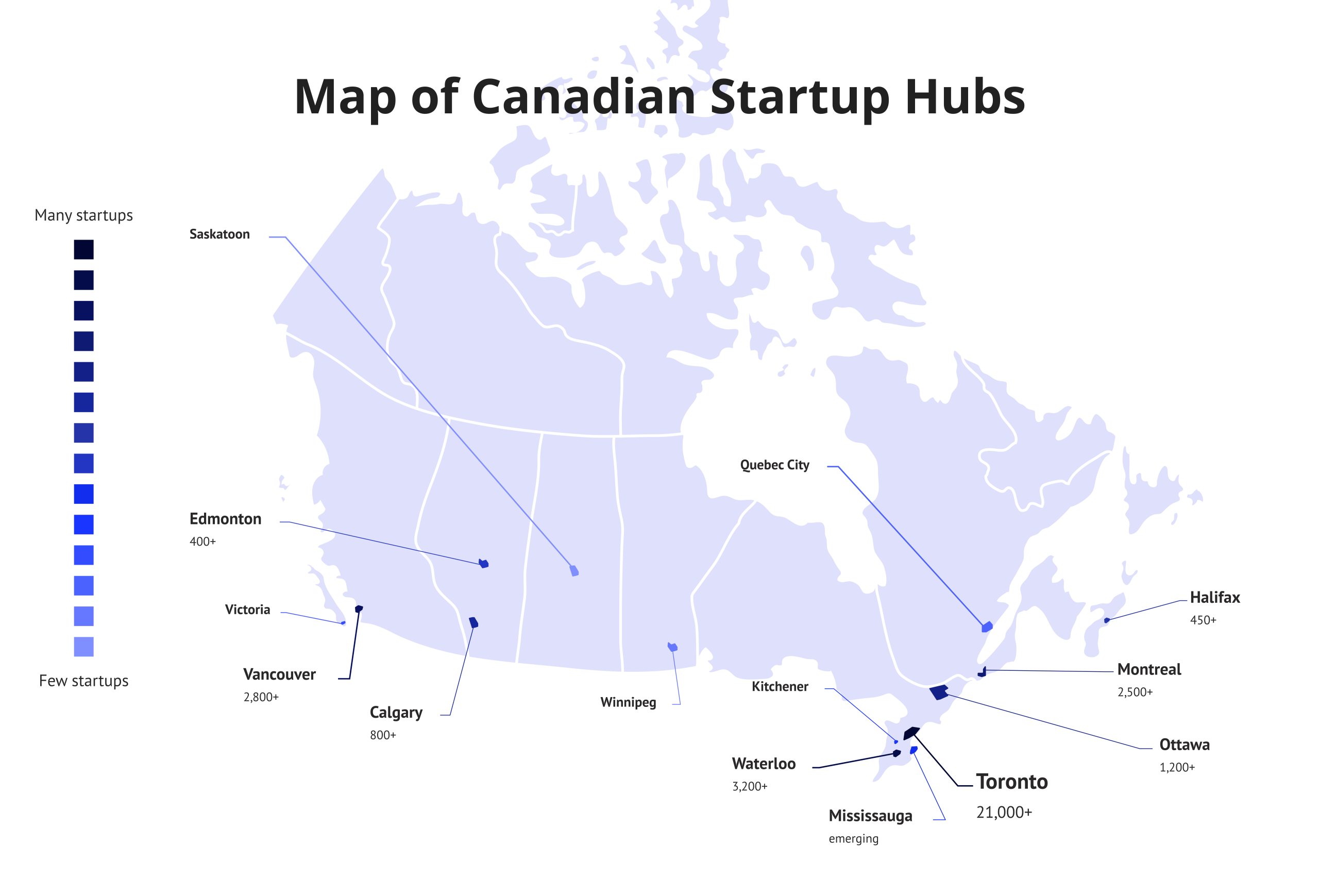
Source: Canadian Venture Capital & Private Equity Association (CVCA). Canadian VC & PE Market Overview 2025. https://reports.cvca.ca/books/CVCA_Q4-2025_VC_Report/#p=8
1. E-commerce, Fintech, and Business Finance
Among global markets, Canada stands noted for its technology ventures. Firms born here — especially within financial software and online retail — reach wide audiences across borders. Their tools support countless businesses, along with everyday users, far beyond national lines.
Shopify

Known around the world, Shopify stands as a leading technology achievement in Canada. From its base in Ottawa, the online selling system supports more than 4.6 million businesses in over 175 nations. Although listed on public markets, it moves with the energy of a new venture — introducing artificial intelligence features, shipping networks, and services for business clients faster than many young firms.
- Industry: E-commerce / SaaS
- Location: Ottawa, ON
- Founded: 2006 [2]
- Series: Public (TSX / NYSE: SHOP)
- Funding Rounds: IPO (2015)
- Money Raised: $122M [2]
Why watch in 2026: Shopify embeds artificial intelligence deeply into tools merchants use daily. Instead of isolated features, intelligent functions appear where products are described, priced, and sorted. This quiet expansion turns routine tasks into adaptive workflows.
“We’re going to begin to use these agentic applications as these kinds of personal shoppers,” he said, adding that the initial rollout will be slow. Agentic personal shoppers are predicted to be the future of shopping in some ways — able to discover, buy, and compare products for consumers more effectively [36].
Harley Finkelstein
Sources:
Text: Davis, D.-M. (2026). Shopify is preparing for AI shopping agents to change everything, exec says | TechCrunch. [online] TechCrunch. Available at: https://techcrunch.com/2026/03/16/shopify-is-preparing-for-ai-shopping-agents-to-change-everything-exec-says/ [Accessed 18 May 2026].
Image: https://www.linkedin.com/in/harleyf/
Lightspeed POS

Worldwide, Lightspeed delivers cloud-powered tools for retail and dining operations. Across more than one hundred nations, business sites number beyond 168,000 using its platform. Expansion into smarter payment systems progresses steadily forward. Unified commerce functions evolve alongside deeper data analysis features. Operations run on digital infrastructure designed for modern trade needs [3].
- Industry: Fintech / SaaS
- Location: Montreal, QC
- Founded: 2005
- Series: Public (TSX / NYSE: LSPD)
- Funding Rounds: IPO (2019)
- Money Raised: $292M+ [3]
- Why watch in 2026: Lightspeed’s strategy of unifying in-store and online retail data provides merchants with a competitive advantage that legacy POS systems simply cannot provide.
Neo Financial

A fresh face among Canadian financial services emerged in 2019, born in Calgary under the name Neo Financial. Digital-only access defines its approach, delivering credit options alongside savings plans paying elevated interest rates.
- Industry: Fintech / Neobanking
- Location: Calgary, AB
- Founded: 2019
- Series: Series D [4]
- Funding Rounds: 8 [4]
- Money Raised: $344M+ [4]
- Why watch in 2026: Neo’s product breadth and aggressive national expansion make it one of the most credible challengers to Canada’s Big Six banks.
Wealthsimple

Wealthsimple is Canada’s leading digital financial platform. With over 3 million users and $30B+ in assets under management, it redefined retail investing in Canada—and then kept going. Today, it offers tax filing, crypto trading, stock investing, and high-interest savings under one roof.
- Industry: Fintech / Wealth Management
- Location: Toronto, ON
- Founded: 2014
- Series: Series F [5]
- Funding Rounds: 9 [5]
- Money Raised: $1.29B+[5]
- Why watch in 2026: Wealthsimple moves steadily toward a complete financial platform unique in Canada. Product lines grow fast, yet each release strengthens trust. Because customer allegiance deepens, rivals find it hard to keep pace. With every launch, its position tightens — quietly, effectively.
Read more: Top 65 Biotech Startups: Most Promising Biotechnology Businesses Reshaping the Future.
Wave

operations remain separate. Millions across North America still rely on its services. Its identity stays distinct even under new leadership.
- Industry: Fintech / SMB Software
- Location: Toronto, ON
- Founded: 2010 [6]
- Series: Acquired (H&R Block, 2019)
- Funding Rounds: 13
- Money Raised: $82.4M+ [6]
- Why watch in 2026: Wave’s freemium model captures early-stage companies at zero cost, creating a massive top-of-funnel that converts to premium products as businesses grow.
Clio

Clio holds a top position among platforms designed for managing law practices. Across more than 130 nations, it supports in excess of 150,000 individuals working in law through features that handle cases, invoicing, and new clients, along with messaging. Leadership within the global legal software sector belongs to this system.
- Industry: Legal Tech / SaaS
- Location: Burnaby, BC
- Founded: 2008
- Series: Series G [7]
- Funding Rounds: 8
- Money Raised: $1.79B+ [7]
- Why watch in 2026: Strength emerges through intelligent support systems built into its platform. Expansion beyond borders unfolds steadily, not abruptly. Resilience forms where adaptability meets structure. One firm, rooted in Canada, sustains momentum while others falter. Software for organizations gains depth when the design aligns with real use. Defensibility grows quietly, without announcement.
Stay ahead of the worldwide startup scene. Digest.Pro curates the best insights on top startups in Europe, Asia, and the USA, venture capital deals, and innovation trends—delivered weekly to your feed. Subscribe to Digest.Pro on LinkedIn and never miss what matters.
2. Artificial Intelligence and Enterprise Software
No sector defines Canada’s global reputation more than AI. The country’s academic research base—anchored by the Vector Institute in Toronto and Mila in Montreal—has created a world-class talent pipeline for AI startups in Canada.
CoHere

CoHere builds enterprise-grade large language models and natural language processing tools for businesses. Founded by former Google Brain researchers, it focuses on private, secure AI deployment—not consumer apps. This distinction makes it the preferred AI vendor for regulated industries.
- Industry: Artificial Intelligence / NLP
- Location: Toronto, ON
- Founded: 2019
- Series: Series D [8]
- Funding Rounds: 7 [8]
- Money Raised: $1.54B
- Why watch in 2026: For those weighing options in 2026, CoHere stands apart through its focus on business clients. Built with strict data safeguards, it answers growing needs for artificial intelligence that keeps internal details contained. Where others rely on external systems, this one limits exposure. Over time, such control becomes difficult to match.
Ada

Beginning with artificial intelligence, Ada supports large organizations through automated support systems. Millions of customers all over the world find resolution to their inquiries via its infrastructure, eliminating the need for live staff involvement. The system operates continuously, handling volume at a level difficult for people alone.
- Industry: AI / Customer Experience
- Location: Toronto, ON
- Founded: 2016
- Series: Series C
- Funding Rounds: 7 [9]
- Money Raised: $200M+ [9]
- Why watch in 2026: By 2026, Ada’s updated AI-powered systems manage intricate customer inquiries without human input. Because business process automation continues expanding rapidly, the company stands ready to claim substantial presence across international service platforms.
Read more: 25 Leading Estonian Startups to Watch in 2026
Waabi

Self-driving trucks form the core focus of Waabi’s work. With roots tied to Raquel Urtasun, once lead scientist at Uber ATG and faculty member at U of T, the company builds its foundation on advanced artificial intelligence. Rather than relying heavily on complex sensors, it shifts emphasis toward smarter algorithms. This path allows quicker updates to code without constant hardware changes. Progress moves faster when software leads the way.
- Industry: Autonomous Vehicles / Deep Tech
- Location: Toronto, ON
- Founded: 2021
- Series: Series C [10]
- Funding Rounds: 4
- Money Raised: $1.03B+ [10]
- Why watch in 2026: By 2026, observation becomes relevant because Waabi has aligned with Uber Freight alongside key players in logistics. These connections place the company within reach of launching driverless freight operations across North America. Movement toward real-world implementation grows more visible through these alliances.
Moonvalley

A different kind of tool emerges when imagination meets meticulous execution. Cinematic results appear from simple written descriptions here. Quality matters most for those shaping visual stories at scale. Production demands are met without relying on amateurish outcomes. High standards guide every frame made through structured input. Professionals find alignment where detail and vision intersect.
- Industry: Generative AI / Creative Tech
- Location: Toronto, ON
- Founded: 2023 [11]
- Series: Seed / Series A
- Funding Rounds: 2
- Money Raised: $150M+ [11]
- Why watch in 2026: Moonvalley’s commitment to professional output quality—rather than viral novelty—gives it a clear differentiation strategy as the AI video market matures and consolidates.
Valsoft

Based in Montreal, Valsoft focuses on acquiring specialized software firms within narrow markets. In the modern world, international reach expands gradually, supported by shared resources among acquired entities. Performance improvements come standard after integration into the larger structure. Strategic support replaces standalone management, allowing each business to evolve under new oversight.
- Industry: Enterprise Software / Software Roll-up
- Location: Montreal, QC
- Founded: 2015
- Series: Private [12]
- Funding Rounds: Proprietary capital
- Money Raised: Undisclosed
- Why watch in 2026: With a portfolio spanning over 80 software products across industries, Valsoft is one of Canada’s most quietly influential enterprise software operators — and one of the fastest-growing Canadian companies by revenue.
StackAdapt

Founded in Toronto, the system operates independently through an automated interface preferred by marketing teams and corporations worldwide. While serving regions like North America, parts of Europe emerge as active users alongside several markets in the Asia-Pacific zone. Specialization exists within formats such as embedded ads, visual banners, streaming clips, and television over internet connections. Precision in reaching specific viewer segments marks one core strength throughout operations.
- Industry: AdTech / MarTech
- Location: Toronto, ON
- Founded: 2014 [13]
- Series: Series B
- Funding Rounds: 4
- Money Raised: $537M [13]
- Why watch in 2026: StackAdapt’s profitable growth model and rapid international expansion make it one of the Toronto tech scene’s most underrated standouts—and a serious contender in the global programmatic ad market.
CoLab Software

CoLab Software helps engineering teams collaborate on CAD models and design reviews in real time. It removes friction from the design review process in hardware and manufacturing organizations—cutting review cycles from weeks to days.
- Industry: Engineering Tech / Collaboration SaaS
- Location: St. John’s, NL
- Founded: 2017 [14]
- Series: Series C
- Funding Rounds: 7
- Money Raised: $117M+ [14]
- Why watch in 2026: Observing CoLab in 2026 matters because shifts in manufacturing drive demand for specialized tools. Growth becomes likely when sectors like aerospace rely on precise teamwork methods. Automotive firms face similar needs, which explains the rising interest.
3. Deep Tech, Aerospace, and Green Technology
Deep tech startups across Canada focus on complex engineering problems worldwide.
MDA Space

Founded long ago, MDA Space stands as a key figure in Canadian aerospace history. The firm engineered both the Canadarm and its successor, tools central to operations aboard NASA’s shuttles and the orbiting laboratory known as the ISS. In current years, focus has shifted toward crafting orbital platforms and support networks on Earth, alongside advanced mechanical helpers tailored for emerging ventures beyond the atmosphere.
- Industry: Aerospace / Space Tech
- Location: Monreal, ON
- Founded: 1969
- Series: Public (TSX: MDA)
- Funding Rounds: 3
- Money Raised: $25M+ [15]
- Why watch in 2026: By 2026, observing MDA grows more relevant due to its foundational involvement in NASA’s Lunar Gateway initiative. Its work in advanced satellite production shapes key systems beneath the rising private-sector space industry. Infrastructure of this kind supports long-term operations beyond Earth.
GHGSat

From space, tiny satellites track pollution at factories across the globe. These observations allow oversight bodies to detect leaks quickly. Emission levels become visible almost instantly after measurement begins. Oversight is continuous, precise, wherever needed. Information is sent directly to decision makers without delay.
- Industry: CleanTech / Space Data Analytics
- Location: Montreal, QC
- Founded: 2011 [16]
- Series: Series C
- Funding Rounds: 9
- Money Raised: $179M+ [16]
- Why watch in 2026: Closer scrutiny by 2026 is coming. With stricter emissions reporting enforced via measures such as Europe’s CSRD and U.S. SEC guidelines, precise oversight will be essential. GHGSat’s ability to deliver accurate data now holds greater relevance across industries. Oversight of this kind shifts from optional to necessary under evolving compliance demands.
Summit Nanotech

Summit Nanotech developed a breakthrough direct lithium extraction (DLE) technology called denaLi. It dramatically reduces water consumption and environmental disruption compared to traditional evaporation-based lithium extraction methods.
- Industry: CleanTech / Critical Minerals
- Location: Calgary, AB
- Founded: 2018 [17]
- Series: Series B
- Funding Rounds: 9
- Money Raised: $90M+ [17]
- Why watch in 2026: Global lithium demand is accelerating alongside EV adoption. Summit’s environmentally superior extraction technology gives it a compelling position in a supply chain that the entire clean energy transition depends upon.
Read more: Top 45 Renewable Energy Startups of 2026: Leading Green and Solar Energy Startups in the Global Transition.
Xanadu

Light-based quantum machines are being developed by Xanadu, replacing traditional superconducting elements with photons for processing. Widely adopted across global research communities, PennyLane’s framework operates openly, shared freely through public codebases.
- Industry: Quantum Computing
- Location: Toronto, ON
- Founded: 2016 [18]
- Series: public
- Funding Rounds: 9
- Money Raised: $250M+ [18]
- Why watch in 2026: By 2026, observation becomes worthwhile because Xanadu’s photon-driven design overcomes scaling issues halting older quantum methods. Progress stems not just from new components but also from accessible code frameworks guiding its rise among competitors.
Tracking deep tech is complex, but Digest.Pro breaks down the most important developments in AI, quantum computing, clean tech, and startup funding every week—clearly and without hype. Join a community of startup leaders at Digest.Pro’s LinkedIn.
4. Cybersecurity and Data Compliance
Across the globe, digital shifts have widened exposure to threats for companies. Infrastructure crafted by Canada’s emerging firms in security and regulatory alignment now supports essential business functions.
Trulioo

Beginning with cross-border operations, Trulioo supports firms and financial backers active in diverse legal regions through identity verification systems. Wherever regulations differ, its infrastructure checks people and organizations across more than 195 nations. Because of this reach, fintech ventures, banks, and online trading platforms rely on it quietly behind compliance processes tied to anti-money laundering and customer identification rules. So widespread is its integration that oversight tasks become manageable even on an international scale.
- Industry: Cybersecurity / RegTech / Identity
- Location: Vancouver, BC
- Founded: 2011 [19]
- Series: Series D
- Funding Rounds: 8
- Money Raised: $477M+ [19]
- Why watch in 2026: As digital fraud accelerates globally, Trulioo’s identity verification network becomes increasingly essential. Its coverage depth and compliance expertise are difficult to replicate.
Assent

Leading the field in supply chain sustainability, Assent provides tools for monitoring regulatory demands. From ESG standards to conflict mineral rules, oversight extends through layered international networks. Reporting obligations are met with structured data collection methods.
- Industry: Supply Chain / Compliance SaaS
- Location: Ottawa, ON
- Founded: 2010
- Series: Series D [20]
- Funding Rounds: 5
- Money Raised: $497M+ [20]
- Why watch in 2026: By 2026, shifting global regulations will reshape supply chain expectations. With its robust infrastructure and focused knowledge of policy demands, one solution stands apart through consistent performance under pressure.
1Password

One reason people choose 1Password lies in its focus on secure access across devices. Despite being built for teams, it works just as well for single users needing protection. Where most tools limit control, this system allows detailed oversight without complexity. Instead of scattered storage methods, everything stays within one encrypted environment.
- Industry: Cybersecurity / Identity Management
- Location: Toronto, ON
- Founded: 2006
- Series: Series C [21]
- Funding Rounds: 3
- Money Raised: $920M+ [21]
- Why watch in 2026: Observing 1Password matters because its shift beyond passwords into broader access control creates relevance amid rising digital risks. Its progression does not follow typical software patterns; instead, gradual expansion redefines how companies manage entry points securely.
Read more: Top 8 AI Startups in Czech Republic to Watch in 2026
5. Education and Future of Work
Now shaping how labor evolves, Canadian startups design systems for teams spread across regions. Not bound by location, these firms support work guided by purpose — linked through digital frameworks that reflect new priorities in education and employment.
Tailscale

Tailscale forms a contemporary mesh structure designed to link systems and applications securely, no matter where they reside. Through the use of WireGuard-based security, isolated networks emerge effortlessly, operating without setup steps. These connections remain functional whether deployed in cloud platforms, local infrastructure, or mixed setups.
- Industry: Networking / Security
- Location: Toronto, ON
- Founded: 2019
- Series: Series C [22]
- Funding Rounds: 4
- Money Raised: $275M+ [22]
- Why watch in 2026: Should work remain split between home and office by 2026, ease in setup matters more than ever. With fewer people in central locations, staying connected without complexity becomes essential. Security must blend into background tasks. For small groups or large enterprises alike, smooth access across distances defines daily function. Tailscale removes steps that slow progress. Hidden infrastructure supports movement, not hinders it.
ApplyBoard

six hundred thousand admissions have moved through its system into North American and Anglophone higher education centers. Institutions across four major countries accept applicants who come via this channel. Student pathways now regularly form through digital matching at scale.
- Industry: EdTech / International Education
- Location: Kitchener, ON
- Founded: 2015 [23]
- Series: Series D
- Funding Rounds: 5
- Money Raised: $495M+ [23]
- Why watch in 2026: By 2026, global enrollment of international students shows signs of recovery. Given such trends, ApplyBoard stands ready – not through promises but performance – to meet rising needs in overseas study access. Its network of academic institutions, combined with streamlined processes, suggests relevance amid expanding mobility markets. With systems already embedded across regions, growth appears less speculative than observational.
Dapper Labs
A digital foundation named Flow emerged under Daper Labs’ direction, paired with a product called NBA Top Shot – recognized as the most widespread NFT venture to date. Without relying on familiar tech jargon, it introduced blockchain to everyday users through design choices that quietly removed barriers once considered obstacles. While many attempts failed, this one shifted focus toward clarity, allowing engagement without prior knowledge. Mainstream hesitation faded as interaction became intuitive, almost invisible in its operation.
- Industry: Blockchain / Web3
- Location: Vancouver, BC
- Founded: 2018
- Series: Series D [24]
- Funding Rounds: 9
- Money Raised: $666M+ [24]
- Why watch in 2026: By 2026, interest grows as Dapper Labs moves beyond sports memorabilia into gaming and digital entertainment. Ownership of virtual items may shift, shaped by its accessible blockchain framework.
Benevity

Benevity holds a leading position worldwide in software for corporate social responsibility. More than one thousand large companies, among them Microsoft, Google, and Apple, rely on its system to oversee staff donations, volunteer efforts, gift matches, and local outreach initiatives.
- Industry: CSR Tech / HR Tech
- Location: Calgary, AB
- Founded: 2008 [25]
- Series: Acquired
- Funding Rounds: 4
- Money Raised: $69.3M+ [25]
- Why watch in 2026: By 2026, fresh rules will require more detailed ESG reports from publicly traded firms across Canada, the United States, and parts of Europe. Because compliance demands structured data collection, solutions like Benevity’s system become relevant for large organizations managing workforce engagement alongside environmental goals.
6. Digital Health and Travel Fintech
Among global industries, healthcare and travel stand out prominently. Firms emerging in Canada within these areas begin reshaping how users engage with services.
League

Beginning with secure technology, League delivers a digital foundation for health benefits used by large insurance providers, corporations, and care networks. Instead of building separately, organizations such as Sun Life, Loblaw, and Blue Cross rely on their system to run personalized health apps for members. Behind the scenes, integration happens smoothly, allowing real-time access to services through one unified structure.
- Industry: Digital Health / Health Tech
- Location: Toronto, ON
- Founded: 2014
- Series: Series C
- Funding Rounds: 7 [26]
- Money Raised: $242M+ [26]
- Why watch in 2026: Should conditions hold into 2026, one factor stands apart: the organization operates a conduit system, supplying core systems to insurers and workplace programs that distribute care access across vast member populations.
Hopper

Beginning with predictions, Hopper applies machine learning to determine optimal booking moments for airfare and lodging. Since then, offerings have shifted toward travel-related financial services. Price guarantees allow users to lock in rates temporarily. Protection plans permit cancellations without cause. Alternatives include adjustable travel dates. These additions resolve uncertainty during trip planning. Meanwhile, they contribute favorably to company earnings through increased profit margins.
- Industry: Travel Fintech
- Location: Montreal, QC
- Founded: 2007
- Series: Series G [27]
- Funding Rounds: 12
- Money Raised: $740M+ [27]
- Why watch in 2026: Hopper’s fintech-first approach to travel differentiates it sharply from traditional online travel agencies. Its financial product layer generates revenue at margins that conventional booking commissions cannot match.
Canada’s startup landscape is evolving fast. Digest.Pro tracks every major funding round, product launch, and market shift across the Canadian and global startup ecosystems. Subscribe to Digest.Pro on LinkedIn and get the insights that move markets—before everyone else does.
The Future of Canada’s Tech Landscape: Key Trends for 2026
Canada’s startup ecosystem is entering a defining era. Several macroforces will separate the companies that scale globally from those that plateau regionally.
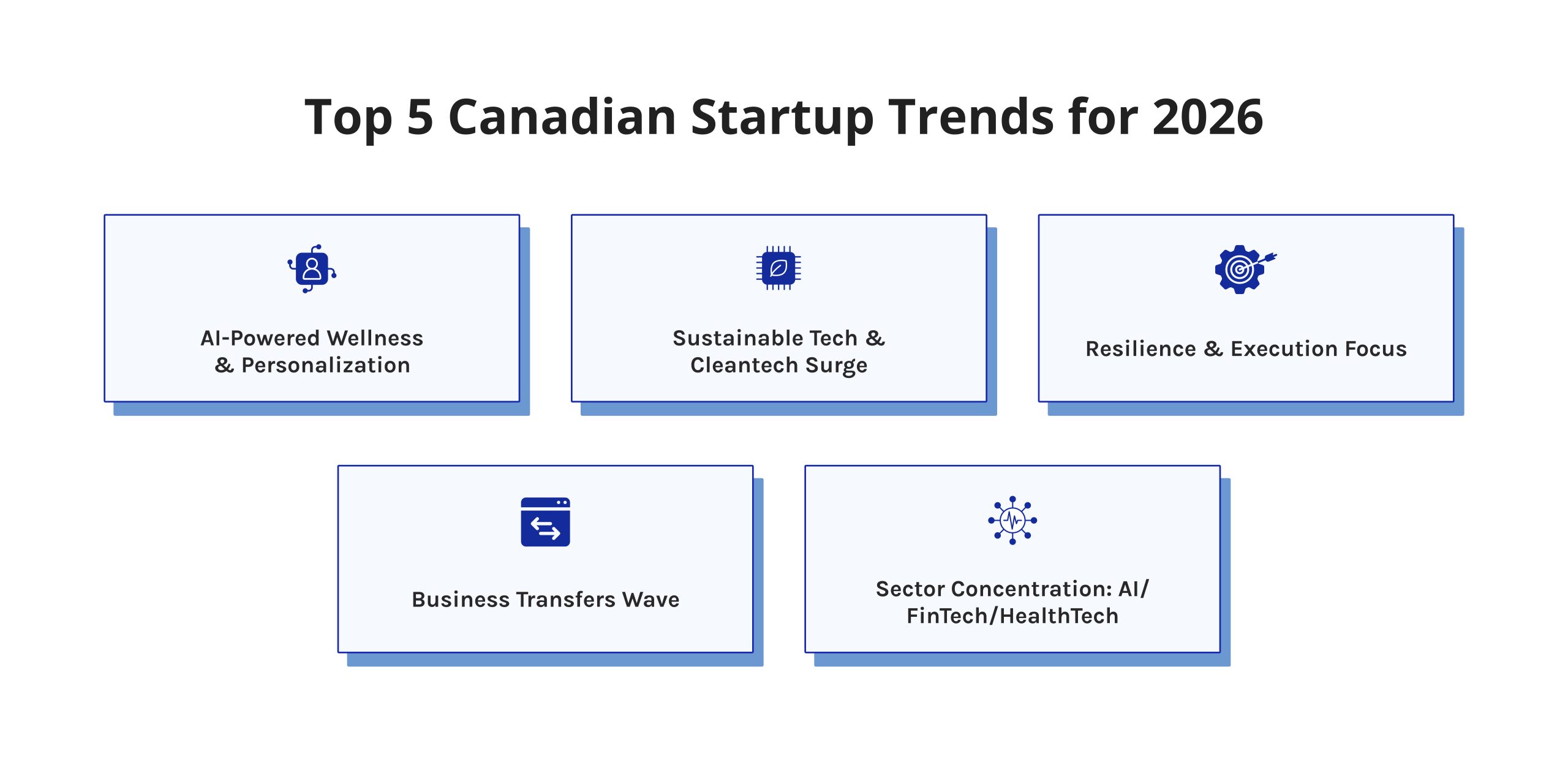
- AI becomes embedded, not standalone. AI is no longer a sector—it’s a capability layer inside every sector. Additionally, the startups winning in 2026 are not pure-play AI companies. They are legal tech, health tech, and fintech companies that happen to be AI-native.
- Clean technology transitions from niche to critical infrastructure. GHGSat, Summit Nanotech, and adjacent companies are solving problems governments and corporations must address. Regulatory tailwinds are creating durable market demand that does not depend on consumer sentiment.
- Cybersecurity becomes non-negotiable. Besides, every digital company is a target. Canadian cybersecurity companies are scaling faster than almost any other sector in the ecosystem.
- International ambition starts on day one. The best startup accelerator in Toronto and across the country now connects founders to global markets from the earliest stages. Canadian startups no longer wait until Series B to think internationally.
- Enterprise SaaS continues to attract the largest venture capital companies in Canada. B2B software remains the most fundable category in the ecosystem—and AI is dramatically expanding what small teams can build and sell.
Methodology: How We Ranked the Best Canadian Startups
Our selection of the top 26 startups in Canada for 2026 applies a consistent five-criterion framework to every company evaluated:
- Innovation and market differentiation — Does the company offer a genuinely novel solution? Or does it dramatically improve an existing approach in a defensible way?
- Funding and investor quality — Total capital raised, round recency, and the caliber of venture capital companies in Canada and globally backing the company.
- Growth trajectory — ARR growth, user adoption rates, and market penetration across the company’s target segments.
- Team and domain expertise — Founder backgrounds, depth of leadership experience, and quality of advisors and board members.
- Market timing and addressable opportunity — We prioritized companies operating in large, growing markets with clear regulatory, commercial, or technological tailwinds.
Every company on this list earned its place through verifiable fundamentals. Hype alone does not qualify any startup for inclusion.
Summary
Across Canada, startup activity shows rising strength, deeper funding, and greater global reach. These 26 firms appear within fintech, artificial intelligence, advanced technology, security systems, workplace evolution, and digital healthcare — not a complete list, yet illustrative of national innovation in 2026.
Should one look toward Canada’s emerging ventures, different paths appear — those tracking investment prospects, assessing job markets, or seeking corporate alliances will find value here. A strong base shapes where skilled individuals meet supportive policies, e.g. SR&ED. This support grows stronger with expanding accelerators across regions. Capital availability increases steadily due to rising fund sizes dedicated solely to early-stage firms within the country. Each element feeds into conditions favorable for launch and expansion alike.
Across the world, technology advances at speed. Among these shifts, Canada grows more influential by measure. Notable among its players, twenty-six firms stand apart. Their path traces a quiet rise, steady in motion. In corridors of innovation, their presence gains weight. With purpose, they define new patterns. From coast to core, impact spreads without fanfare. Each milestone adds depth to a broader shift. Behind progress, effort accumulates unseen. These entities move beyond old limits. A different kind of momentum builds here. Without spectacle, change takes root.
Want to stay tuned to all the news about startups, AI, and contagious trends? Our experts make weekly articles to provide you with high-quality and current information. Subscribe to Digest.Pro on LinkedIn and do not skip any notable news.
FAQs
The 90% rule relates to SR&ED (Scientific Research and Experimental Development) tax credit eligibility. A Canadian-controlled private corporation must perform a minimum 90% of its qualifying R&D work in Canada to access the maximum refundable credit rate of 35% on eligible expenditures. It directly shapes how startup companies in Canada structure their R&D operations and hiring decisions.
Waabi, Moonvalley, Tailscale, and CoHere are the most frequently cited candidates based on growth trajectories, recent funding valuations, and market opportunity. Additionally, Neo Financial and League are tracking closely toward the $1B valuation threshold. Unicorn startups in Canada are increasingly common as the ecosystem matures and late-stage capital becomes more accessible.
Yes. Canada’s Start-Up Visa Program allows entrepreneurs to immigrate, provided they secure a letter of support from a designated organization—such as an approved venture capital fund, angel investor group, or business incubator. The program specifically targets founders of high-growth, innovative businesses with global potential.
It depends heavily on the business type and growth model. A solo consulting firm can launch for under $1,000. A venture-backed tech startup typically needs a working prototype and early user traction before approaching investors. Many Canadian accelerators and startup incubators in Canada provide seed funding, workspace, mentorship, and access to networks at minimal or no cost to founders.
Among Canada’s most valuable private and recently public tech companies, the leading names include Shopify, Wealthsimple, 1Password, Clio, ApplyBoard, CoHere, and Hopper. Valuations shift often based on funding rounds and market conditions, so verifying current figures against Crunchbase or CVCA data is recommended.
Scientific Research and Experimental Development (SR&ED) is Canada’s primary federal R&D tax incentive. Canadian-controlled private corporations can claim up to 35% in refundable investment tax credits on qualifying R&D spending. Larger corporations and foreign-controlled entities access non-refundable credits at a lower rate. SR&ED is widely regarded as one of the most generous R&D incentive programs among OECD countries and is a significant competitive advantage for early-stage technology companies operating in Canada.
Toronto leads as the primary hub—it hosts the largest concentration of venture capital companies in Canada and is home to the Vector Institute for AI. Montreal excels in AI research (Mila) and game development. Vancouver is the top destination for blockchain, creative tech, and climate technology. Waterloo is a powerhouse for enterprise software and cybersecurity startups, while Calgary is emerging as a cleantech and fintech hub.
Canada raises significantly less absolute venture capital than the US. However, the gap is narrowing—and in AI talent density, Canada is genuinely world-class. The average engineer’s salary in Montreal and Toronto is 20-40% lower than the average engineer’s salary in San Francisco, giving Canadian startups a meaningful runway advantage. The primary structural gap remains at the growth and late stage, where US funds dominate global deal flow.
Artificial intelligence, fintech, cybersecurity, clean technology, and digital health are the five dominant sectors driving the best startups in Canada right now. AI is the cross-cutting theme—virtually every category now includes companies with AI-native architectures. Canadian AI startups in particular benefit from the world’s densest concentration of machine learning researchers outside the US.
Key programs: SR&ED tax credits (up to 35% refundable); the Industrial Research Assistance Program (IRAP), which offers direct non-dilutive funding to innovative SMEs; the Strategic Innovation Fund for large-scale strategic projects; and Export Development Canada (EDC) financing for companies expanding internationally. Additionally, most provinces offer supplementary innovation grants and business development tax credits. Together, these programs make Canada one of the most government-supported environments globally for startup companies in Canada at every stage of development.
References
- Canadian Venture Capital & Private Equity Association (CVCA). Canadian VC & PE Market Overview 2025. https://reports.cvca.ca/books/CVCA_Q4-2025_VC_Report/#p=8
- https://tracxn.com/d/companies/shopify/__NNWgXlWtRBr7FVe-BI1BiwMHs246IPF8HlqlcE5kZno#about-the-company
- https://tracxn.com/d/companies/lightspeed/__ri0G7u1AIMw3ew3kU8K_Jpsj7mvqukEzNSSOsKCodG4#about-the-company
- https://tracxn.com/d/companies/neofinancial/__w6sSncWVE9DSZdxP8_P7ja6erp_oWNPhS9C1oSHWfRA#about-the-company
- https://tracxn.com/d/companies/wealthsimple/__pqhB6c22JgYwAooOttqLZVs0knLh7FkkBAWF8IAwkE8#about-the-company
- https://tracxn.com/d/companies/wave/__2PeroYo1jQPMOOId6n2Cp73YjCtx7xgWg3iihwMk-Sw
- https://tracxn.com/d/companies/clio/__VHNDx_LwMJabSkqMAu8NhbsTOiDgSiibt3EQCr4mDUo
- https://tracxn.com/d/companies/cohere/__o4xfwmr3XwgsGEyH41XvwBm6Xd-SjsMlSld3d4ci6G0#about-the-company
- https://tracxn.com/d/companies/ada/__Y06jG5HQ67AohlIi02l0VNGyAGeZotSldx2E69XE-Ow#about-the-company
- https://tracxn.com/d/companies/waabi/__2Dsnq9PMh0C3XxQwdQAuD6aEWsFDawAPiybiOubSEH0#about-the-company
- https://tracxn.com/d/companies/moonvalley/__ykGg_iNNY1gLm1nGe-rdZDGOCrV8zIl0ohu4ZnccHFQ#about-the-company
- https://tracxn.com/d/private-equity/valsoft/__bwG0bn1luQTwggGumQmjO2uldUWEPZap2fUnUAJWiak#aboutKeyMetrics
- https://tracxn.com/d/companies/stackadapt/__b7n3s2WgjnDo9Q07vHxDbBIzg36Nux1YWkVd2HuNdO0#about-the-company
- https://tracxn.com/d/companies/colabsoftware/__CfSXmVfLrzQRY6vjvJFRtb950-KUeI4KJPq3yNzu2A4#about-the-company
- https://tracxn.com/d/companies/mdaspace/__vdeT0E95FjdasrI-fOe-ttzM4Xqjdt993nraxZgB3Rk#about-the-company
- https://tracxn.com/d/companies/ghgsat/__Y7SqVN6svUAB06NHiRPIvUsx9SrUb4Cayumant5anyY#about-the-company
- https://tracxn.com/d/companies/summitnanotech/__g7XyjYzc9wEIycw5axJeuAlPEPhIcd0sTKfgf8EB0xg#about-the-company
- https://tracxn.com/d/companies/xanadu/__8glMb5pDYEPLzcvVGlgerKuCjk0cSwffJv6SgJ62D4g#about-the-company
- https://tracxn.com/d/companies/trulioo/__XDcqsHK7sW6gIb3n2RgS6zGkASmAA4FAAWgQOXRwWmw#about-the-company
- https://tracxn.com/d/companies/assent/__Orq_bmXbU6tF_J165VtLTWZiUf5k8ElVKziaUd7IcMU#about-the-company
- https://tracxn.com/d/companies/1password/__Sz7moPLjMHzO6kby4jUIEDkwSJkdudydzuPn-rw6C8c#about-the-company
- https://tracxn.com/d/companies/tailscale/__HoO0OVaODdbZEsDLJ7_OTsp344lrcNrb7eGx_aw5Lrk#about-the-company
- https://tracxn.com/d/companies/applyboard/__kRjKdL9DAFlDyZehkD8tgpGiu7aKiLM3jp7xrM8X_x4#about-the-company
- https://tracxn.com/d/companies/dapperlabs/__cBEGTgOMk5vFVAGxFGUY5krvFkZdR5V67ypbyIX6Y2A#about-the-company
- https://tracxn.com/d/companies/benevity/__wjzkQ3Sc5jxroDcwp3T5QMNNxBfF32mPxTgw6UAtx9w#about-the-company
- https://tracxn.com/d/companies/league/__h395QSQRWBTDwTRKdfBc7ZdaYYmGc7jispYAeQLsHyY#about-the-company
- https://tracxn.com/d/companies/hopper/__Ln4k4rjkcG8vAMU1mQEUbbE0_QgdRMNscFg38vGru6M#about-the-company
- Singla, Alex, et al. “The State of AI in Early 2024: Gen AI Adoption Spikes and Starts to Generate Value.” McKinsey & Company, 30 May 2024, www.mckinsey.com/capabilities/quantumblack/our-insights/the-state-of-ai-2024.
- Jemal, Jagmeet Trudeau, Kevin Singh Fisher, and Justin Vuong Findley. “Entrepreneurial Mindset and Venture Success: A Study of Startups in Vancouver, Canada.” Journal of Entrepreneurship & Project Management 7.9 (2023): 1-10.
- Rowe, Andrea, et al. “Scaling start-ups: challenges in Canada’s innovation ecosystem.” ISPIM Conference Proceedings. The International Society for Professional Innovation Management (ISPIM), 2019.
- Grant, Kenneth A., Divya Padmanaban, and Amr El-Kebbi. “The early investment ecosystem for start-ups in Canada, a preliminary study.” Kindai Management Review 6 (2018): 76-99.
- Intahchomphoo, Channarong, Odd Erik Gundersen, and Christian Tschirhart. “Ecosystem, Education and Mindset of Startups in Canada’s Capital.” HHBIC 2020, 17–18.11 (2020): 2.
- Bergen, Benjamin. “Canada has a Scale-up Problem, not a Start-up Problem.” New Thinking on Innovation (2017): 113.
- Ressin, Marat. “Start-ups as drivers of economic growth.” Research in Economics 76.4 (2022): 345-354.
- Gartner. Top 10 Strategic Technology Trends in 2025. https://www.gartner.com/ngw/globalassets/en/information-technology/documents/trends/2025-top-tech-trends-ebook.pdf