
Data show that sales performance plateaus not from talent shortages but from an inability to coach effectively. A senior sales manager can only side-coach around four to five sales team members per week. For the remaining team, their development is left mostly to intuition and only occasional feedback from their manager, while sales quotas increase every quarter. This has created a long-standing structural divide that has existed for decades, but not until now.
The arrival of the AI coach for sales signifies a complete overhaul of how companies will create, implement, and enforce the use of playbooks with their sales teams in order to drive consistent revenue performance across multiple teams and locations.
An AI sales coach will score each conversation, analyze every interaction and provide specific recommendations on how to improve, all without the burden of hiring additional headcount or taxing managers with more responsibility. McKinsey has reported that sales organizations that leverage AI achieve productivity improvements ranging from 10-20% when compared to organizations using traditional methods.
We will cover what an AI sales coach is, how it works, specific benefits associated with AI sales coaching, key features to look for when evaluating an AI coaching platform, top platforms for 2026, and a structured process for selecting the best AI sales coaching solution for your organization.
What Is AI Sales Coaching?
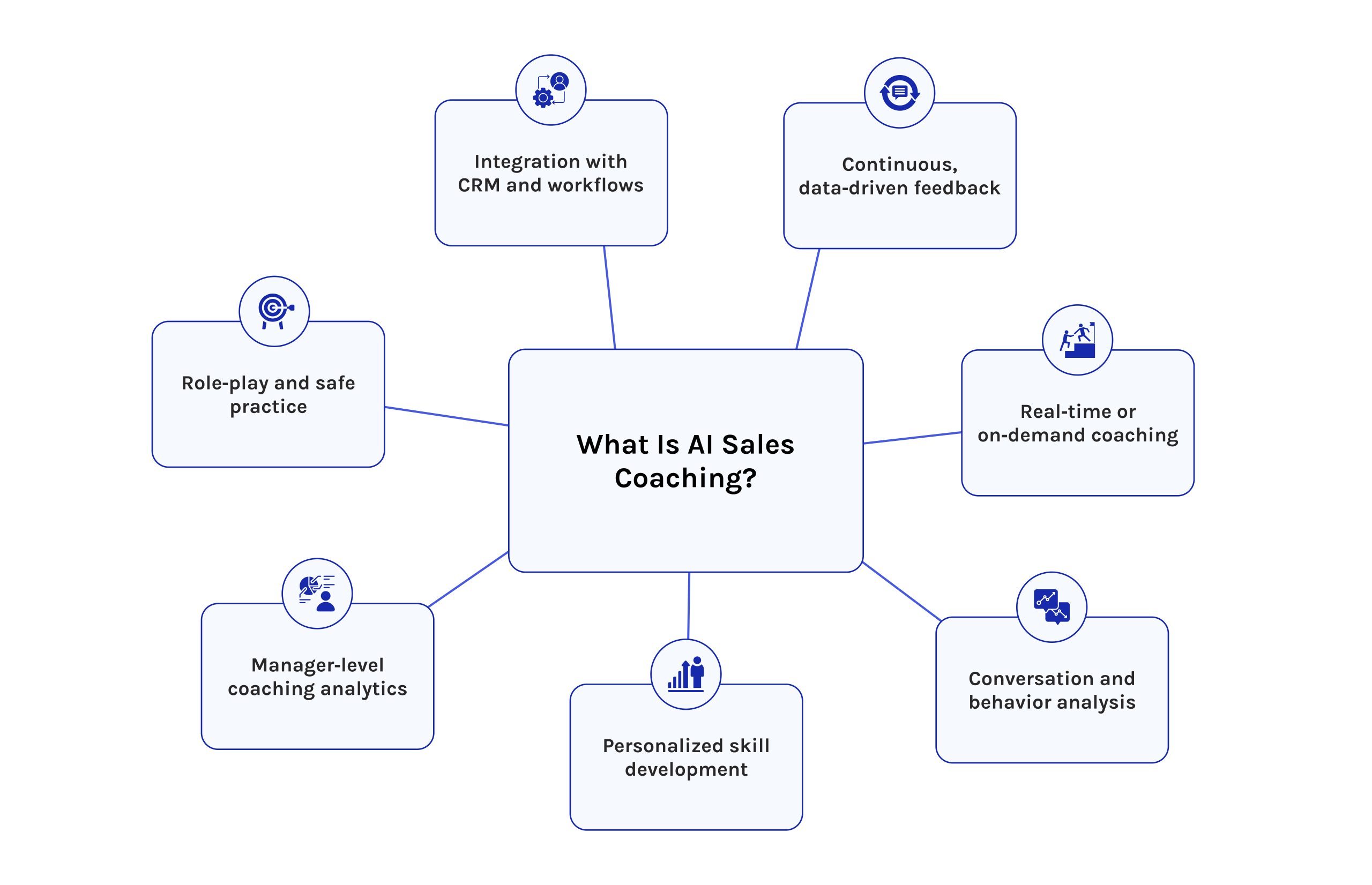
From behind the scenes, artificial intelligence examines sales talks. Performance of representatives gets measured through automated review. Guidance appears during or after calls, shaped by data patterns. Human-led feedback loops either fade away or shift into new forms. Assistance arrives without delay, driven by observation rather than memory.
A machine-based guide cannot take the place of people who lead sales teams. Yet it manages tasks filled with numbers and repetition. From audio files, written records, and customer system details, patterns emerge. These findings appear ready for review by team leaders or sellers without delay.
During sales discussions, understanding stems from systems powered by natural language processing, alongside machine learning and extensive language frameworks. These tools notice speaking balance, spot resistance points, highlight regulatory concerns – measuring performance relative to leading team members. What emerges is insight shaped by pattern recognition rather than human observation alone.
How AI Sales Coaching Works

1. Real-time Conversation Intelligence and Coaching.
Right during calls, modern AI tools begin reviewing speech patterns instantly. Mid-conversation, an intelligent assistant detects shifts without delay. Should a rival’s name come up, notification follows immediately. At the first hint of hesitation around cost, insight appears just then. When interest shows in the buyer’s voice, recognition occurs at that moment.
Right away, support like this shrinks delays from realization to adjustment. Instead of holding off until Friday’s review, staff gain responses during live exchanges. Clarity arrives just as dialogue ends. The moment matters more than the meeting.
2. Automated Call Scoring and Performance Analysis.
From every sales conversation, information emerges. Information gets collected without human input by an artificial intelligence system designed for coaching. Each discussion receives evaluation through fixed benchmarks like speaking versus silence time, how often inquiries occur, mention of benefits, and following established guides. Evaluation happens silently, behind the scenes, after audio ends.
What stands out is how performance of each representative compares to both group norms and leading peers. A clear view forms for supervisors, showing which individuals face challenges along with precise areas falling short. Instead of spending long stretches listening to recordings by hand, evaluation happens through steady machine-driven assessment.
3. AI-powered Roleplay and Practice Sessions.
Essential to strong sales performance is consistent practice. Today’s technology enables learning through simulated interactions driven by artificial intelligence. Instead of static drills, representatives engage in dynamic exercises like initial outreach and uncovering client needs. These scenarios include resistance responses and deal conclusion strategies. Behavior resembling actual prospects emerges from the AI counterpart during each exchange.
At any hour, these sessions remain accessible. Across varying regions, representatives may proceed at times fitting personal routines. As performance shifts, so does the AI’s feedback – growing sharper with every attempt. Each interaction adjusts quietly, matching effort and outcome.
4. Personalized Skill Development and Training.
Essential to strong sales performance is consistent practice. Today’s technology enables learning through simulated interactions driven by artificial intelligence. Instead of static drills, representatives engage in dynamic exercises like initial outreach and uncovering client needs. These scenarios include resistance responses and deal conclusion strategies. Behavior resembling actual prospects emerges from the AI counterpart during each exchange.
At any hour, these sessions remain accessible. Across varying regions, representatives may proceed at times fitting personal routines. As performance shifts, so does the AI’s feedback – growing sharper with every attempt. Each interaction adjusts quietly, matching effort and outcome.
Benefits of AI Sales Coaching for Sales Teams
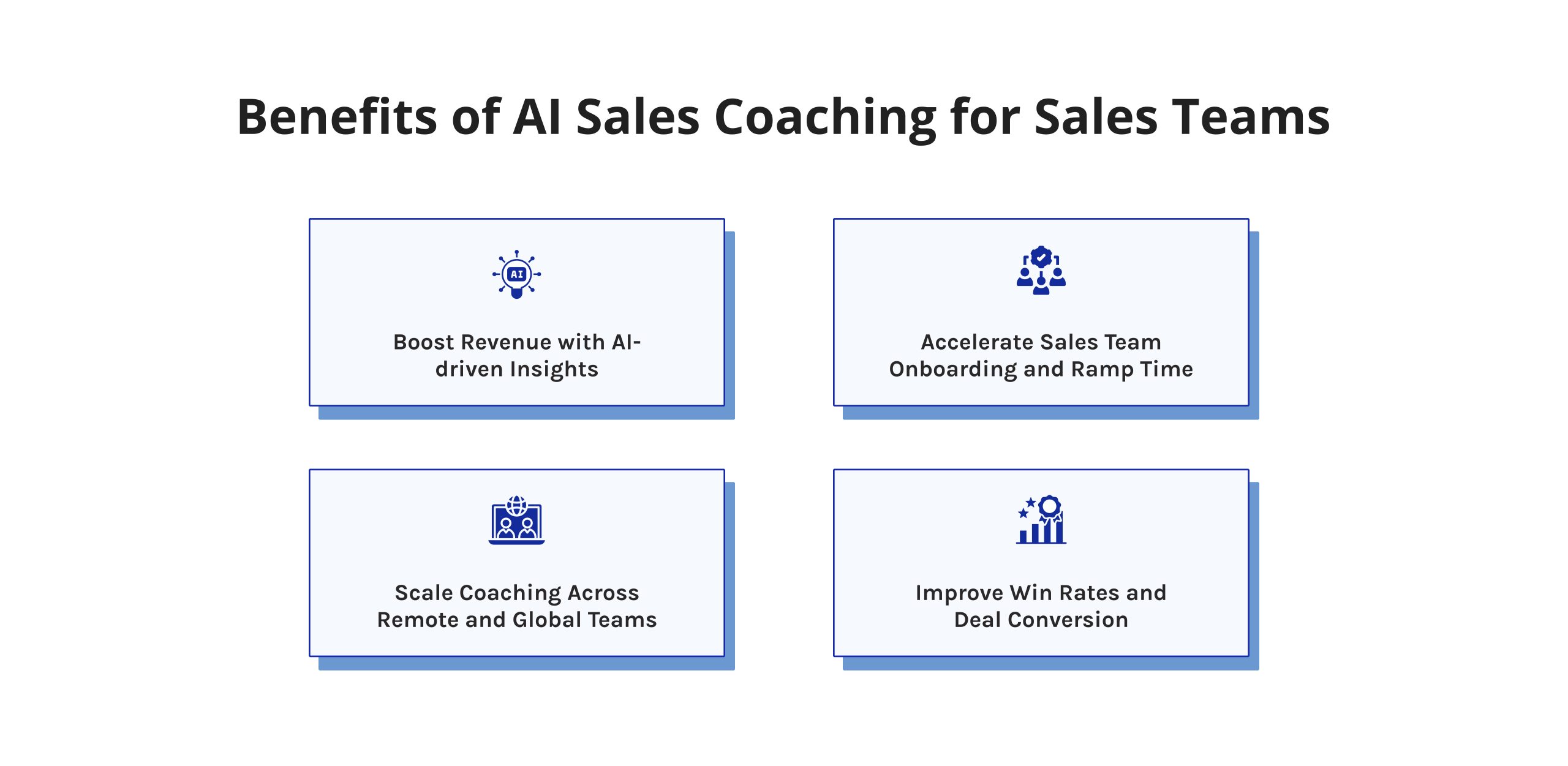
1. Boost Revenue with AI-driven Insights.
What sets successful deals apart becomes visible through AI coaching. From vast numbers of discussions, specific phrases and queries emerge – those tied to positive results. Winning approaches appear not by guesswork but by observation. One after another, interactions reveal what works. Patterns form over time, clear yet unforced. Teams begin aligning their dialogue accordingly. Success spreads quietly, shaped by repetition. Outcomes shift where attention was once scattered. Behind every closed deal lies a structure now understood.
2. Accelerate Sales Team Onboarding and Ramp Time.
Most newcomers need three to six months before they perform at peak levels. With an artificial intelligence-guided training system, that duration shortens noticeably. Right away, recent recruits can study successful conversations, receive on-the-moment suggestions while speaking with prospects, then refine responses using simulated interactions.
According to Highspot (2024), firms applying artificial intelligence in employee induction shorten adaptation periods as much as thirty percent. Contribution begins earlier with each individual entering the role.
3. Scale Coaching Across Remote and Global Teams.
Human managers cannot coach a distributed team of 50 or 500 reps consistently. AI sales coach agents solve this problem. They apply the same standards, the same playbooks, and the same feedback quality to every rep — regardless of location, language, or time zone.
This consistency is especially valuable for global sales teams. An AI sales coaching platform can operate in multiple languages and adapt feedback to regional sales contexts.
4. Improve Win Rates and Deal Conversion.
Sales coach AI platforms analyze deal-level data alongside conversation data. They identify risk signals in pipeline deals, recommend next-best actions, and flag stalled opportunities early. Reps and managers can intervene before deals slip — not after.
Gong’s research shows that reps who receive AI-driven coaching close deals at a higher rate than those relying solely on manager feedback (Gong, 2024). The data advantage is significant.
Stay ahead of the latest trends in AI, sales technology, and business strategy. Follow Digest.pro on LinkedIn for curated expert insights delivered straight to your feed.
Key Features of AI Sales Coaching Platforms

Live Automated Speech Coaching
During live conversations, speech patterns are examined moment by moment. Filler terms, rhythm, vocal quality, and intensity receive continuous assessment. Guidance appears quietly within the interface. Adjustments happen gradually as feedback flows. Reps respond to cues without disruption. Input shapes respond in real time. Subtlety maintains flow. Awareness grows through quiet signals.
AI Live Coach Cards for Real-time Recommendations
Should an inquiry arise regarding competitors, assistance appears without delay. Information becomes available at once when concerns are voiced. Guidance is presented as soon as hesitation shows. At the moment doubt emerges, relevant support material displays itself. Responses appear instantly if comparisons come up. Resources show themselves whenever questions occur. Assistance reveals itself precisely when needed most.
Coaching Groups for Team Support
Grouping representatives by role, skill, or product allows managers to design focused coaching. Such organization supports team growth while maintaining personal feedback loops.
Call Analysis and Conversation Intelligence
After each call ends, the system converts speech into text. Through analysis, topics are identified and labeled automatically. Instead of guessing, supervisors locate discussions using keywords or themes. Review happens with purpose, guided by results rather than chance.
Performance Metrics and Analytics
Over time, performance metrics like talk versus listen duration, how often objections arise, speed of closing deals, and progress in training tasks appear clearly on dashboards. Early signs of shifting patterns become visible, allowing guidance focus to shift where needed. Trends unfold gradually; responses follow with precision.
Customizable Roleplay Scenarios
With AI-driven sales coaching tools, roleplay exercises reflect real customer profiles, offerings, and progression phases. As a result, training aligns closely with everyday situations. Relevance emerges naturally when simulations mirror live conditions. Practice gains value through contextual accuracy. Customization ensures alignment across team activities. Scenarios evolve alongside shifting priorities. Learning stays grounded in practical demands.
Multi-language Support and Localization
Global deployment stays consistent when top-tier AI coaching tools include multilingual capabilities. Real-time conversion of conversation feedback appears in select systems. While language barriers often disrupt training, these platforms maintain clarity across regions. Translation during sessions shows up occasionally among advanced options. Coaching effectiveness remains stable regardless of tongue. A few solutions even adjust spoken analysis instantly. Though not universal, live interpretation exists where needed most.
Enterprise Security and Compliance
Information from call recordings often includes confidential details. Secure systems meet SOC 2 standards, ensuring trust through strict protocols. Encryption protects data at rest and in transit across these networks. Access depends on assigned roles within the organization structure. Logs track user actions for oversight and review purposes.
Seamless Workflow Integration
Insights move directly into daily operations when linked with tools like Salesforce, Zoom, or HubSpot. Workflows stay continuous because connections exist across platforms such as Teams, Slack, and learning management systems. Data does not sit apart; it travels where needed through these bridges. Seamless movement happens by design, not chance, within established processes.
Best AI Sales Coaching Tools and Platforms
1. Gong — Conversation Intelligence Platform
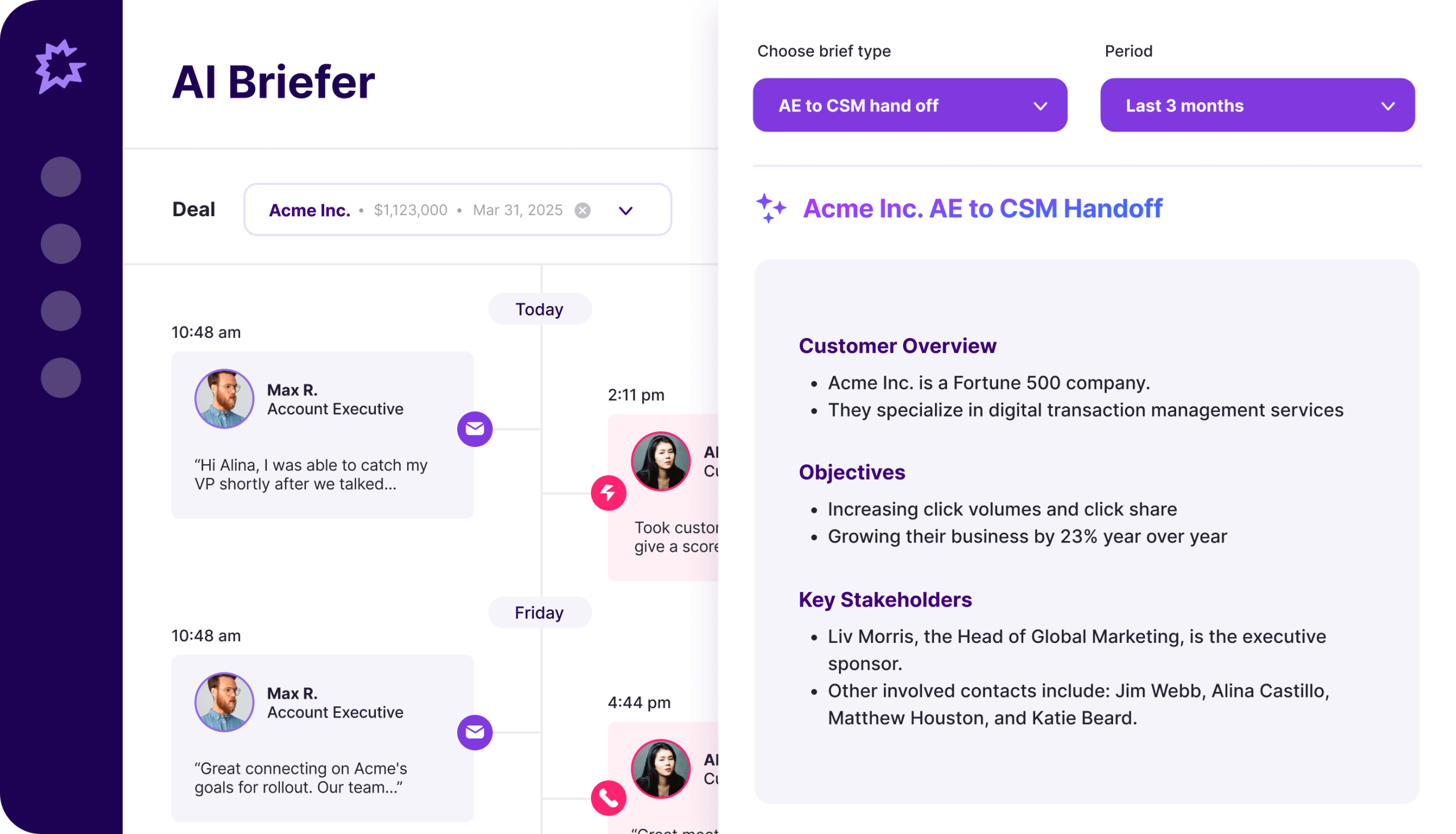
Gong is one of the leaders in the revenue intelligence market. With an AI platform (an artificial intelligence platform) that can help you analyze all your sales interactions (calls, emails, and meetings), you’ll be able to gain important insights from each conversation you have with a customer. In addition to providing robust analytical capabilities for conversations and deals, it also enables you to coach your employees using a single platform.
Best for: Enterprise sales teams that want comprehensive conversation intelligence combined with pipeline insights.
Distinguishing feature: Gong’s Deal Intelligence connects conversation data to CRM pipeline, flagging at-risk deals based on actual rep behavior — not just CRM updates.
Pros:
- Best-in-class depth of conversation analytics.
- Enhanced integration with many CRMs (Salesforce, HubSpot, MS Dynamics)
- Robust coaching and scorecard workflows
- Excellent AI-generated call summaries and next-step recommendations
- Powerful deal intelligence that links rep behavior directly to pipeline health
Cons:
- Premium pricing may be prohibitive for SMBs
- Steep learning curve for new admins
- Limited native roleplay functionality
Pricing: Custom pricing; typically $100–$200+ per user/month depending on contract size.
User reviews:
- G2: 4.7/5
- Capterra: 4.8/5
2. Hyperbound — AI Roleplays and Sales Coaching
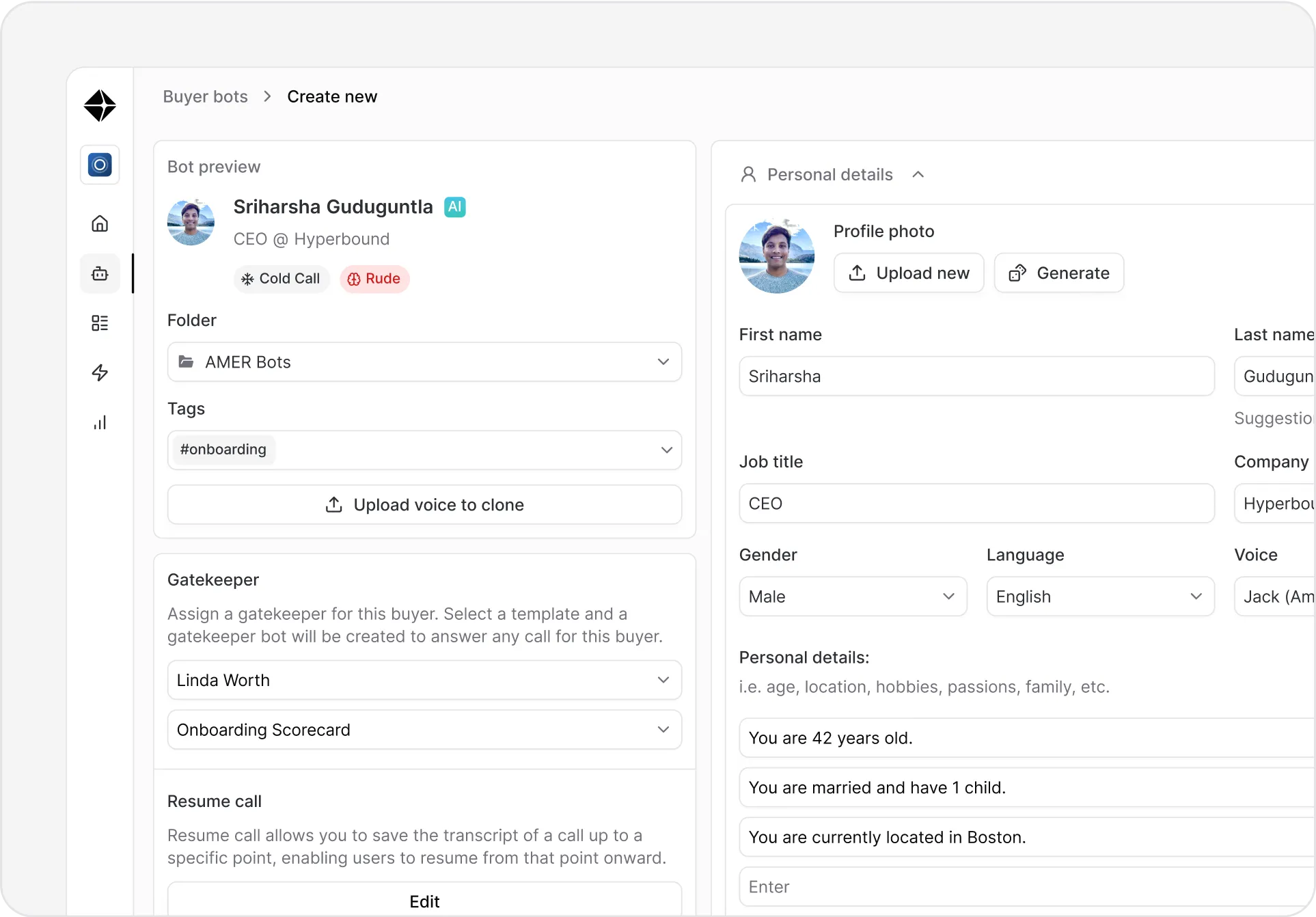
Hyperbounty is an AI-based, purpose-built sales coaching program that revolves around the creation of interactive role-playing programs and skills training for representatives to utilize buyer simulations powered by AI to practice, currently, in real scenarios in the marketplace, such as making cold calls, conducting discovery, and overcoming objections.
Best for: Sales teams who are looking for high-volume & scalable practice/onboarding acceleration.
Distinguishing feature: Hyperbound builds AI buyer personas based on your actual ICPs (ideal customer profiles), making roleplays immediately relevant to real-world selling.
Pros:
- Highly realistic AI buyer simulations built on your own ICP data
- Fast setup for custom roleplay scenarios with minimal technical overhead
- Strong performance analytics that track skill progression over time
Cons:
- Narrower scope than full conversation intelligence platforms
- Newer platform with a smaller customer base and fewer third-party integrations
Pricing: Custom plans available.
User reviews:
- G2: 4.9/5
- Capterra: –
3. Dialpad — AI-powered Call Intelligence
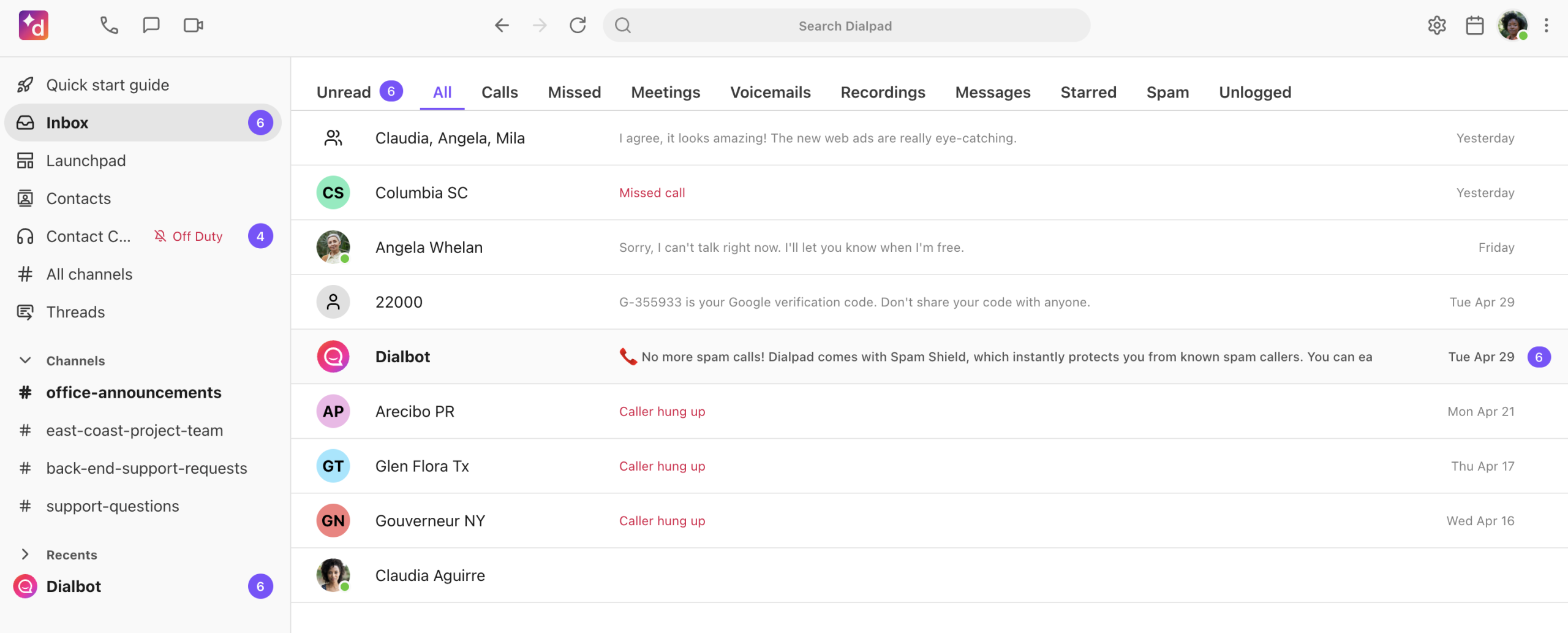
Dialpad is a cloud-based communication solution that includes a powerful AI-based sales coach. On the Dialpad platform, users can read their calls as they occur, receive ‘Live’ alerts for coaching cues, have their calls scored automatically, and access post-call analytic reports; all from Dialpad’s integrated voice and video system.
Best for: Sales teams looking for one source for their unified communications product with AI coaching capabilities.
Distinguishing feature: Dialpad’s AI is built exclusively into Dialpad’s telephony platform; No third-party integration required, less latency in receiving ‘Live’ coaching cues.
Pros:
- Real-time AI coaching tips provided during ongoing calls
- Phone, video, and chat included – consolidates tools into one
- Affordable price allows usage by smaller teams
- Native telephony stack ensures lower latency than third-party integrations
Cons:
- Conversation intelligence depth and analytics fall short of dedicated platforms like Gong
- Some advanced AI coaching features are locked behind higher-tier plans
Pricing: custom enterprise pricing available.
User reviews:
- G2: 4.4/5
- Capterra: 4.2/5
4. Second Nature — AI Sales Training and Roleplays
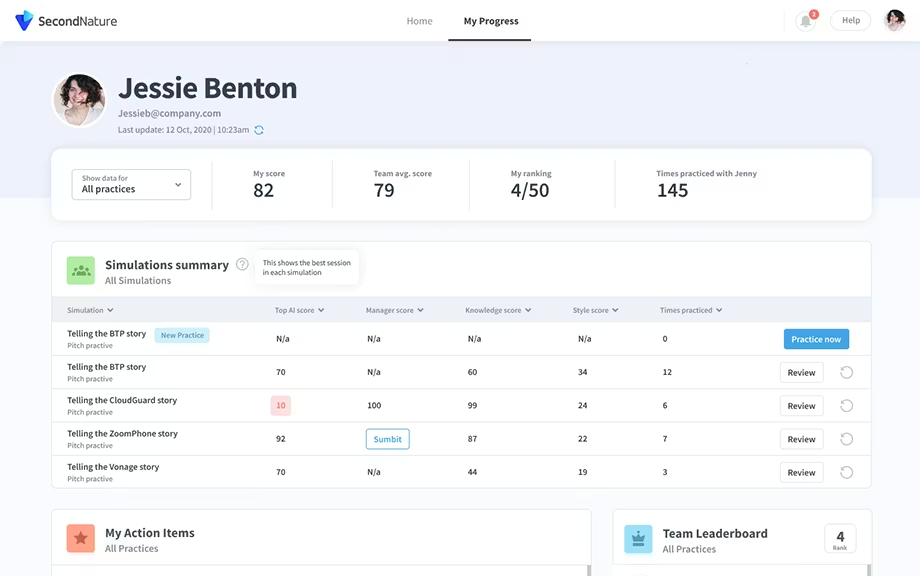
Second Nature is a dedicated sales coaching application that uses artificial intelligence for conducting realistic roleplay practice sessions and then generates a performance report for each.
Best for: L&D professionals and sales enablement specialists interested in creating organized sales training courses.
Distinguishing feature: Unlike most other applications mentioned on this list, the AI “coaches” in Second Nature analyze not only what you say but also your tonality, confidence, and effectiveness.
Pros:
- Highly realistic, voice-based AI roleplay with adaptive buyer responses
- Detailed competency scoring that maps directly to defined sales skills
- Strong fit for compliance-heavy industries requiring certification training
Cons:
- Primarily a training tool — it does not provide live in-call coaching
- Limited CRM and pipeline integration compared to broader platforms
- Pricing is enterprise-focused and may be high for smaller sales teams
- No native conversation intelligence for real customer call analysis
Pricing: Custom pricing for enterprise.
User reviews:
- G2: 4.6/5
- Capterra: 5.0/5
5. Salesforce Einstein — AI Coaching Insights

Salesforce Einstein is an additional AI layer available inside Salesforce Sales Cloud and featuring various sales coaching tools, including lead scoring, deal insights, activity intelligence, and coaching tips.
Best for: For companies with a deep investment in Salesforce ecosystem interested in integrating AI sales coaching.
Distinguishing feature: Having access to Salesforce data, Einstein AI has context like no other AI sales coaching application out there.
Pros:
- Unmatched native Salesforce integration with zero additional data plumbing required
- Combines pipeline forecasting, activity intelligence, and coaching insights in one place
Cons:
- Requires a paid Salesforce Sales Cloud subscription — costs can escalate quickly
- Conversation intelligence and coaching depth lag behind dedicated AI coaching platforms
- Less flexible for teams that operate outside the Salesforce ecosystem
Pricing: Custom.
User reviews:
- G2: 4.4/5
- Capterra: 4.0/5
Top AI Sales Coaching Tools: Comparison Table
|
Platform |
Best For |
Live Coaching |
Roleplay |
CRM Integration |
|
Gong |
Enterprise conversation intelligence |
✅ Yes |
❌ Limited |
✅ Deep |
|
Hyperbound |
Roleplay and onboarding |
❌ No |
✅ Best-in-class |
✅ Moderate |
|
Dialpad |
Unified comms + coaching |
✅ Yes |
❌ Limited |
✅ Good |
|
Second Nature |
Training and simulation |
❌ No |
✅ Excellent |
✅ Moderate |
|
Salesforce Einstein |
Salesforce-native teams |
✅ Yes |
❌ Limited |
✅ Native |
Use Cases for AI Sales Coaching
Sales Conversations and Negotiation Training
An AI coach for sales team environments can simulate complex negotiation scenarios. Reps practice handling pricing pressure, multi-stakeholder dynamics, and procurement conversations — safely, before real deals are on the line.
Product Knowledge and Compliance Training
For regulated industries — financial services, healthcare, insurance — compliance adherence during sales calls is critical. AI sales coaching software monitors calls for required disclosures and flags deviations automatically. It also supports product knowledge training through scenario-based learning.
Objection Handling and Closing Techniques
Objection handling separates good reps from great ones. AI-powered sales coaching tools analyze how top performers respond to common objections. They surface those patterns as training content and live prompts for the broader team.
Customer Interaction Quality Improvement
AI sales coaches do not only help with winning new deals. They also improve the quality of account management and renewal conversations. Analyzing customer success calls helps teams identify satisfaction signals, expansion opportunities, and churn risks early.
How to Choose the Right AI Sales Coaching Platform
Start by seeing it clearly: picking an AI sales coaching tool goes beyond ticking boxes on a spec sheet. A poor fit drains funds while slowing team uptake across departments.
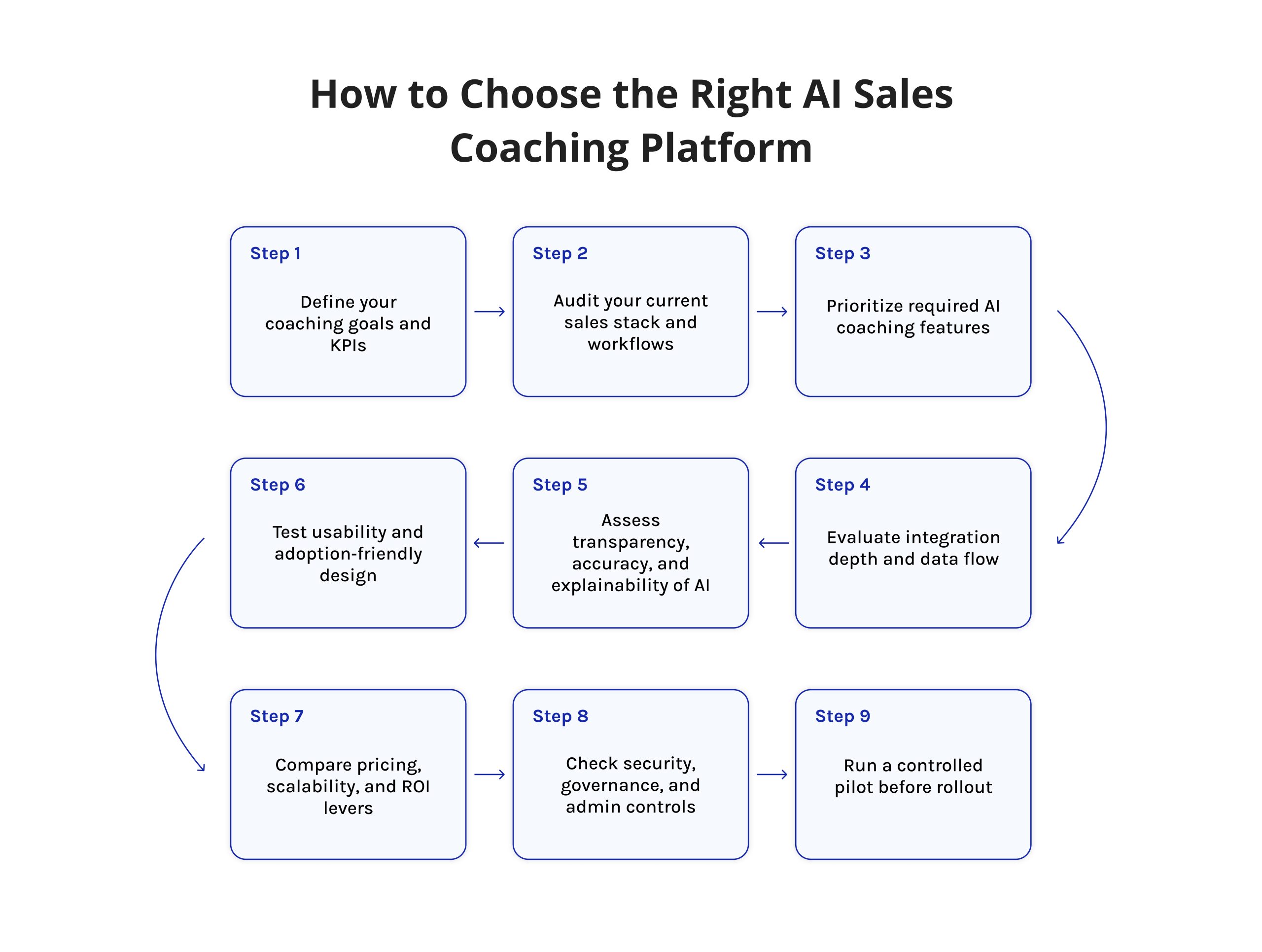
1. Define Your Coaching Goals and KPIs
Outcomes come first – features follow. Is reducing training duration for new team members the target? Quality of initial client conversations might be the focus instead. Perhaps closing more contested opportunities is the aim. Different objectives connect to distinct system functions. Start by setting a small number of clear performance markers – perhaps time per sale, response success on initial contact, or follow-up session adherence. Such measures form the basis against which system value will later be reviewed. With these in place, evaluation gains focus once operations begin.
2. Audit Your Current Sales Stack and Workflows
Start by outlining the way sales groups work now. What CRM is in place at present? Call logging by representatives happens through which method? Feedback from supervisors reaches teams where exactly? An effective AI-driven coaching tool aligns with current processes instead of demanding fresh routines. Where slowdowns occur, notice them first. A suitable system removes such barriers instead of creating fresh obstacles.
3. Prioritize Required AI Coaching Features
Some teams do not require all available functions. Begin with a layered structure. At the top, place essential items – such as live feedback during calls or automated review after. Below that, include desired but non-critical elements. The lowest level holds optional extras. This approach stops suppliers from gaining favor through unused tools. Direct presentation periods toward core requirements. Require providers to support claims using actual results rather than refined presentations.
4. Evaluate Integration Depth and Data Flow
One sign of weak integration is surface-level connectivity. Question suppliers on precise methods linking their system to your CRM, dialer, or video software. Data returned to Salesforce – does that happen without manual steps? Coaching evaluations appear in the learning platform – is that handled in real time? Connection depth matters more than advertised compatibility. When information moves slowly, understanding gets trapped in isolated areas – so usage declines quickly. Instead of watching a standard demonstration setup, ask for a guided review using the tools you already run.
5. Assess Transparency, Accuracy, and Explainability of AI
Often skipped, yet critical: when an AI tool assigns a rating to a sales call, clarity behind that number becomes essential. Because without knowing what prompted the result, confusion follows. Reps need insight into how judgments form. Managers require visibility into assessment logic. Systems operating without transparency tend to weaken confidence. Platforms revealing specific dialogue segments linked to scores help reduce uncertainty. Evidence-backed suggestions support better guidance. Adjustability lets leaders align scoring with internal benchmarks. Questions around precision matter too – especially regarding speech conversion and subject recognition. Industry-specific terms test reliability most. Accuracy claims should reflect real-world performance.
6. Test Usability and Adoption-Friendly Design
Most effective tools succeed when adopted consistently by users. Try observing actual usage through testing with individual contributors – select active sellers instead of oversight personnel only. Notice how the steps required to examine recorded interactions affect engagement. Consider whether mobile accessibility supports routine participation during typical workdays. Does the feedback take less than two minutes to understand? When teams adopt it fully, returns follow. Without uptake, even advanced systems fail silently. Success hides where usage begins.
7. Compare Pricing, Scalability, and ROI Levers
Pricing per seat opens the conversation only. Beyond that, include expenses tied to setup, connecting systems, managing operations, and efforts needed to adopt new workflows. When estimating returns, suppose training periods shrink by one month – what gain emerges across each newly onboarded employee? Imagine success ratios climb half a tenth; how shifts the total income outlook for the year shift? Before talks begin around price, draft a basic framework for return analysis – it brings understanding, and also influence.
8. Check Security, Governance, and Admin Controls
Recordings of phone calls, along with written records, hold business-critical details. Certification under SOC 2 Type II standards and adherence to GDPR and CCPA rules come standard among strong enterprise systems – so does controlled user access, tracking logs, and where data is stored geographically. Where finance, medical care, or insurance apply, extra regulatory benchmarks enter the picture. Proof matters more than promises: confirm each credential independently. Trust only what has been validated through official channels.
9. Run a Controlled Pilot Before Rollout
Start small when scaling new systems — full rollout demands prior testing. A test phase reveals what spreadsheets cannot. Choose participants carefully: ten to twenty individuals will suffice. Include varying performance tiers and diverse locations, too. Duration matters; allow between one month and two months. Clarity comes first — state objectives clearly ahead of launch. Metrics must exist before activity begins. Insights emerge not just from numbers but also from people.
If you work in sales strategy, revenue operations, or business leadership, follow Digest.Pro on LinkedIn — we publish expert breakdowns on AI, productivity, and growth every week. Join a community of professionals who rely on us to cut through the noise.
Final Thoughts
Now it becomes clear: AI in sales coaching isn’t up for debate. What matters instead is how well a given system fits the way your group works.
A single truth stands out when teams adopt automated guidance: repetition meets precision only through constant oversight. Because performance gaps shrink not by chance but by design, each conversation becomes a chance to align behavior with results. Where new hires once struggled, now steady feedback lifts their pace without burdening trainers. Insights emerge where silence used to live, allowing choices to form around evidence rather than instinct. Through daily review of real interactions, patterns appear that even experienced eyes might overlook.
When artificial intelligence supports skilled leaders, outcomes improve the most. Instead of substitution, integration brings lasting gains. One sees clearer insights emerge where machine analysis meets human decision-making. Motivation grows stronger under guidance that blends data with experience. Advantage builds slowly in systems, balancing algorithmic precision and managerial wisdom. Such a balance does not happen by accident. It forms through careful alignment of tools and people.
Our Methodology
To evaluate the best AI sales coaching tools in this article, we applied a consistent framework across all five platforms:
- General description: We assessed each platform’s core positioning, primary use case, and target customer segment.
- Best for: We identified the specific scenarios and team profiles where each tool delivers the highest value.
- Distinguishing feature: We highlighted the capability that most differentiates each platform from its competitors.
- Pros and cons: We evaluated strengths and limitations based on verified user reviews (G2, Capterra) and platform documentation.
- Pricing: We referenced publicly available pricing where disclosed and indicated custom pricing where it is not.
- User reviews: We sourced ratings and review counts from G2 and Capterra as of Q2 2026.
We did not accept sponsored placements or allow vendors to influence our assessments. Our goal is to give sales leaders, revenue operations teams, and C-level executives the objective information they need to make confident platform decisions.
AI Sales Coaching FAQs
An AI sales coach is a software system that uses artificial intelligence to analyze sales conversations, score rep performance, and deliver personalized coaching feedback automatically — at scale and without requiring manual manager review.
It records and transcribes sales calls, scores conversations against defined criteria, identifies skill gaps, delivers real-time in-call guidance, and provides post-call coaching recommendations. It also enables AI-powered roleplay practice for continuous skill development.
The best AI sales coach depends on your use case. Gong leads for enterprise conversation intelligence. Hyperbound excels for roleplay and onboarding. Dialpad is strong for teams wanting unified communications with built-in coaching. There is no single universal answer — define your priorities first.
It works by continuously analyzing rep behavior, identifying patterns linked to successful outcomes, and delivering targeted feedback. Over time, reps internalize winning behaviors, and managers can focus on strategy and motivation rather than manual call review.
No. AI handles data analysis, pattern recognition, and consistent feedback delivery. Human managers provide strategic judgment, motivation, relationship building, and contextual coaching that AI cannot replicate. The strongest teams use both.
AI coaching scales consistent feedback to every rep, reduces ramp time for new hires, identifies skill gaps early, and surfaces the behaviors that separate top performers from the rest. This lifts team-wide performance, not just individual outcomes.
Most leading AI sales coaching platforms integrate with major CRMs (Salesforce, HubSpot), dialers, video platforms (Zoom, Teams), and communication tools (Slack). Always verify specific integrations before purchasing.
Prioritize: fit with your primary use case (live coaching vs. training vs. analytics), CRM integration quality, multi-language support, compliance certifications, ease of adoption, and verifiable ROI data from similar customers.
AI coaching is available 24/7, scales to every rep simultaneously, delivers consistent and objective feedback, adapts to individual skill levels, and connects coaching to real call data — not hypothetical scenarios. Traditional training is periodic, subjective, and disconnected from daily performance.
AI coaching bots use NLP and machine learning to understand spoken or written sales conversations. They parse language in real time, match patterns to defined competencies or playbooks, and generate feedback or recommendations based on what they detect. Some bots also simulate buyer conversations for practice purposes.
References
- McKinsey & Company. (2023). The state of AI in 2023: Generative AI’s breakout year. https://www.mckinsey.com/capabilities/quantumblack/our-insights/the-state-of-ai-in-2023-generative-ais-breakout-year
- Luo, Xueming, et al. “Artificial intelligence coaches for sales agents: Caveats and solutions.” Journal of Marketing 85.2 (2021): 14-32.
- Casenave, Eric, and Laurianne Schmitt. “Comparing AI coaching and sales manager coaching: A construal-level approach.” Journal of Business Research 190 (2025): 115241.
- Azar, Rody. “AI-Augmented Sales Leadership: Coaching HighPerformance Teams in the Age of Intelligent Automation.” Neonatology Today 20.11 (2025).
- Terblanche, Nicky, and Danie Cilliers. “Factors that influence users’ adoption of being coached by an artificial intelligence coach.” Philosophy of Coaching: An International Journal 5.1 (2020): 61-70.
- Gartner. (2024). Market Guide for Revenue Intelligence Platforms. Gartner Research.
- Highspot. (2024). State of Sales Enablement Report 2024. https://www.highspot.com/resource/state-of-sales-enablement/
- Forrester Research. (2017). How AI Will Transform Sales. Forrester Research Inc.
- Schultz, M., & Doerr, J. (2014). Insight Selling: Surprising Research on What Sales Winners Do Differently.
- Dixon, M., & Adamson, B. (2011). The Challenger Sale: Taking Control of the Customer Conversation. Portfolio/Penguin.
- Mäntyvaara, Joona, et al. “Ai-assisted sales coaching framework: Empirically-derived models for B2B communication analysis.” Array (2026): 100755.
- Nguyen, Carlin A., et al. “Dimensions of effective sales coaching: Scale development and validation.” Journal of Personal Selling & Sales Management 39.3 (2019): 299-315.