
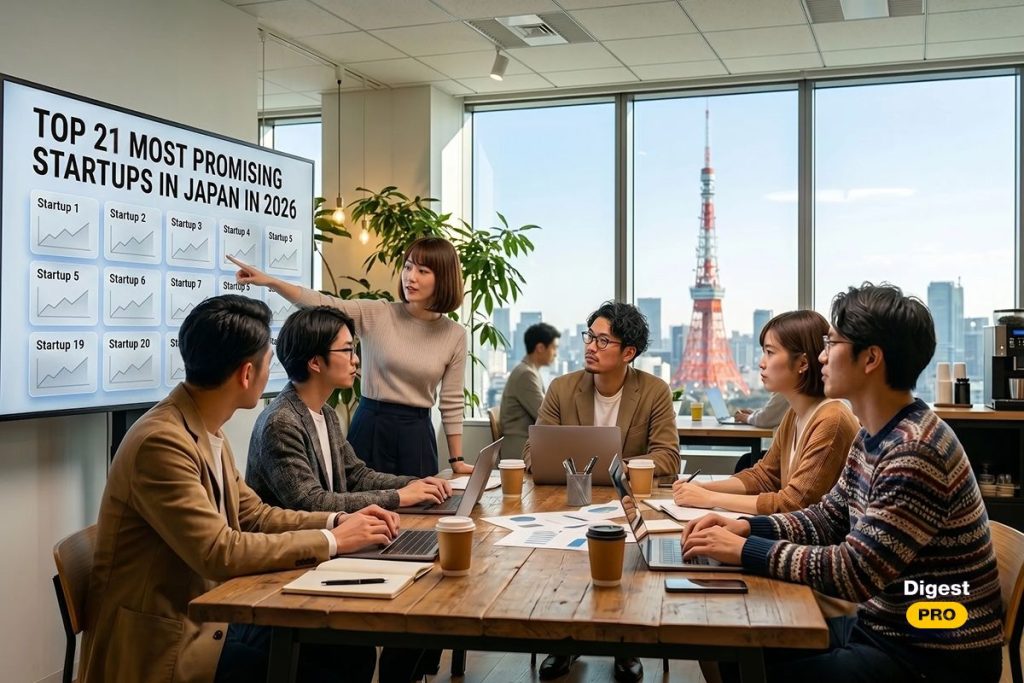
Nowhere is change more visible than in Japan’s emerging startup scene. This shift appears suddenly in the daily news. Not long ago, such energy stayed hidden. Today, it draws global notice because innovation grows stronger there. Where tradition once slowed progress. A new pattern forms without loud announcements.
Key Takeaways:
- Japan’s startup ecosystem raised approximately ¥761 billion ($5.1B) in 2025, according to SPEEDA’s Japan Startup Finance 2025 Report — nearly flat year-over-year, as the market entered a phase of consolidation after 2021–2022 peaks [42].
- Sakana AI is Japan’s most valuable privately held startup, reaching a $2.65 billion valuation in under two years — the highest ever recorded for an unlisted Japanese company [2,3].
- The Japanese government has put together a five-year plan with the goal of generating ¥10 trillion of investments into startup companies and 100 unicorns by the time we reach 2027 or 2028 [4,5].
- Within AI, robotics, quantum computing, and space technology, Japanese startups now directly compete against similar ones from the US and Europe.
- The J-Startup initiative and the government agencies that support it have been instrumental in creating an environment where new technology entrepreneurs want to move to Tokyo and the greater Tokyo area.
By finishing this article, you will have identified the most promising innovators from Japan by matching their attributes with your funding and determining the respective industry sectors that are driving future competitiveness for Japan.
Read more: 5 Best Startups in Hungary to Watch in 2026
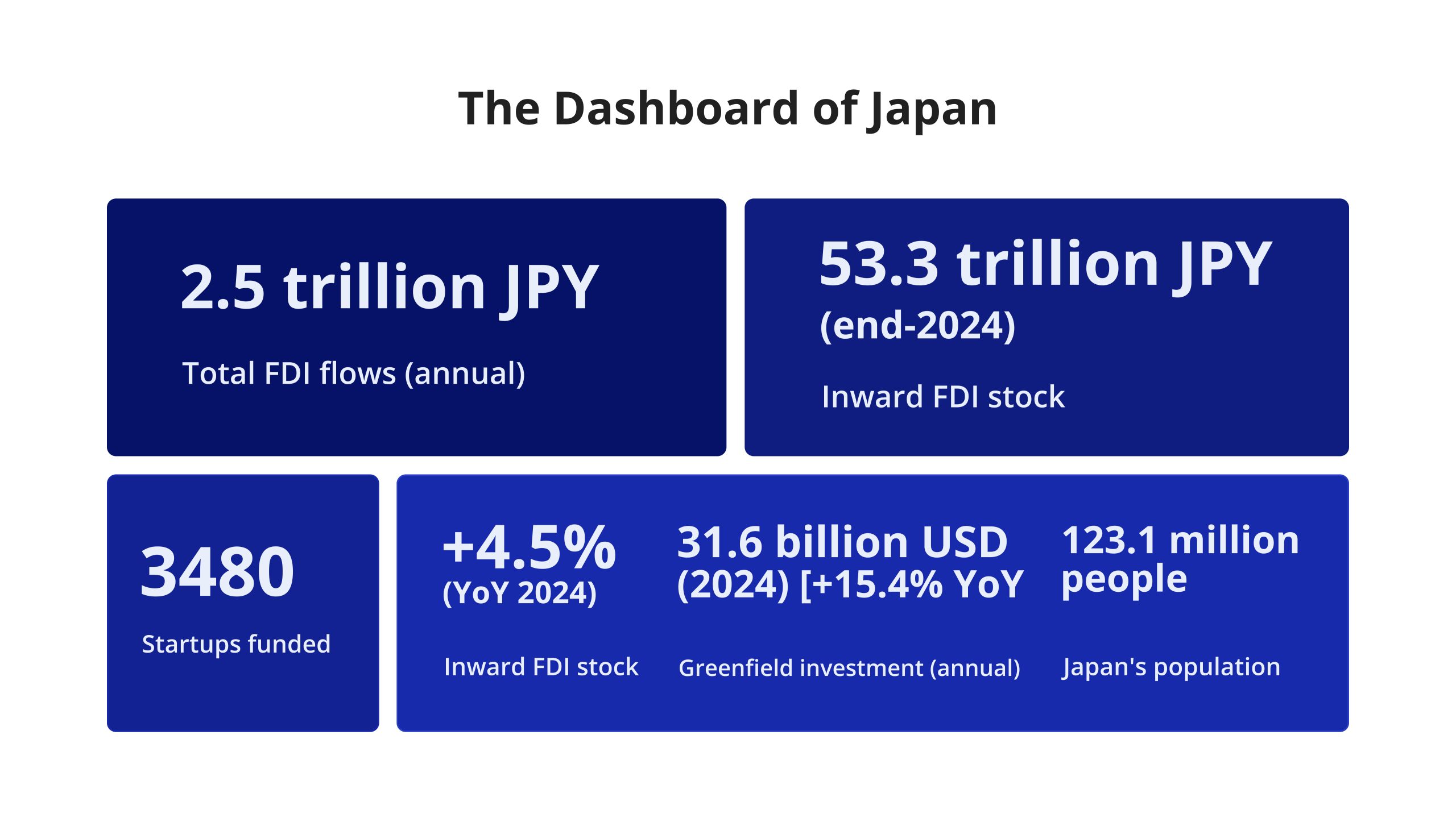
“In 2024, FDI flows to Japan totaled 2.5 trillion yen, and the growth rate has slowed down from the previous year, yet maintaining a net inflow. As of the end of the year, Japan’s FDI stock was 53.3 trillion yen, up 4.5% from the previous year, marking a new record high.”
TRO Invest Japan Report 2025 %911%93.
Read more: Top 26 Startups in Canada to Watch in 2026
What Does Japan’s Startup Ecosystem Look Like in 2026?
1. ABEJA

From Tokyo comes ABEJA, an artificial intelligence firm focused on visual recognition and behavior analysis within stores and factories. While others chase theoretical models, it captures movements in physical spaces — turning them into operational insight. Because environments change constantly, its system updates decisions moment by moment. Though Japan rarely leads global tech trends, this application shows great precision in reworking old sectors with new tools [6].
- Industry: Artificial Intelligence / Enterprise SaaS
- Location: Tokyo
- Founded: 2012
- Series: Listed (TSE Growth Market)
- Funding Rounds: 5+ [6]
- Money Raised: $45.5M+
- Why watch in 2026: ABEJA’s predictive analytics tools are reducing unplanned manufacturing downtime by over 20%, positioning it as a critical digital transformation partner for Japan’s industrial base.
2. AI Medical Service

AI Medical Service is a medical technology company that has developed an AI-based diagnostic software product specifically for use in gastrointestinal endoscopes. The primary purpose of this product is to detect early-stage cancer with a level of accuracy that is comparable to what experienced gastrointestinal physicians would expect to see. This product represents one of Japan’s most innovative AI companies in the rapidly growing medical technology space.
- Industry: Medical AI / Health Tech
- Location: Toshima City [7]
- Founded: 2017
- Series: Series C
- Funding Rounds: 4
- Money Raised: $122M+ [7]
- Why watch in 2026: The aging population of Japan creates a huge demand for scalable diagnostics solutions. The regulatory-approved AI solutions of this company are currently deployed in hundreds of hospitals in Japan and are being rolled out internationally.
3. Alpaca

Alpaca is a broker API platform that enables fintech companies, banks, and app developers to embed stock trading into their apps. Founded by Japanese entrepreneur Yoshi Yokokawa, Alpaca is one of the most popular infrastructural layers of the fintech ecosystem in Asia and North America.
- Industry: Fintech / API Infrastructure
- Location: Tokyo / San Mateo, CA
- Founded: 2015
- Series: Series D
- Funding Rounds: 12 [8]
- Money Raised: $298M+ [8]
- Why watch in 2026: Alpaca operates a commission-free API, which is garnering strong interest from neobanks and super-apps around the world, particularly in areas that are beginning to experience an increase in embedded finance.
4. Astroscale

“I believe space debris removal as a trend and business case will evolve faster in the next five years than it has in the previous sixty. We are nearing the point where a low-cost debris removal solution is inevitable.”
— Nobu Okada, Founder and CEO of Astroscale. Source: Astroscale.
Orbital debris removal stands at the center of what Astroscale aims to address. With focus shifting toward long-term viability, systems emerge that support satellite maintenance alongside decommissioning processes. A notable development unfolded during 2024 — trading began on the Tokyo Stock Exchange under the company name. This shift marked a turning point, not just for the organization but within broader efforts tied to responsible space operations [9].
- Industry: Aerospace / Space Technology
- Location: Tokyo
- Founded: 2013
- Series: Public (TSE: 186A)
- Funding Rounds: 12+ [9]
- Money Raised: $400M+ [9]
- Why watch in 2026: Space debris removal has become an essential element of infrastructure for governments and commercial entities. Astroscale is the market leader for these services.
5. Atonarp

Atonarp builds high-performance spectrometry systems used in industry monitoring and chip production while supporting studies in biology. Performance of the ASTON system arises from blending mass detection with light-based analysis, achieving sensitivity down to ten parts per billion — accuracy unattainable through conventional tools.
- Industry: Deep Tech / Semiconductor Analytics
- Location: Tokyo
- Founded: 2009
- Series: Series D
- Funding Rounds: 4 [10]
- Money Raised: $111M [10]
- Why watch in 2026: With regard to semiconductors, by 2026, stability becomes a global concern. Due to this, it becomes necessary to have accurate monitoring in the process of manufacturing. The tools produced by Atonarp play this part perfectly without any excess.
6. AxelSpace

AxelSpace creates small satellites while delivering imaging data from orbit to companies and public agencies. With production expenses far below those of conventional aerospace firms, access expands beyond elite users. Lower pricing opens doors once closed. Space insights now reach groups previously excluded. Traditional barriers dissolve through learner methods. Fewer resources are needed for similar results. This shift allows wider adoption across sectors.
- Industry: Space Tech / Earth Observation
- Location: Chuo City
- Founded: 2008
- Series: Public [11]
- Funding Rounds: 5
- Money Raised: $107M+ [11]
- Why watch in 2026: The business models of cheap satellite constellations created by AxelSpace create applications for commercial activities that were not economically viable before.
7. Crunchyroll

Founded before Sony took ownership in 2021, Crunchyroll leads worldwide access to Japanese anime, manga, and drama. Despite corporate changes, its foundation remains tied closely to Japan’s artistic networks. Because of its reach, artists from Japan now share work internationally through this channel. While based abroad, the service reflects local production trends more than global demands [12].
- Industry: Streaming / Entertainment Tech
- Location: Originally San Francisco; content operations centered in Japan
- Founded: 2006
- Series: Acquired (Sony, 2021)
- Funding Rounds:4 [12]
- Money Raised: $1.175B (acquisition value) [12]
- Why watch in 2026: Anime’s global cultural reach continues to grow. Crunchyroll’s scale—100+ million registered users—makes it the dominant platform for Japan’s soft-power economy.
Japan’s startup scene moves fast. Digest.Pro curates the most important developments in Japanese and global tech innovation weekly, clearly, without the noise. Subscribe to Digest.Pro on LinkedIn and stay ahead of what’s next.
8. FromSoftware

FromSoftware, based in Japan, is the most internationally renowned video game producer in Japan. This studio has developed games with global appeal, including but not limited to ‘Elden Ring,’ ‘Dark Souls,’ and ‘Sekiro.’ Although FromSoftware doesn’t fit into the typical definition of a startup, it has reached the highest point of creative technology in Japan and continues to garner significant attention for international investment as gaming valuations soar across the globe [13].
- Industry: Gaming / Interactive Entertainment
- Location: Tokyo
- Founded: 1986
- Series: Acquired (Kadokawa Corporation)
- Funding Rounds: 1
- Money Raised: $263M [13]
- Why watch in 2026: Elden Ring sold 25M+ copies globally. As gaming becomes one of the world’s largest entertainment sectors, FromSoftware’s IP value and creative output position it as a unique strategic asset in Japan’s tech economy.
9. Kyash

Kyash is a Tokyo-based neobank offering digital wallet services, prepaid Visa cards, and seamless mobile payment experiences. It serves individual consumers across Japan and has raised $57M+ to expand its financial product suite. It’s one of the more accessible travel startups in Japan, welcoming users of all ages without age barriers.
- Industry: Fintech / Neobanking
- Location: Tokyo
- Founded: 2015
- Series: Series D [15]
- Funding Rounds: 4
- Money Raised: $110M [15]
- Why watch in 2026: With strong policy support, Japan moves toward fewer physical transactions. Among emerging tools, Kyash stands out — not by claim, but design. Built for phones first, it fits where behavior is changing fast. One of Asia’s biggest economies now leans into digital exchange. Behind steady growth, infrastructure evolves. Consumer habits follow new paths. In this setting, early alignment matters more than speed.
10. Kyoto Fusioneering
Among global players in renewable energy, a Japanese venture stands out through technical precision. Specialized plant systems emerge from Kyoto Fusioneering, shaped for future nuclear fusion reactors. Plasma heating mechanisms form part of its output; tritium management parts follow closely behind.
- Industry: Nuclear Fusion / Clean Energy
- Location: Uji
- Founded: 2019 [16]
- Series: Series C
- Funding Rounds: 9
- Money Raised: $120M+ [16]
- Why watch in 2026: Commercial fusion is accelerating faster than most forecasts predicted. Kyoto Fusioneering’s hardware expertise makes it a critical supplier to every major fusion developer—regardless of which approach wins.
Japan’s startup scene is moving faster than most industry reports can track. Digest.Pro covers the most important funding rounds, product launches, and innovation trends across Asia and beyond — weekly, in plain language. Subscribe at Digest.Pro on LinkedIn and stay a step ahead.
11. Mujin

Beginning with precision, Mujin develops advanced robotic control systems tailored for automated facilities in production and storage environments. Without reliance on bespoke coding, its core product — the MujinController — allows machines to adapt swiftly to intricate operations such as moving items within supply chains. Reaching a notable scale by 2025, it stood first among Japanese startups in capital secured, totaling ¥36.2 billion through successive investments [14].
- Industry: Robotics / Industrial Automation
- Location: Tokyo
- Founded: 2011
- Series: Series D [17]
- Funding Rounds: 6
- Money Raised: $243M+ [17]
- Why watch in 2026: By 2026, rising e-commerce volumes are reshaping logistics needs. Across Japan, then North America, followed by Europe, Mujin’s robotic systems handle complex warehouse tasks. Automation demand grows where speed matters most — fulfillment centers adapt accordingly.
12. Nanofiber Quantum Technologies

Nanofiber Quantum Technologies develops quantum communication hardware using optical nanofiber technology. Its systems create quantum memories and network interfaces essential for building secure quantum communication networks. This is one of the most specialized early-stage technology companies in Japan’s deeptech landscape.
- Industry: Quantum Technology / Photonics
- Location: Tokyo
- Founded: 2022
- Series: Series A [18]
- Funding Rounds: 3
- Money Raised: $23.9M [18]
- Why watch in 2026: Security through quantum-safe communications has become a priority on the national level. The government funding in quantum technologies in Japan is driving the interest towards such companies.
13. PayPay

Among Japanese mobile payment services, PayPay holds the leading position. PayPay created platform for cashless payments via QR codes. With more than 60 million people signed up, its reach extends widely across the country. Holding 45 percent of the digital payment sector, its influence grows steadily. Support comes from major firms like SoftBank and Yahoo Japan, entities under Z Holdings.
- Industry: Fintech / Mobile Payments
- Location: Chiyoda
- Founded: 2018
- Series: Public (SoftBank / Z Holdings) [19]
- Funding Rounds: N/A
- Money Raised: N/A
- Why watch in 2026: By 2026, one reason stands out: PayPay links with Alipay+, connecting to 16 global digital wallets. This shift gains weight through stronger support for visitors’ spending in Japan. Cross-border transactions become simpler because of shared infrastructure. Value grows where travel meets payment ease.
Don’t miss the future of tech. Digest.Pro delivers expert-curated insight on the most promising startups in Japan, AI breakthroughs, and global venture capital trends. Join community of innovators at Digest.Pro.
14. Sakana AI

Founded in 2023, Sakana AI holds the position of Japan’s highest-valued privately held startup. Its origins trace back to three ex-researchers from Google: Llion Jones, David Ha, and Ren Ito. Biology shapes much of their work; inspiration drawn from natural evolution guides model development. Rather than relying on massive scale, they build compact systems that run quicker with reduced resource needs. A funding round labeled Series B closed in November 2025. That event pushed the company’s worth to $2.65 billion.
- Industry: Artificial Intelligence / Generative AI
- Location: Tokyo
- Founded: 2023
- Series: Series B [20]
- Funding Rounds: 7
- Money Raised: $379M [20]
- Why watch in 2026: Should global interest grow by 2026, Sakana’s approach to self-governing artificial intelligence may draw attention — not through scale, but focus: systems shaped around Japan’s distinct social patterns, linguistic traits, and economic needs.
15. SkyDrive

“Since our founding, SkyDrive has been dedicated to transforming the future of transportation through the aerial mobility revolution.”
— Tomohiro Fukuzawa, Founder and CEO of SkyDrive Inc. Source: Indiatimes.
Flying high above city traffic, SkyDrive builds eVTOL aircraft designed for urban transport alongside powerful drones capable of carrying heavy loads. Supported through investments from Suzuki, Toyota Group, and Kintetsu, its position stands firm as Japan’s foremost startup in the flying car sector.
- Industry: Advanced Mobility / Aerospace
- Location: Shinjuku City
- Founded: 2018 [21]
- Series: Series C
- Funding Rounds: 8
- Money Raised: $298M [21]
- Why watch in 2026: The 2025 Osaka World Expo placed SkyDrive under global observation. Progress toward eVTOL certification may shape its future just as much as steps into cargo drone operations. Rather than promises, actual regulatory approvals could determine momentum.
16. SmartNews

One of Japan’s verified unicorn startups goes by the name SmartNews. This application discovers news through artificial intelligence. Over twenty million people actively engage with it across Japan and the U.S. Machine learning guides its method for highlighting credible journalism.
- Industry: Media Tech / AI
- Location: San Francisco
- Founded: 2012 [22]
- Series: Series F
- Funding Rounds: 8
- Money Raised: $410M+ [22]
- Why watch in 2026: As media credibility becomes a competitive differentiator, SmartNews’s anti-filter-bubble editorial philosophy and its dual US-Japan audience make it a uniquely positioned media tech asset.
17. T2 Auto

Highway freight operations in Japan face pressure due to fewer available drivers. T2 Auto builds self-driving technology tailored for extended truck routes. As the working population grows older, automation gains importance. Safer transport methods become necessary under these conditions. The company focuses on addressing logistical gaps through engineered vehicle control.
- Industry: Autonomous Vehicles / Logistics Tech
- Location: Tokyo
- Founded: 2022
- Series: Series A [23]
- Funding Rounds: 2
- Money Raised: $44M [23]
- Why watch in 2026: Japan faces shrinking population numbers. Driverless trucks then become more than a business opportunity — they serve public needs. What sets T2 Auto apart is how it meets a gap in workforce supply. Regular recruitment methods fail here, yet operations continue without pause.
From fintech to fusion energy, Japanese startups are rewriting what’s possible across every major industry. Digest.Pro brings you expert-curated analysis on the companies and trends shaping the global tech landscape. Join the Digest.Pro community and never miss what matters.
18. Telexistence

Beginning operations in Japanese convenience outlets, Telexistence develops robotic arms driven by artificial intelligence. Not limited to retail spaces alone, these systems also operate within logistics settings. In practice today, machines manage shelf restocking without human guidance inside FamilyMart locations nationwide.
- Industry: Robotics / Retail Automation
- Location: Tokyo
- Founded: 2017
- Series: Series B
- Funding Rounds: 5
- Money Raised: $210M+ [24]
- Why watch in 2026: Telexistence’s North America expansion—targeting US convenience store chains—could transform a Japan-market proof of concept into a global category leader in retail robotics.
19. Thirdverse

A world unfolds where gameplay meets digital possession — Thirdverse builds virtual realms shaped by player interaction. Ownership shifts form through Web3 integration, making asset control tangible in these spaces. Emerging from Japan’s long-standing game culture, new experiences take shape beyond traditional limits.
- Industry: VR Gaming / Web3
- Location: Shinjuku
- Founded: 2020
- Series: Series D [25]
- Funding Rounds: 6 [25]
- Money Raised: $41.9M+ [25]
- Why watch in 2026: By 2026, advancing VR technology alongside more practical Web3 applications may shift focus toward real utility rather than mere conjecture. Early commitment by Thirdverse to shared virtual experiences — where users retain control over assets — could gain greater relevance amid these changes.
20. Tier IV

Tier IV develops Autoware, an open-source system for autonomous vehicles, recognized globally for its reach and application. Self-driving shuttles rely on it, as do robotic delivery units, along with machinery used in industrial settings throughout Japan and beyond. Funding gathered reaches a sum of 457.8 million dollars when tallied in full.
- Industry: Autonomous Vehicles / Open Source Software
- Location: Tokyo
- Founded: 2015
- Series: Series B [26]
- Funding Rounds: 6
- Money Raised: $279M [26]
- Why watch in 2026: Open-source autonomy gains ground by 2026, standing firm beside closed systems. With each new city in Japan adopting Tier IV’s solution, confidence builds quietly elsewhere.
21. Uniphore

Founded in India, Uniphore operates globally with a core strength in Japan. Real-time dialogue forms the basis of its technology stack. Insights emerge through automated parsing of spoken exchanges. Enterprise clients rely on structured feedback from customer interactions. Sales performance links directly to system-generated guidance. Customer support teams apply findings during live engagements.
- Industry: AI / Conversational Intelligence
- Location: Global (Japan operations)
- Founded: 2008
- Series: Series F [27]
- Funding Rounds: 12
- Money Raised: $961M [27]
- Why watch in 2026: Japan’s enterprise SaaS adoption is accelerating rapidly. Uniphore’s Japanese-language AI capabilities and existing corporate client relationships position it well for continued growth in this high-value market.
Read more: Top 9 Startups in Finland to Watch in 2026
How Do the Top 21 Japanese Startups Compare?: Comparison Table
|
Startup |
Industry |
Founded |
Stage |
Key Strength |
|
ABEJA |
AI / Enterprise SaaS |
2012 |
Listed (TSE Growth) |
Predictive analytics cutting manufacturing downtime 20%+ |
|
AI Medical Service |
Medical AI / Health Tech |
2017 |
Series C |
AI endoscopy diagnostics deployed in hundreds of hospitals |
|
Alpaca |
Fintech / API Infrastructure |
2015 |
Series D |
Commission-free broker API powering embedded trading |
|
Astroscale |
Aerospace / Space Tech |
2013 |
Public (TSE: 186A) |
Market leader in orbital debris removal |
|
Atonarp |
Deep Tech / Semiconductor Analytics |
2009 |
Series D |
High-precision spectrometry (ASTON) for chip manufacturing |
|
AxelSpace |
Space Tech / Earth Observation |
2008 |
Public |
Low-cost small satellites enabling wider commercial access |
|
Crunchyroll |
Streaming / Entertainment Tech |
2006 |
Acquired (Sony, 2021) |
Dominant global anime platform, 100M+ users |
|
FromSoftware |
Gaming / Interactive Entertainment |
1986 |
Acquired (Kadokawa) |
Hit IP (Elden Ring, Dark Souls) with global sales scale |
|
Kyash |
Fintech / Neobanking |
2015 |
Series D |
Mobile-first digital wallet and prepaid card platform |
|
Kyoto Fusioneering |
Nuclear Fusion / Clean Energy |
2019 |
Series C |
Critical hardware supplier across fusion reactor approaches |
|
Mujin |
Robotics / Industrial Automation |
2011 |
Series D |
Japan’s top-funded robotics startup; no-code warehouse control |
|
Nanofiber Quantum Technologies |
Quantum Technology / Photonics |
2022 |
Series A |
Optical nanofiber quantum memory and network hardware |
|
PayPay |
Fintech / Mobile Payments |
2018 |
Public (SoftBank/Z Holdings) |
Leading QR payments app, 60M+ users, 45% market share |
|
Sakana AI |
AI / Generative AI |
2023 |
Series B |
Japan’s highest-valued private AI startup ($2.65B) |
|
SkyDrive |
Advanced Mobility / Aerospace |
2018 |
Series C |
Leading eVTOL developer backed by Suzuki, Toyota, Kintetsu |
|
SmartNews |
Media Tech / AI |
2012 |
Series F |
AI news discovery app, 20M+ users across Japan and US |
|
T2 Auto |
Autonomous Vehicles / Logistics Tech |
2022 |
Series A |
Self-driving tech for long-haul trucking amid driver shortage |
|
Telexistence |
Robotics / Retail Automation |
2017 |
Series B |
AI robotic arms automating retail restocking (FamilyMart) |
|
Thirdverse |
VR Gaming / Web3 |
2020 |
Series D |
Web3-enabled VR worlds with player asset ownership |
|
Tier IV |
Autonomous Vehicles / Open Source |
2015 |
Series B |
Autoware, widely adopted open-source autonomy platform |
|
Uniphore |
AI / Conversational Intelligence |
2008 |
Series F |
Conversational AI analytics with strong Japan enterprise ties |
What’s Happening in Japan’s Startup Industry in 2026?
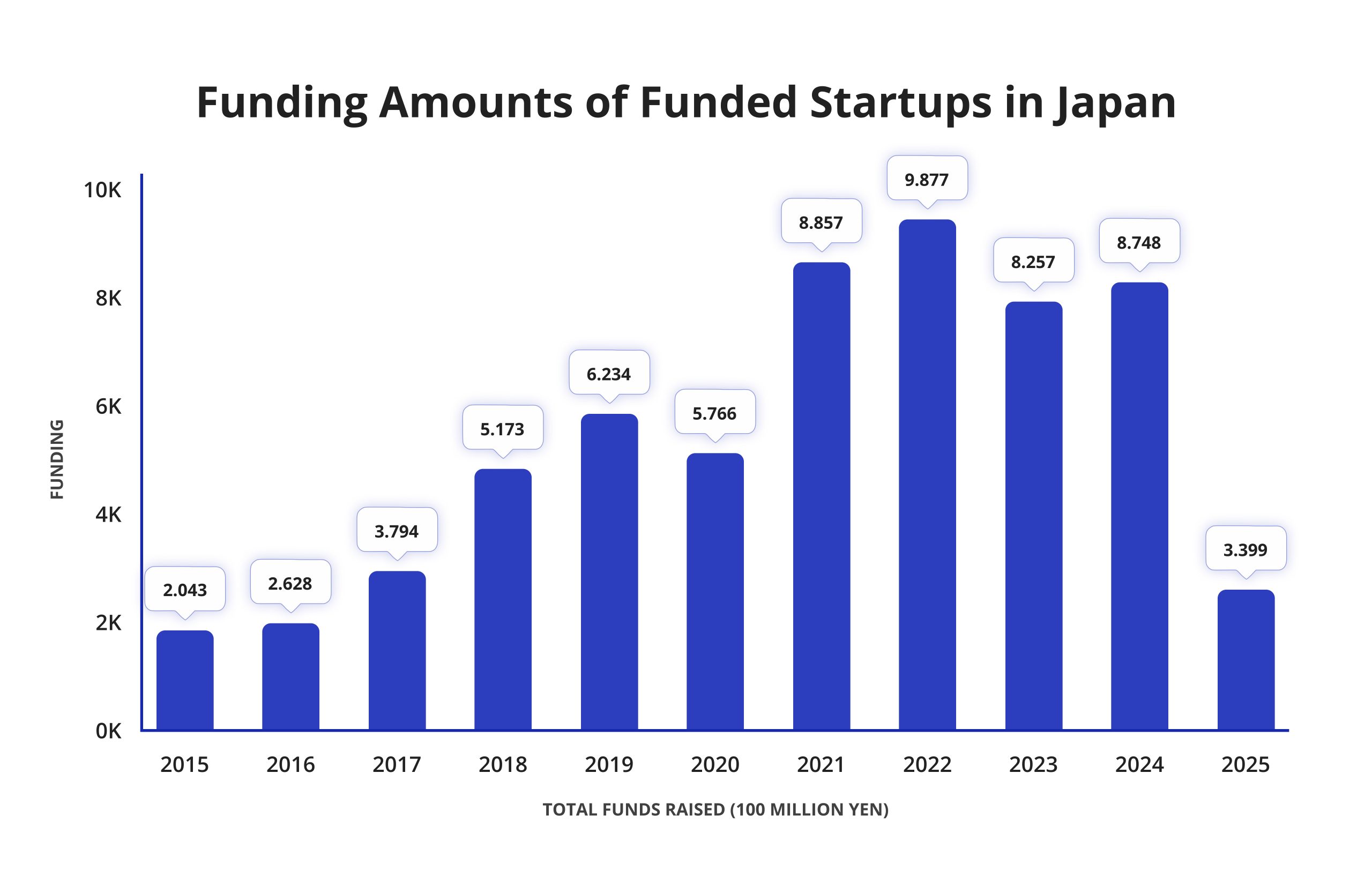
The startup scene in Japan has undergone a structural transformation. The ecosystem is no longer driven by consumer internet clones. It is powered by deep tech, applied AI, and engineering-intensive companies that align with Japan’s core industrial strengths.
According to the Global Startup Ecosystem Report, Tokyo now ranks among the top 15 global startup hubs. Japan’s total startup ecosystem is valued at above $5.5 billion in funded company terms, with more than 3,400 active startups. Critically, overseas venture capital is entering Japan for the first time at scale—with US firms like Andreessen Horowitz and Khosla Ventures actively deploying capital in Japanese startups.
Read more: Top 9 Most Promising Startups in Switzerland in 2026
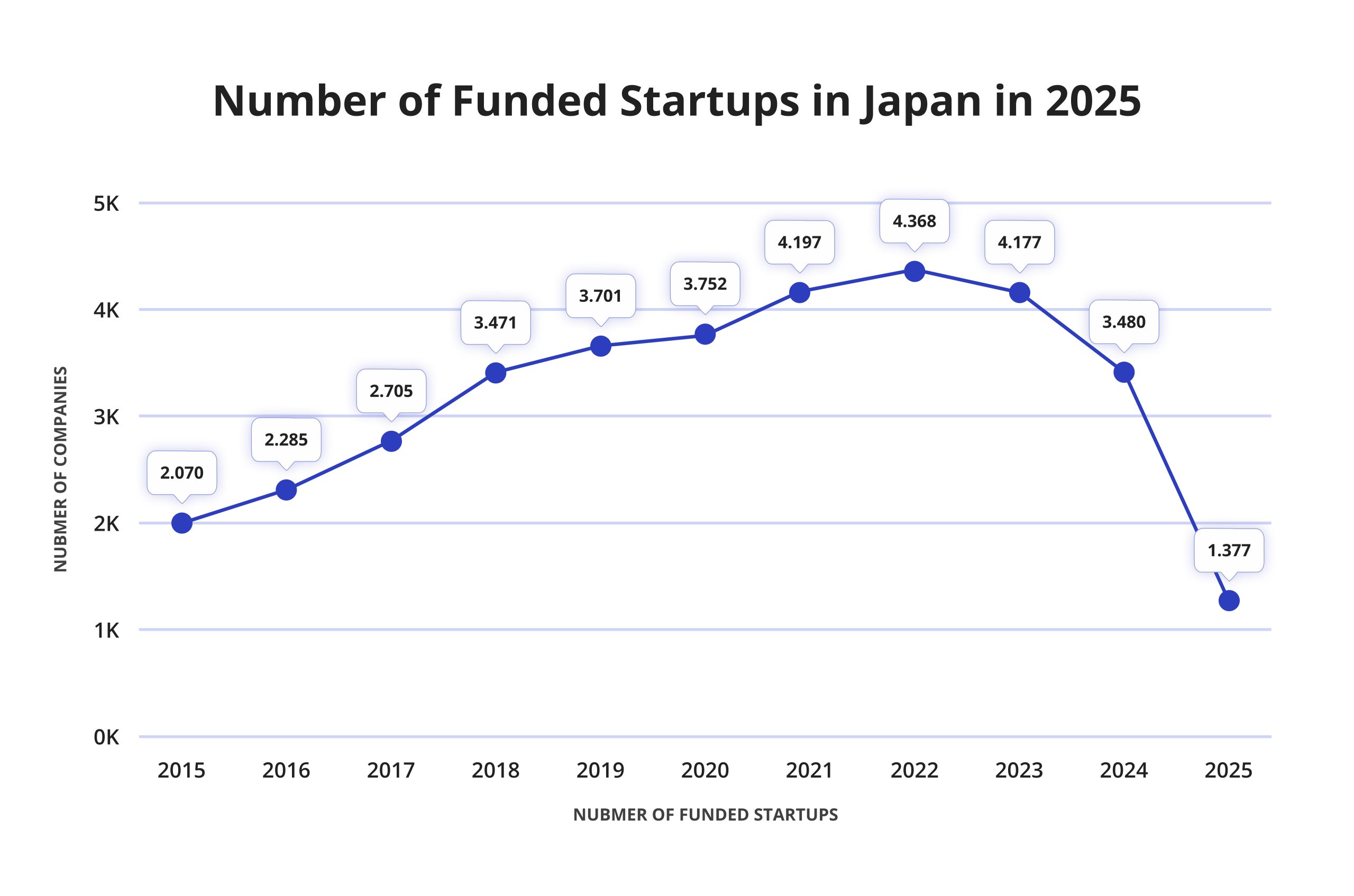
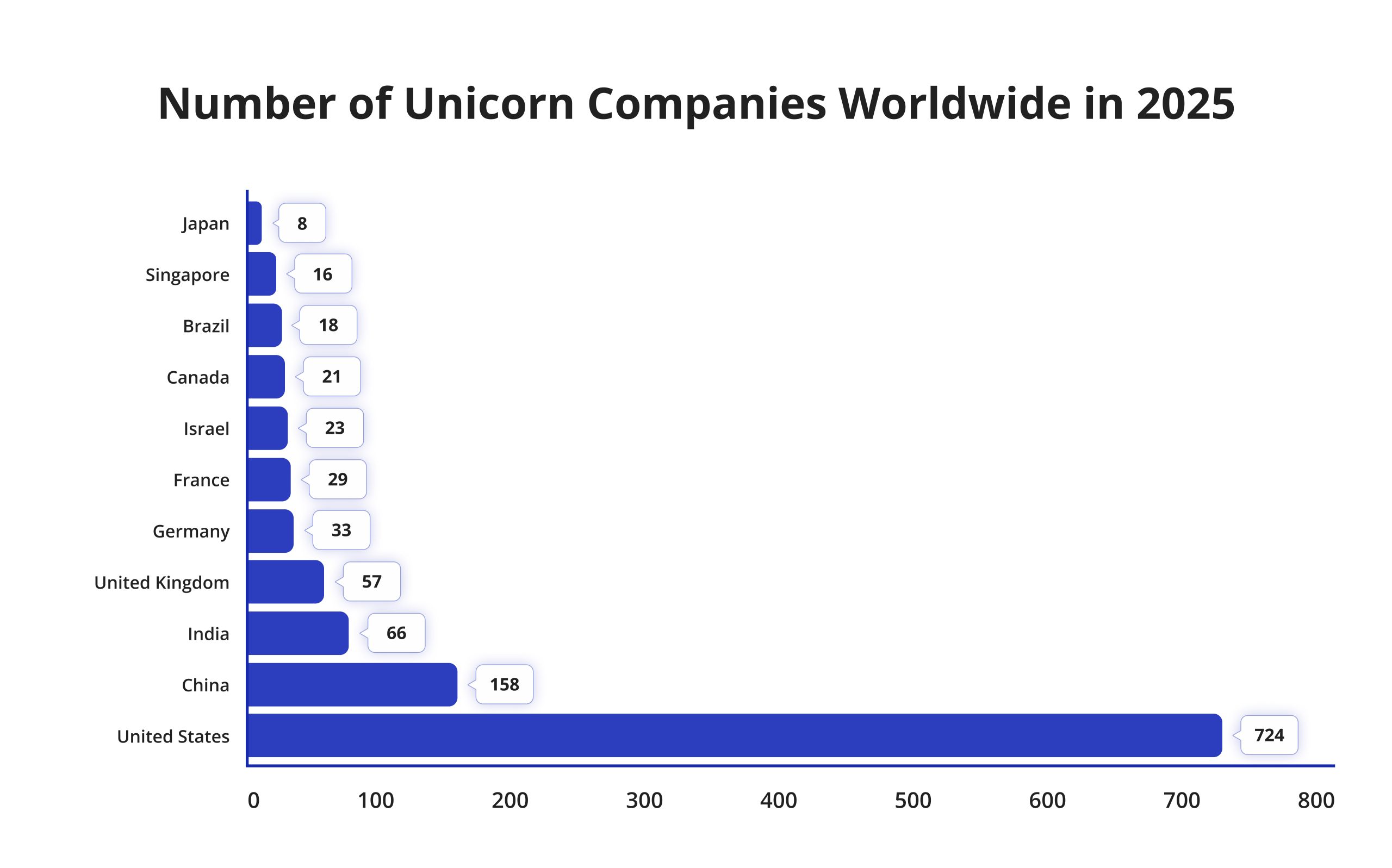
As of now, Japan has approximately 10 unicorns, including Preferred Networks and Sakana AI. In addition to these companies, Kraken Technologies has a presence in Japan, providing energy software solutions as an enabler of the global transition to clean energy. With continued interest from investors and a strong market for top green technology, the country will see an increased number of green tech startups in Japan emerging from domestic innovators as well as from Kraken Technologies, drawing on global capital.
Female participation in Japan’s technology sector is also growing as government programs and multinational corporations are continually creating more opportunities for female founders and engineers in both Tokyo and Osaka.
“Japan is still developing as a startup country. However, it is still the third largest economy in the world. Many tech companies such as GAFA are making a lot of profit in Japan. Although there are still some difficulties with regard to the culture of startups, the ability for global startups to launch their business while living in a safe and secure social infrastructure cannot be disregarded.” (New Year’s Interview with Yoshiro Tasaka, Director of the Global Hub City Promotion Office, Shibuya City — Shibuya Startup Support) [43]
Yoshiro Tasaka
Which Government Programs Back Startups in Japan?
Japan’s government has made startup development a national priority. Two programs in particular define the institutional framework:
J-Startup Program
The J-Startup Program is a national initiative from Tokyo that identifies emerging tech ventures showing strong potential. These firms gain structured guidance through seasoned business leaders worldwide. Support arrives via strategic networking, often leading to funding discussions abroad. Access to government contracts becomes easier under this framework. Recognition on global stages has grown since the effort began.
Some well-known innovators today first emerged through this channel. For example, SmartHR, Spiber, CADDi, and Astroscale have developed thanks to the J-Startup Program.
Japan Open Innovation Prize
The Japan Open Innovation Prize comes from the Cabinet Office, honoring strong partnerships between corporations and startups within the country. As recognition grows, major firms find motivation to engage emerging ventures. Investors now regard the award as an indicator when assessing the reliability of Japan’s startup landscape.
How Did We Rank the Top Japanese Startups?
Our selection of the top 21 startups in Japan for 2026 applies a consistent evaluation framework across every company reviewed:
- Innovation and differentiation — Does the company offer a genuinely novel technology or a meaningfully superior approach to an existing problem?
- Funding and investor validation — Total capital raised, recency of rounds, and the quality of institutional investors backing the company.
- Growth trajectory — Revenue growth, user adoption, or deployment scale that demonstrates real market traction.
- Team and technical depth — Founder credentials, domain expertise, and the quality of scientific or engineering leadership.
- Market timing and scale — Priority given to companies operating in structurally large markets with regulatory or demographic tailwinds.
Every company in this list was evaluated using the same five criteria. Inclusion reflects verified fundamentals—not media attention.
Summary
Japanese startups have never been in a better position to make an impact globally. These 21 startups mentioned above cover a variety of areas, including artificial intelligence, robotics, space technology, quantum computing, fintech, gaming, and clean energy. All these businesses represent a particular aspect of the confidence and global ambitions of Japan’s startup firms.
Whatever you may be—an investor interested in the next wave of unicorns, an executive looking for new business partners, or a foreign entrepreneur looking into getting into the Tokyo market — these startups can guide you through where all the best innovations in Japan are taking place right now.
Innovation in Japan is not just a good project anymore. This can be seen from the above-mentioned startups.
Understanding where Japan’s startup ecosystem is heading takes more than a one-time read. Digest.Pro delivers ongoing coverage of the best startups worldwide, AI breakthroughs, and venture capital shifts — straight to your feed. Follow Digest.Pro on LinkedIn and make smarter decisions, faster.
Read more: 15 Best AI startups in the Netherlands to Watch in 2026
FAQs
Japan is appealing to startups due to its large economy, abundant engineering talent, and government initiatives amounting to ¥10 trillion by 2027, along with many strategic industrial partners, including the industries of robotics, artificial intelligence, and material science.
The developing sectors include deep tech, AI, robots, and clean energy because of financial support provided by the government and the country’s ability to engineer hardware products. Other developing fields are health-tech and age-tech solutions, which solve demographic problems in Japan.
They include Web3 technology, software-as-a-service oriented on digital transformation of existing companies, agriculture technology that supports sustainable development, and space technology. Advanced materials science is another developing sector due to high investments made by venture capital funds.
Absolutely. An expatriate individual is allowed to fully own and register a newly formed corporation in Japan, i.e., a KK or a GK, without needing to actually relocate to Japan. After the legal reforms of 2015, expatriates do not need to appoint a local representative from Japan anymore, which makes the entire process of incorporation remotely perfect as being perfectly legal. Nonetheless, practical issues like getting a company’s bank account opened or obtaining visas usually necessitate local assistance.
The expenses of establishing a Japanese KK range from ¥200,000 to ¥400,000 for registration and notary fees. If taking into account a GK as an option, it could save about ¥60,000 for the registration, and there is no need to pay for a notary as it is optional in this case. In addition to that, the company owners need to have a minimum of ¥1,000,000 to ¥3,000,000 reserved for business operational expenses.
To open a corporate bank account, one needs to register their company first, along with the need to have a registered office in Japan, company seals, and a business plan. Due to very stringent anti-money laundering regulations, banks scrutinize foreign organizations carefully; it is strongly recommended that one find a resident director or a bilingual local consultant for that.
There are comparatively fewer unicorns in Japan since the best engineers prefer working in large corporations as compared to early-stage startups. Additionally, the local venture capitalist market is quite small, causing most entrepreneurs to seek out early IPOs.
One does not necessarily have to know Japanese for incorporation of a company; however, managing a company without knowledge of Japanese becomes extremely difficult. Handling government red tape, opening a corporate bank account, and gaining the trust of customers in Japan will be impossible without bilingual employees or agency services.
The use of a virtual office address to legally register a Japanese company is permitted by law and is an economically viable solution approved by the Legal Affairs Bureau of Japan. However, when applying for a business manager visa or to open a corporate bank account, the authorities concerned will likely require you to have a physical office at your disposal.
In Japan, there is a great deal of non-dilutive funding options available for technology companies, such as METI’s IT Introduction Subsidy and the J-Startup initiative. Various local governments may also provide additional funding sources, such as, for instance, the Tokyo Metropolitan Government’s rental subsidy, startup visa, and early-stage seed grant to foreign startups.
Japanese startups like Sakana AI, Astroscale, ABEJA, and Kyoto Fusioneering are among the top startups in Japan in 2026. These startups are leading the way in generative artificial intelligence, sustainability in space, and deep tech.
Typically, ranking is done based on manner of working, proprietary score with deep tech, and funding rate of startups in Japan. How well they will grow into foreign markets and whether they are backed by good venture capitalist funds is also taken into account.
Under the auspices of the aggressive 10 trillion yen government project called “5-Year Startup Development Plan,” today Japanese startups are able to pull in more than 1 trillion yen ($6.5 billion) each year as venture capital from various institutions.
The strongest startup hubs outside Tokyo are Fukuoka, Osaka, and Kyoto. Fukuoka leads with national strategic deregulation, offering dedicated Startup Visas and reduced municipal taxes. Osaka specializes in healthcare, IoT, and manufacturing via the Osaka Innovation Hub. Kyoto leverages elite university research spin-offs to provide specialized deep-tech and hardware R&D subsidies.
Foreign founders can access English-language acceleration in Japan through JETRO, Plug and Play Japan, and Shibuya Startup Support. JETRO provides free temporary office spaces, bilingual incorporation guidance, and corporate matching. Global accelerators like Plug and Play run bilingual batch programs across Tokyo, Osaka, and Kyoto to connect international startups directly with Japanese corporate partners.
Romanian tech startups access non-dilutive funding through both national allocations and direct European Union innovation instruments:
- EIC Accelerator (Horizon Europe): Grants up to €2.5 million for high-risk deep-tech and hardware companies, often paired with blended equity.
- PoCIDIF (Smart Growth & Digitalisation Programme): Targeted R&D grants supporting private-sector innovation and commercialization.
- PNRR Digitalisation & Innovation Calls: Non-repayable recovery funds targeting advanced technology development, software modernization, and research-to-market pilots.
- Innovation Norway: Bilateral grants focused on green tech, renewable energy, and ICT commercialization projects with Norwegian partners.
- Start-Up Nation Romania: Government grants for early-stage capital equipment and operational launch costs.
Early-stage founders win risk-averse Japanese investors by securing warm introductions and demonstrating enterprise proof-of-concept over speculative TAM growth. Pitch decks must emphasize regulatory compliance, data security, and enterprise letters of intent (LOIs). Showing long-term market commitment through a bilingual local presence and accepting milestone-based funding tranches reduces perceived downside risk for domestic venture funds.
Japan’s Startup Visa is a temporary, 6- to 12-month preparatory status granted by authorized municipalities to prepare a venture. In contrast, the Business Manager Visa is an operational, multi-year status requiring a physical office and ¥5,000,000 minimum capital. The Startup Visa allows founders to incorporate before fulfilling full immigration requirements.
References
- https://www.jetro.go.jp/en/invest/investment_environment/ijre/report2025/
- https://techcrunch.com/2025/11/17/sakana-ai-raises-135m-series-b-at-a-2-65b-valuation-to-continue-building-ai-models-for-japan/
- https://finance.yahoo.com/news/sakana-ai-raises-135m-series-115207368.html
- https://www.fintechobserver.com/speedas-japan-startup-finance-2025-report/
- https://www.japantimes.co.jp/2025/12/25/special-supplements/japans-startup-ecosystem-gains-global-attention/
- https://tracxn.com/d/companies/abeja/__vBSqowSw4slX01R5OWUmjmZrQkQArxJl-0nAzJAUu38#about-the-company
- https://tracxn.com/d/companies/aimedicalservice/__Hzl_nCiQxc7x17CMdIhkrB9UCOCYDpVDieqCTD54Cz0#about-the-company
- https://tracxn.com/d/companies/alpacasecurities/__DPL-aW731hp1_4Nu15IlzWceYujWM4Ds-BLWnQN0EB8#about-the-company
- https://tracxn.com/d/companies/astroscale/__X3ikccndmOA3eUrOc8YOwlTpPb-HHPZ5g9XqovFHV2U#about-the-company
- https://tracxn.com/d/companies/atonarp/__5C-RdO6GseKftS1OJhirnLId2f0OJAgyjqjZQG7Nrmw#about-the-company
- https://tracxn.com/d/companies/axelspace/___vuX5j8_OkcsiIk4YKrQhXp0qoUPnySDLCpQLa0DUyk#about-the-company
- https://tracxn.com/d/companies/crunchyroll/__ZIRsVsSTwFqB8QxuNz9fM-3nY0iVlGsfV2Qk3P3N4zc#about-the-company
- https://tracxn.com/d/companies/fromsoftware/__XervgQd_Mpy73ZfMa9bSeT_4Wmwo2jPi-okKDwm8LUg#about-the-company
- Gartner forecasts worldwide AI spending to grow 47% in 2026. (2026, May 19). Gartner. https://www.gartner.com/en/newsroom/press-releases/2026-05-19-gartner-forecasts-worldwide-ai-spending-to-grow-47-percent-in-2026
- https://tracxn.com/d/companies/kyash/__jaSiJikeonlxxEnIslK457qmyy5LEgOphm3Ne0j5pkg
- https://tracxn.com/d/companies/kyotofusioneering/__w_jpXB89-HmRSrY0oHyrQuvBvdS6fCI6I9KjlxJpSaI
- https://tracxn.com/d/companies/mujin/__xbSc-zi1Olf68E4doxtUnzkHM6IgwwD1IyDDvwyxQYA#about-the-company
- https://tracxn.com/d/companies/nanofiberquantumtechnologies/__Ht8HfOauWkDCMcM0B0-JZzdQ3GEj4DiDQbr7gRMhh9Y
- https://tracxn.com/d/companies/paypay/__Yl_2L0SMqptNYE9g65KKqE5LZcYddvdtZvU_r29Av74#about-the-company
- https://tracxn.com/d/companies/sakana/__Rxr2r3OKVsnvG1iZDZfSuo_0DuLgIoPwG_c5RX-eMWw#about-the-company
- https://tracxn.com/d/companies/skydrive/__m0V6b45mNSayMn3UmeQHhiZ6lMIxw-Nx1mXmlf30MPI#about-the-company
- https://tracxn.com/d/companies/smartnews/__tolE8en4hMBJY65XD0ol3URBTv_FD7CkIskCgFLDx84#about-the-company
- https://tracxn.com/d/companies/t2auto/__iI0OJykZdZ0Fp4QuOi_RKIwAYEbRUd2GPK2UUPGBA3Q
- https://tracxn.com/d/companies/telexistence/__OsGta7qg-Zodzu1vM7ErwfqDbl8FtlssTs8cOT6DTB8#about-the-company
- https://tracxn.com/d/companies/thirdverse/__mKiSuv3LSX35uRGtdyW-NHocEMpAzOO-Tx5ssPb_uO8#about-the-company
- https://tracxn.com/d/companies/tier4robotics/__6gahdEBbPR60b3LAlFk9ICYqs7bhz05DNKJucnP48ys#about-the-company
- https://tracxn.com/d/companies/uniphore/__qc0Tx2JG6_zdqzjxpSYBCtGZ5GpjeKyO3PsMME5sWbw#about-the-company
- Hasegawa, Katsuya, and Taketo Sugawara. “Characteristics of university startups in Japan.” 2017 IEEE Technology & Engineering Management Conference (TEMSCON). IEEE, 2017.
- Motohashi, Kazuyuki. “A comparative analysis of biotechnology startups between Japan and the US.” Social Science Japan Journal 15.2 (2012): 219-237.
- Iwamoto, Takashi. “Management of deep technology startups in Japan.” 2018 Portland International Conference on Management of Engineering and Technology (PICMET). IEEE, 2018.
- Rowen, Henry S., and Maria A. Toyoda. From Keiretsu to Startups: Japan’s Push for High Tech Entrepreneurship. Asia/Pacific Research Center, Stanford University, 2002.
- Kegel, Paul. “A Comparison of Startup Entrepreneurial Activity Between the United States and Japan.” Journal of Management Policy & Practice 17.1 (2016).
- Startup Genome. Global Startup Ecosystem Report 2024. https://startupgenome.com/report/gser2024
- McKinsey & Company. The State of AI in 2025. https://www.mckinsey.com/capabilities/quantumblack/our-insights/the-state-of-ai
- Gartner. Top 10 Strategic Technology Trends. https://www.gartner.com/en/information-technology/insights/top-technology-trends
- Japan External Trade Organization (JETRO). Startups in the Vanguard of Japanese Artificial Intelligence. https://www.jetro.go.jp/en/invest/insights/japan-insight/startups-japan-ai.html
- Ministry of Economy, Trade and Industry (METI). J-Startup Program Overview. https://www.j-startup.go.jp/en
- Ministry of Economy, Trade and Industry (METI). (2024). Japan Startup Ecosystem [PDF]. Government of Japan. https://www.meti.go.jp/policy/newbusiness/global_promotion.pdf
- Startup Genome. (2024). The Global Startup Ecosystem Report 2025. Startup Genome. https://startupgenome.com/report/gser2025
- JETRO. (2025). Scale Up with Japan’s Unique Startup Ecosystem. Japan External Trade Organization. https://www.jetro.go.jp
- Japan Investment Corporation. (2025). Japan Venture Capital Report: Trends and Insights. Japan Investment Corporation. https://www.japan-investment.jp
- 株式会社ユーザベース. (2026, February 17). 2025年 Japan Startup Finance – 国内スタートアップ資金調達動向 -|経済情報プラットフォーム スピーダ(SpeedA). Speeda. https://jp.ub-speeda.com/document/260127wp/
- https://www.shibuya-startup-support.jp/topics/new-years-interview-with-yoshiro-tasaka-director-of-the-global-hub-city-promotion-office-shibuya-city